EveryEvent Houston

Ver todos os Events

Find every event in Houston

events

Concerts & Live Music
Festivals
Sports & Recreation
Food & Drink
Arts & Culture
Community
Family & Kids
Nightlife
Comedy
Theater
Destinos populares
BaliSedonaLos AngelesCosta RicaNew YorkSan FranciscoAustinMiamiJoshua TreeTulum
Ver todas as categoriasVer todos os destinos

Explorar todos os recursos

Ferramentas poderosas para expandir seus eventos

Recursos da plataforma

Precificação dinâmica inteligente
Categorias de ingressos
Lugares marcados
Recuperação de carrinho abandonado
Recuperação de visitantes
Doações e preço variável
Sistema de afiliados
Scanner de ingressos
Códigos de desconto
Perguntas personalizadas
Compartilhamento de ingressos
Upsells e complementos
Análises e relatórios
Sequências de e-mail
Lista de espera / Notificar / Lembrar
Explorar
Discovery HubArtists & PerformersVenuesKnowledge Base
Ver todos os recursosSobre nós
PreçosBlog
Ver todos os eventos

events

Concerts & Live MusicFestivalsSports & RecreationFood & DrinkArts & CultureCommunityFamily & KidsNightlife

Destinos populares

BaliSedonaLos AngelesCosta RicaNew YorkSan Francisco

Explorar

Discovery HubArtists & PerformersVenuesKnowledge Base

Recursos da plataforma

Precificação dinâmica inteligenteCategorias de ingressosLugares marcadosRecuperação de carrinho abandonadoRecuperação de visitantesDoações e preço variávelSistema de afiliadosScanner de ingressosCódigos de descontoPerguntas personalizadasCompartilhamento de ingressosUpsells e complementosAnálises e relatóriosSequências de e-mailLista de espera / Notificar / Lembrar
Ver todos os recursosSobre nós
PreçosBlog
EntrarCadastrarOrganizadores de eventos
  • Browse All Events
  • Concerts & Live Music
  • Festivals
  • Sports & Recreation
  • Food & Drink
  • Arts & Culture
  • Community
  • Family & Kids
  • Nightlife
  • Todas as categorias →
  • Galveston
  • Austin
  • San Antonio
  • Dallas
  • New Orleans
  • All Destinations →
  • For Promoters
  • For Artists
  • For Venues
  • For Festivals
  • For Event Spaces
  • For Nonprofits
  • For Bloggers
  • For Speakers
  • Brand Ambassador
  • Case Studies
  • Rede de 350K+ compradores
  • Recuperação de carrinho abandonado
  • Precificação dinâmica inteligente
  • Categorias de ingressos
  • Eventos recorrentes
  • Lugares marcados
  • Sistema de afiliados
  • Lista de espera / Notificar
  • Scanner de ingressos
  • Widget incorporável
  • Event Syndication
  • Message Center
  • Integrations
  • Reports
  • Todos os recursos →
  • Sobre
  • The Ecosystem
  • Blog
  • Glossário
  • Inspiration
  • Central de ajuda
  • Contato
  • Documentação da API
  • Recursos da marca
  • Carreiras
  • Imprensa
  • Termos de Serviço
  • Política de Privacidade

Events

  • Browse All Events
  • Concerts & Live Music
  • Festivals
  • Sports & Recreation
  • Food & Drink
  • Arts & Culture
  • Community
  • Family & Kids
  • Nightlife
  • Todas as categorias →

Getaways

  • Galveston
  • Austin
  • San Antonio
  • Dallas
  • New Orleans
  • All Destinations →

For Organizers

  • For Promoters
  • For Artists
  • For Venues
  • For Festivals
  • For Event Spaces
  • For Nonprofits
  • For Bloggers
  • For Speakers
  • Brand Ambassador
  • Case Studies

Recursos

  • Rede de 350K+ compradores
  • Recuperação de carrinho abandonado
  • Precificação dinâmica inteligente
  • Categorias de ingressos
  • Eventos recorrentes
  • Lugares marcados
  • Sistema de afiliados
  • Lista de espera / Notificar
  • Scanner de ingressos
  • Widget incorporável
  • Event Syndication
  • Message Center
  • Integrations
  • Reports
  • Todos os recursos →

Empresa

  • Sobre
  • The Ecosystem
  • Blog
  • Glossário
  • Inspiration
  • Central de ajuda
  • Contato
  • Documentação da API
  • Recursos da marca
  • Carreiras
  • Imprensa
  • Termos de Serviço
  • Política de Privacidade
EveryEvent
© 2026 EveryEvent Houston. Todos os direitos reservados.
Inspiration

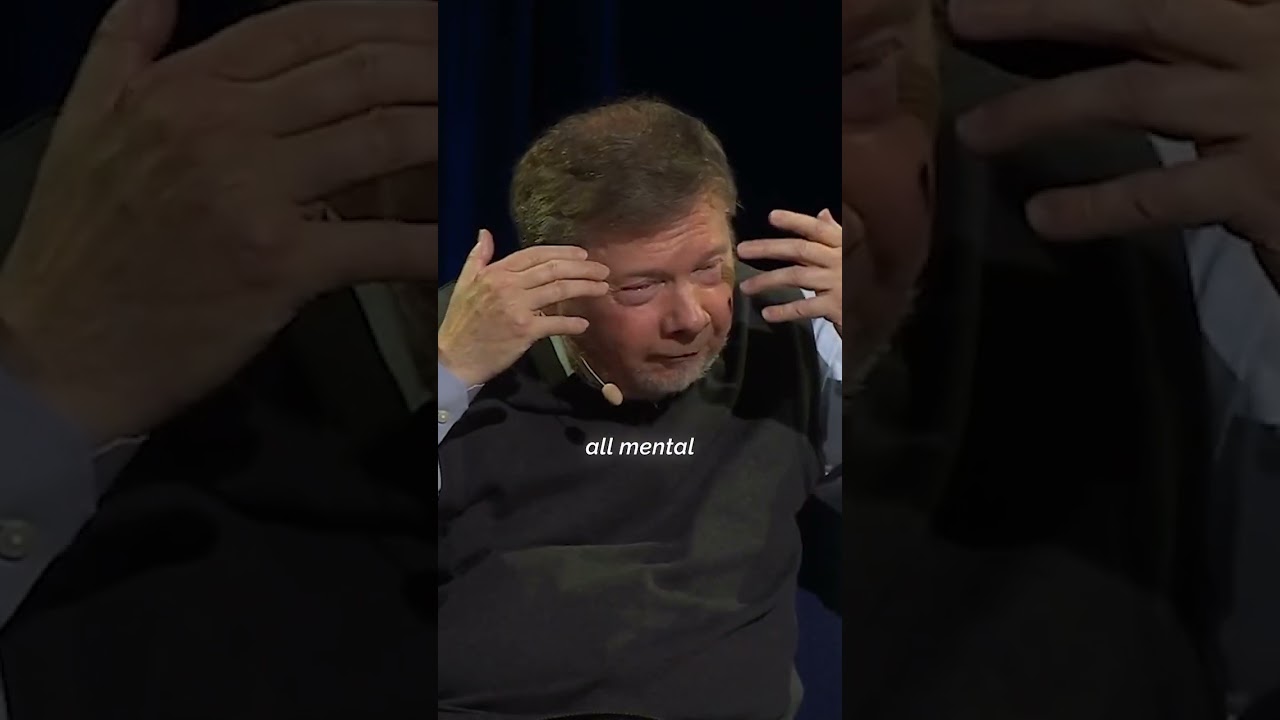
Thought vs Reality: WhyYour Mind Hypnotizes You

Eckhart Tolle
Eckhart Tolle
May 9, 2026
7 min read

TLDR: Most human suffering stems from a fundamental confusion: we treat our thoughts as facts. An event occurs—neutral in itself—and our mind immediately wraps a story around it. We then believe the story, feel the emotions it generates, and never pause to notice that the suffering isn't from the event but from our narrative about it. This pattern is so automatic it functions like hypnosis, a trance we're barely aware we've entered. The gap between what actually happened and what you told yourself about it is the real source of pain.

Read · 6 sections

How Your Mind Mistakes Thought for Reality

Every thought that crosses your consciousness arrives with a default assumption of truth. You don't question it; you accept it as a direct report of reality. This is the central confusion Eckhart Tolle identifies: we conflate the map with the territory. When a thought arises—"That person doesn't respect me," "I'm not good enough," "This situation is unfair"—it feels solid, factual, true. But it's only a story, an interpretation layered on top of a neutral event.

This happens because the mind's job is to conceptualize and narrate. It takes raw experience and packages it into meaning. That function is useful, but we've become so identified with our thoughts that we can no longer separate the event from the story we're telling about it. The event itself is neutral. A person walks past you without greeting you. That's it—a neutral occurrence. But your mind immediately generates a narrative: they're angry at you, they don't like you, you've done something wrong. The thought feels true because it arises inside you, and we instinctively trust our inner content.

The hypnotic power lies in this seamlessness. There's no gap, no moment of doubt. The thought appears, and immediately you're feeling the emotion the thought creates. You're wrapped in a story so completely that you've forgotten it's a story. You believe you're responding to reality when you're actually responding to your interpretation of reality.

Why Do We Believe Every Narrative Our Mind Creates?

The human mind evolved to generate stories because narrative is how we make sense of the world. It's how we predict danger, plan for the future, and create identity. But this same mechanism has a built-in flaw: we can't easily tell the difference between a thought and an observation. Both feel like they're "coming from outside," both feel like they're reporting what's real.

Additionally, emotions reinforce the belief. When your mind tells you a story, it triggers an emotional response—fear, shame, anger, sadness. That emotion feels like evidence that the story is true. You feel hurt, so the narrative that hurt you must be accurate. But the emotion is just a neurochemical response to the thought, not a confirmation of its truth. The mind is essentially hypnotizing itself: thought creates feeling, feeling validates thought, and you're locked in a loop that feels completely real.

This is compounded by attention. Where your attention goes, your energy follows. Once you believe a thought, you start looking for evidence that confirms it. You notice every instance that fits the story and ignore those that don't. This is called confirmation bias, and it makes the narrative stronger and more believable over time. The mind has literally hypnotized itself into a conviction.

The Gap Between Event and Interpretation: Where Suffering Lives

Here's the crucial insight: between the neutral event and your experience of suffering, there's a gap. In that gap sits your interpretation. The event itself—by itself—has no emotional valence. Someone didn't text you back. Your boss gave you critical feedback. You made a mistake. These are just occurrences. But the moment your mind interprets them ("They don't care about me," "I'm not competent," "I'm a failure"), suffering begins.

Tolle's teaching points to the fact that most people never locate this gap. They experience the suffering and assume it comes from the event. So they try to change the event, control circumstances, or get other people to behave differently. But if the suffering actually comes from the interpretation, those efforts will mostly fail. You can't control external events reliably enough to prevent all painful interpretations from arising.

What actually works is noticing the gap itself. Can you observe the moment between what happened and what you're telling yourself about it? Can you recognize that the story is a story, not a fact? This recognition is not intellectual—you don't just think, "Oh, that's a story." You actually see it, feel the difference between the neutral event and the narrative overlay. That seeing itself weakens the hypnotic spell. It doesn't make the thought disappear, but it removes your total identification with it. You become the observer of the thought rather than the believer in it.

How the Hypnosis Works: Automaticity and Identification

The hypnotic quality of this pattern comes from its complete automaticity. It happens before you're conscious of it. A thought arises, you feel an emotion, you act from that emotion—all before awareness has a chance to catch up. By the time you're conscious, you're already in the feeling, already believing the story. It's like waking up in the middle of a dream and realizing you were never awake at all.

What makes it a hypnosis specifically is that you're identified with the thought. It's not something happening to you; you're convinced it's you. The thought says, "I'm not good enough," and you think that's a true statement about who you are. But "I" is awareness, consciousness. A thought is content that appears in consciousness. They're not the same thing. When you mistake a thought about yourself for yourself, you've entered the trance.

The repetition reinforces it. The same thoughts recur again and again, and each time they arise, they feel true again. Over years, these thought patterns become so familiar that they feel like the fabric of reality itself. You don't notice them anymore—they've become invisible, like the air you breathe. That invisibility is the depth of the hypnosis. You're not noticing you're hypnotized because the hypnosis has convinced you there's nothing to notice.

Breaking the Pattern: Noticing Without Judgment

The path out isn't complicated, but it requires a shift in attention. Instead of focusing on whether the thought is true, you shift to noticing that you're having a thought. This is a different order of awareness. You're not analyzing the content; you're observing the fact of the thought itself.

When you notice, "I'm having the thought that I'm not good enough," something changes. There's now a separation between the awareness that's observing and the thought being observed. That gap is the crack in the hypnotic trance. You're no longer completely identified with the thought. You're present to it as an occurrence rather than a fact about reality.

This practice isn't about positive thinking or replacing bad thoughts with good ones. That's just using the mind to manipulate itself, another layer of the same pattern. Real freedom comes from seeing clearly: the event happened, the mind generated a story, emotions arose from the story, and now I'm believing the story as if it were the event itself. That seeing is itself the wake-up from the hypnosis. Not permanently, necessarily—the thoughts will keep coming. But each time you notice, you're breaking the automatic identification and reconnecting with clear seeing.

Where to Go From Here

The practice is simple: start paying attention to the gap. When you feel emotional pain or resistance, pause and ask: What event actually occurred, and what story am I telling about it? Not to judge yourself, not to try to "fix" your thinking, but simply to create that separation between event and interpretation. Over time, this noticing becomes more automatic than the original pattern. Presence—the quality of being aware right now without the overlay of narrative—becomes your default rather than the thought-story.

As this clarity deepens, you'll notice that life events continue, but they don't carry the same weight of suffering. Not because your circumstances change, but because you're no longer completely hypnotized by your own mind.

Transcript

[0:00] Complete loss of spaciousness,

[0:03] inner spaciousness,

[0:06] is the unawakened

[0:08] state.

[0:09] Complete loss of inner spaciousness,

[0:11] there's no awareness of anything in you

[0:13] except this complete identification with

[0:16] the stream of thinking

[0:19] that is mistaken for who you are.

[0:22] And that's the ego.

[0:31] To mistake

[0:33] who you are, to confuse who you are

[0:36] with the

[0:38] incessant stream of thinking plus

[0:43] the emotions that accompany the

[0:45] incessant stream of thinking,

[0:48] that is

[0:50] what we call

[0:52] unconscious

[0:54] living.

[0:56] And that is

[0:58] what we call the ego. The ego being

[1:03] a sense of self,

[1:07] a sense of identity

[1:10] that is based on concepts.

[1:16] And it's based on concepts or thoughts,

[1:20] on thinking.

[1:23] And that kind of unconscious thinking

[1:28] is

[1:30] amplified

[1:32] by

[1:34] the emotions

[1:37] that are created

[1:39] by that unconscious thinking.

[1:47] So, you believe in every thought that

[1:49] comes into your head.

[1:55] And the body reacts

[1:58] as if

[2:00] every thought were

[2:02] actually reality.

[2:06] Not doesn't realize that it's just a

[2:08] thought.

[2:16] He betrayed me.

[2:19] Oh.

[2:21] The thought comes in and

[2:23] it's you don't realize if there's no

[2:24] spaciousness, you don't realize that

[2:28] that is

[2:30] that little phrase is a story.

[2:35] And you choose to completely believe in

[2:37] it.

[2:39] And it's not a pleasant story. Something

[2:41] bad has happened to you is implied in

[2:44] it.

[2:46] And then you experience emotion that

[2:49] this generated by the body

[2:52] uh when something bad is has happened to

[2:55] you.

[3:03] So,

[3:05] there are events and there are

[3:07] narratives.

[3:10] The events are neutral.

[3:18] The narrative is the interpretation.

[3:30] So, as I speak,

[3:33] be aware that

[3:36] there is an undercurrent of

[3:39] spaciousness.

[3:40] And the moment you become aware of it,

[3:43] that spaciousness is not just in me,

[3:46] the moment you become aware of it, it's

[3:48] also in you. It opens up in you. And

[3:51] that's how true spiritual teaching

[3:54] happens in in which all conceptual

[3:58] explanations are secondary.

[4:00] And the primary spiritual teaching is

[4:04] you become receptive

[4:06] to the state of consciousness of

[4:11] the teacher. And the teacher is just

[4:14] doesn't doesn't have an identity that is

[4:17] teacher. The teacher is a temporary

[4:20] function. I am a teacher at this moment.

[4:24] Spiritual teacher.

[4:28] But that's not my identity. It's just a

[4:30] If I believed that I am actually that my

[4:33] true identity is a spiritual teacher, I

[4:35] would be lost. I would be lost in ego. I

[4:38] would be lost in a conceptual sense of

[4:40] self.

[4:41] It's only a function. So, when I say

[4:46] be receptive and open to the

[4:50] I could almost say transmission that

[4:52] comes when you listen to a spiritual

[4:54] teacher. And spiritual teacher is a

[4:56] function, not an identity. It's only a

[4:58] function while the teaching happens. So,

[5:01] when I walk away from here,

[5:03] I'm no longer a spiritual teacher

[5:05] because the function has come to an end.

[5:14] So, the the essential teaching is

[5:18] the teaching of the transcendent state

[5:22] of consciousness,

[5:27] which is a state of inner stillness or

[5:30] spaciousness.

[5:33] And

[5:36] I will be reminding you

[5:40] frequently

[5:42] of this even while I speak

[5:45] about certain things such as

[5:49] the obstacles that

[5:51] can arise as you begin to awaken.

[5:56] The ego's tendency

[5:59] to want to

[6:01] sabotage

[6:04] the arising

[6:06] presence.

[6:08] These things can be very helpful to

[6:10] know. They In fact,

[6:12] it's important to know these things

[6:18] so that you don't

[6:20] get

[6:22] deceived

[6:26] and hypnotized again by the conceptual

[6:29] mind.

Eckhart Tolle
AuthorEckhart Tolle

German-born spiritual teacher whose 1997 book The Power of Now became one of the most widely read spiritual works of the 21st century. After a profound transformation at 29 — movin…

View profileWebsite
Explore Topics
Thought-realityMind-hypnosisSuffering-interpretationNarrative-storyPresence-awareness

Got Questions?

Frequently Asked Questions

Your thoughts arrive feeling true and immediately trigger emotions that reinforce the belief. You're identified with the thought rather than observing it, which means you're completely caught in the story without awareness you're in a trance. This automatic, invisible identification is what makes it hypnotic.
The mind evolved to generate narratives for survival and meaning-making, so it feels natural and trustworthy. Additionally, emotions that arise from thoughts feel like evidence the thoughts are true, creating a feedback loop where thought generates feeling and feeling validates thought.
You can't stop thoughts from arising, but you can break your identification with them. By noticing the gap between what actually happened and the story you're telling about it, you shift from believing the thought to observing it—and that awareness itself loosens the hypnotic pattern.
The event is neutral—just something that occurred. Your interpretation is the story your mind creates about what it means. If someone doesn't text back, that's the event; 'they don't care about me' is the interpretation. Most suffering comes from the interpretation, not the event itself.
When you feel emotional pain, pause and identify what actually happened versus what you're telling yourself about it. The practice isn't to change your thinking but simply to see clearly that the story is a story. That seeing itself creates separation from complete identification with the thought.
Repeated thoughts become so familiar they become invisible, like background noise. Each time they arise, they feel true again because the pattern is automatic. Noticing them repeatedly weakens the identification gradually, but thoughts don't disappear—your relationship to them changes.
Positive thinking is still using the mind to manipulate itself, which doesn't address the core issue of identification with thought. Real freedom comes from seeing the gap clearly, not from replacing one story with a better story.

Continue Reading

More from Eckhart

View All
God Beyond the Sky: Rethinking Divine Nature
Featured

God Beyond the Sky: Rethinking Divine Nature

God is not an external judge deciding human suffering. Suffering itself becomes the mechanism through which consciousness awakens to itself.…

1 min read
God, Suffering, and the One Life Across Traditions
Featured

God, Suffering, and the One Life Across Traditions

Eckhart Tolle explores how Islam, Buddhism, and Greek philosophy all point to the same ultimate reality—and why the problem of suffering dis…

1 min read
Why Humanity Cannot Sit in Silence: Disconnection from Being
Featured

Why Humanity Cannot Sit in Silence: Disconnection from Being

The root of human conflict lies in disconnection from the being dimension—the inability to find peace when alone. When disconnected from bei…

1 min read
Who You Really Are Beyond Surface Identity
Featured

Who You Really Are Beyond Surface Identity

You are not your body, name, or conditioned mind. Eckhart Tolle reveals the distinction between surface identity and deeper being.…

1 min read

Keep exploring

Continue your journey

More wisdom and gatherings from across the BrightStar directory.

More Articles

Browse the full library of teachings, interviews, and guides.

Back to all articles →

Teachers & Artists

Explore the lineages, musicians, and guides of the conscious world.

Explore artists →

Find an Event

Kirtan, retreats, sound baths, breathwork, festivals — happening soon.

Browse events →
Read more from BrightStarCreate Free Account
Host your own gatherings?Try the Demo