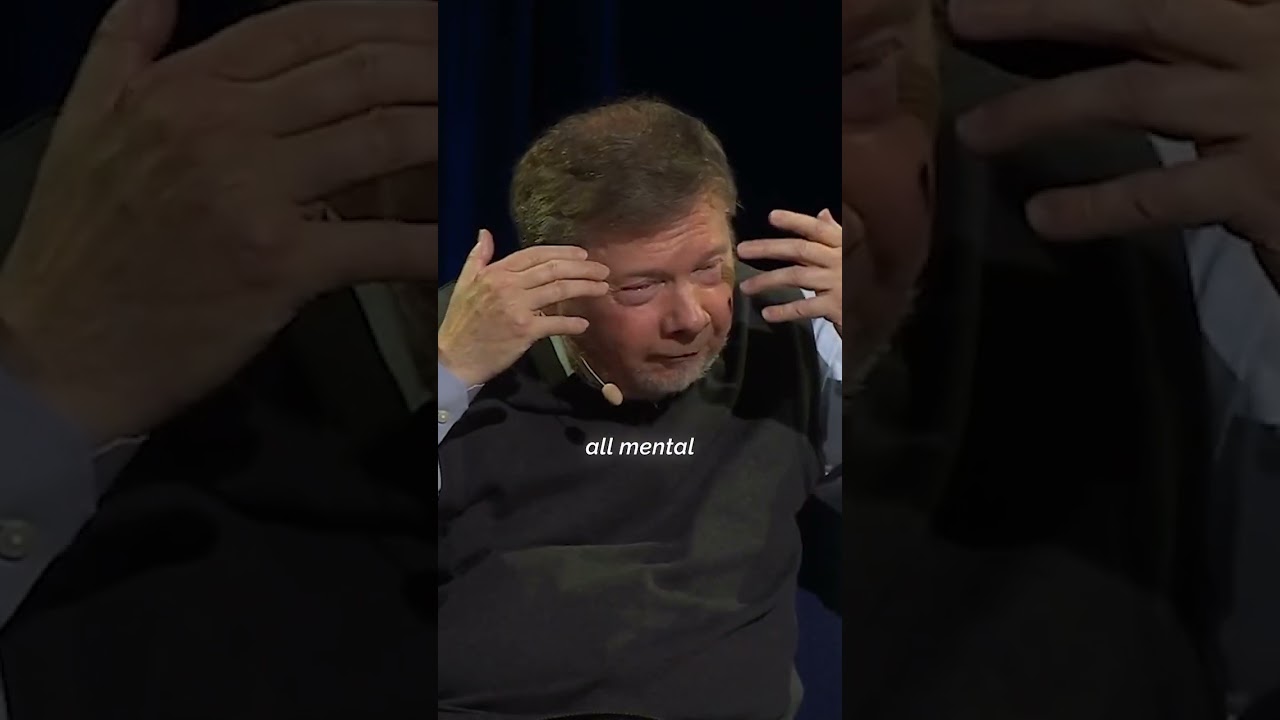
In unawakened consciousness, the world carries an enormous heaviness and seriousness—every small situation becomes magnified and draws us in completely. However, there exists a state of consciousness where the world is experienced as insubstantial, dreamlike, and light, not because nothing matters, but because we stop confusing what is relatively important with what is absolutely important. Accepting the impermanence of all forms—the fact that life is just a dash on a gravestone between birth and death—can detach us from the crushing seriousness of daily events and allow for a more peaceful, appreciative relationship with existence.
Why Does the Unawakened World Feel So Heavy?
In ordinary consciousness, everything carries weight. Every situation, no matter how small, becomes magnified and draws the mind in completely. A delayed email, a social slight, a work deadline—these become absorbing dramas that feel absolutely critical. The unawakened consciousness treats relative concerns as though they were absolute. Tolle points out that "everything is so serious and matters. Every tiny situation draws you in and it becomes so serious and you don't realize how insignificant most situations actually are."
This heaviness is not inherent to the situations themselves. Rather, it is a function of how consciousness relates to phenomena. When awareness is identified with the thinking mind and its judgments, the mind continuously magnifies minor events into major crises. The body tenses. Anxiety arises. The whole being becomes entangled in the drama. Nothing is seen in proportion.
This is why Tolle observes that suffering is not primarily caused by what happens, but by how we relate to what happens—by the state of consciousness we bring to experience. The world itself is neutral. But filtered through an identified, egoic consciousness, it becomes oppressive.
What Happens When Consciousness Shifts?
Tolle describes his own direct experience of a radically different state of consciousness. When identification with the thinking mind loosens, the entire quality of perception changes. The world no longer appears solid and heavy. Instead, it appears "somewhat insubstantial...a light show...like a dream." Yet this is not a cold dissociation or denial of reality. Rather, there is a simultaneous recognition that "everything is contained is in the process of disappearing and appearing and disappearing."
In this state, there is a recognition of what remains untouched by the flux of phenomena: what Tolle calls "timeless consciousness." From this perspective, forms arise and pass away, but the awareness witnessing them is unchanged. There is space around events rather than being pulled into them. Participation in life continues, but with detachment—the difference between being in a lucid dream and being asleep in an ordinary dream. In a lucid dream, you know you are dreaming, so events unfold but do not carry the same weight.
This is not nihilism or the belief that nothing matters. Rather, it is what Tolle calls a "lucid" relationship with the world. As he explains: "I don't see it as everything is totally illusory. There is something in the dream that is of the essence. And it is important that these dream figures that are sitting here should awaken out of the dream by realizing who they are beyond form."
The Ancient Truth of Impermanence: Heraclitus and Parmenides
Tolle draws on two pre-Socratic philosophers to illustrate a profound paradox. Heraclitus taught "Everything flows" (in Greek, panta rhei)—a teaching that aligns with the Buddhist doctrine of impermanence. Everything is in constant flux. Nothing lasts. The Buddha taught the same: whatever arises will pass away.
Parmenides, by contrast, taught that "nothing ever changes. The reality is unchangeable." These two philosophies seem contradictory, yet Tolle reveals that both are true depending on the level of reality we are discussing. Heraclitus was describing the world of form, the realm of phenomena constantly being born and dying. Parmenides was describing absolute reality—the timeless, unchanging consciousness itself.
This distinction is crucial. When we identify only with form (the body, thoughts, possessions, status), we experience constant change and instability, which breeds anxiety. But when consciousness recognizes what is timeless in itself, it can hold the flux of phenomena without being overwhelmed by it. The world continues to change, but it no longer has the same crushing significance.
The Gravestone Meditation: Contemplating the Dash
One of Tolle's most powerful practices is the gravestone contemplation. Look at a gravestone and notice the dates: birth date, death date, and between them a dash—often only two inches long, even on a large stone. That dash represents an entire lifetime: all the anxieties, all the suffering, all the drama, all the things that felt so terrible and important and heavy.
"All the anxieties and problems and suffering and things were so have so terrible the drama and so heavy and so important. What's left now? The dash between the date of birth and the date of death." This is not morbid contemplation for its own sake. Rather, contemplating impermanence in this way naturally detaches consciousness from the tyranny of relative concerns. When you really see that your entire life—with all its dramas—will be reduced to a small dash, the weight lifts.
This is why certain Buddhist traditions have monks meditate in morgues, surrounded by dead bodies. Such practice is extremely powerful because it forces direct confrontation with impermanence without the usual defenses of denial. In Western civilization, death is largely taboo. Seeing a dead body is nearly impossible unless it is a close relative. But in cultures where death is more openly encountered—such as in India, where bodies are taken to fire and burned within hours—the teaching of impermanence becomes visceral and undeniable. "That teaches you more about the reality of the fact of impermanence than any scripture," Tolle observes.
Relative Importance versus Absolute Importance
A critical distinction Tolle makes is between what is relatively important and what is absolutely important. Most people confuse the two.
Relatively important matters: whether your body is healthy, whether you live in a warm house or a cold tent, whether you have food and shelter. These things do matter in the world of form. They make a difference. Comfort is better than discomfort. Security is better than danger. There is no need to deny this or practice false indifference.
However, relatively important things are not absolutely important. What is absolutely important is knowing who you are beyond form—realizing the timeless awareness that witnesses all changes. Once that is established, you can enjoy sensory experiences and engage with the world without the crushing seriousness that typically accompanies them. "You don't need it but you enjoy it," as Tolle puts it.
Some spiritual traditions teach the opposite: despising the world, denying it completely, treating all material existence as worthless. Such traditions exist in both Eastern (Indian) and Western (Christian monastic) contexts. Tolle does not advocate this approach. "I believe not helpful because you're doing something before it there's never a despising of the world there's can be there's an appreciation of the world but without mistaking it for what it is not fully realizing the impermanence of it and yet enjoying that also."
The teaching is not to despise relative life but to understand its nature correctly. When you know that forms are impermanent, you can appreciate them fully without clinging. When you know who you are beyond form, you can enjoy the sensory world without needing it for your sense of self.
The Experience of a Lucid World
From this shifted consciousness, the world takes on a quality that might be called lucid. One interlocutor in the dialogue describes the experience: "I awakened and um it appeared to be a dream. So, um illusory and as you said and uh everything had a relative quality except from the the place where I was watching." The world appears to have a "relative quality"—it matters, but only relatively. There is always a place of awareness, untouched and spacious, from which the world is witnessed.
This state is not static. One may move in and out of it. The body may not always disappear from sensation—sometimes it is felt, sometimes not. Forms may come and go from awareness. The important thing is the shift in consciousness itself: the recognition that there is something in you that is not identified with form, something that is timeless and untouched by the flux.
From this vantage point, life loses its crushing seriousness while paradoxically becoming more vivid and alive. Colors may appear brighter. Sensations may be felt more keenly. Yet there is no grasping, no anxiety about loss. Things are enjoyed as they arise and naturally released as they pass.
Where to Go From Here
The practical application of these teachings is not complex: begin to notice where you confuse relative importance with absolute importance. Observe the situations that seem heavy and serious and ask yourself: in six months, in a year, will this still carry the same weight? Visit a cemetery and spend time contemplating the gravestone dash—the truth that your entire life is temporary. Notice the impermanence already present in your direct experience: the changing light, the breath entering and leaving, the thoughts arising and disappearing, the sensations in the body that come and go.
Most importantly, begin to distinguish between the witnessing awareness and what is witnessed. Who or what in you remains unchanged as everything changes? That inquiry itself begins to loosen identification with form and opens the door to a lighter, freer relationship with existence. The heaviness does not come from life itself. It comes from how consciousness relates to life. Change that relationship, and the world transforms—not because the world changes, but because you do.