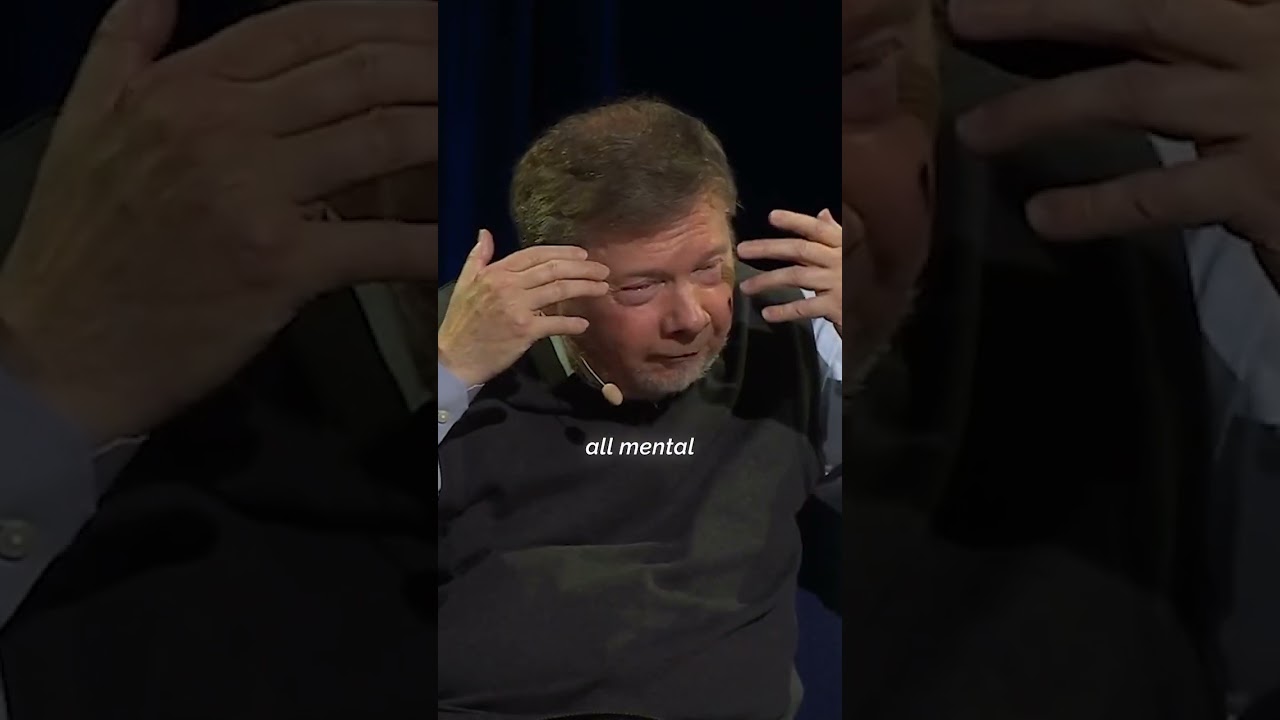
Thinking about death is not meant to trigger anxiety or dread, but rather to serve as a corrective lens that reveals the preciousness of the present moment. By remembering mortality, we stop wasting our lives on trivial pursuits and mental distraction, and instead inhabit the only time that actually exists: now. This practice is foundational to awakening consciousness and living with intentionality.
What is the real purpose of contemplating mortality?
The instruction to "remember death" appears across many spiritual and philosophical traditions—from Buddhism to Stoicism to Christian mysticism. Yet it is frequently misunderstood as morbid or anxiety-inducing. In this teaching, Eckhart Tolle clarifies that the purpose is not psychological harm, but awakening. Contemplating death is meant to interrupt the default mode of consciousness: the endless stream of thought, worry, and self-centered concerns that keep us trapped in a false reality.
When you truly recognize that your life will end—that this body, this version of "you," has a finite duration—a fundamental shift in perception becomes possible. The illusions that normally absorb your attention lose their grip. The petty grievances, the endless mental loops, the anxiety about how others perceive you, the postponement of joy until some imagined future moment—all of these are exposed as the time-wasting activities they are.
How does mortality awareness reveal what truly matters?
Most people live as if they have infinite time. This assumption generates a particular kind of consciousness: the consciousness of procrastination, distraction, and postponement. "I'll be happy when..." "I'll start living fully when..." "This difficult thing will eventually be over and then real life begins." But death is the ultimate teacher that there is no "eventually." There is only now.
When you hold the awareness of your own mortality, the present moment suddenly becomes luminous. The ordinary—a cup of tea, a breath, a conversation, sunlight on your face—is revealed as extraordinary because it is all you actually have. Not yesterday (which no longer exists), not tomorrow (which may never arrive), but this moment. This is not pessimism; it is clarity. It is the recognition that you have been given a gift of time, and that gift is always only the present.
This shift in perspective naturally reorders your priorities. Behaviors and pursuits that waste time—excessive social media scrolling, holding grudges, worry about trivial social slights, compulsive thinking about the past or future—become clearly visible as obstacles to living fully. Death contemplation is a tool for seeing through the pretense of the ego, which insists that you have all the time in the world to fix things, mend relationships, pursue what matters, or simply be present.
Does remembering death create fear or freedom?
There is a critical distinction here. Thinking about death—as an intellectual concept or as a source of morbid fascination—can indeed generate anxiety. This is the thought-based approach, where the mind imagines worst-case scenarios or dwells on the loss death represents. That is not the teaching here.
True death contemplation is a direct perception, not a thought. It is the simple recognition: "I am alive now, and I will not be alive forever." Held without drama, without the mind spinning stories, this recognition is liberating rather than frightening. It removes the illusion that you have endless time to live inauthentically, to chase false goals, or to delay presence.
In fact, the real fear is not fear of death—it is fear of wasting life. Many people spend their days in a state of chronic anxiety and distraction, never fully present, always mentally rehearsing the future or replaying the past. They are, in a real sense, not actually living. Paradoxically, contemplating the fact that life ends is what breaks you free from this living death. It restores the urgency that presence requires and the clarity that authentic living demands.
Why is this moment precious, not the next one?
There is a deep logical insight embedded in this teaching: the moment you are in right now is the only moment that is ever real. The past is a memory. The future is imagination. Both exist only in thought. Yet most people's attention is habitually pulled away from the present and into these mental constructs. We live in our heads, in time, rather than in reality, which is always here.
Death contemplation cuts through this confusion. If you knew that you had only one week to live, you would not spend it worrying about what people think of you. You would not squander it on resentment or planning. You would not be glued to a screen with your consciousness fragmented. You would be present. You would touch, listen, feel, and see. You would be aware that the person you love is here, now, and not guaranteed to be here tomorrow.
But the truth is: you do not know when you will die. No one does. This makes every single moment, including this one, equally precious. The assumption that you have "plenty of time" is an assumption, not a fact. The only certainty is that you are alive in this moment. Not in the next one—that one may never come. Not in the previous one—it is gone. Here, now.
How does this practice integrate into daily life?
Contemplating death is not a morbid exercise to be done once and forgotten. It is a practice—a return of attention to the reality of your own finite nature. It can be done in a moment: a simple acknowledgment that this body will not be here one day, that everything you see and know is temporary. This recognition, held without drama, has an immediate effect on consciousness. The mental noise quiets. The sense of urgency about truly irrelevant matters dissipates. You return to the present.
Over time, if this practice is repeated, the structure of consciousness itself shifts. You begin to live less from the conditioned patterns of thought and more from presence. You become less reactive to perceived threats to the ego. You are more patient, because you recognize that what you are worried about is almost certainly far less significant than the gift of being alive at all. You make different choices—choices that honor the preciousness of time rather than waste it.
This is not about becoming obsessed with death or living in a state of existential dread. Rather, it is about using the fact of mortality as a tool to wake up. Many spiritual traditions teach this explicitly: remember that you will die, so that you may truly live.
Where to go from here
If you are interested in deepening this practice, begin with a simple, direct recognition: you are alive now, and you will not always be. Notice what shifts in your consciousness when you hold this fact. Do the constant mental concerns feel as pressing? Does the present moment feel more vivid? You might also notice which activities in your day genuinely feel aligned with living fully, and which feel like time-wasting. Use that clarity to make intentional choices about how you spend your attention and energy. Finally, consider how this awareness might change your relationships—the recognition that the people you care about are also finite, also here only in this moment, can deepen presence and gratitude in ways that nothing else can.