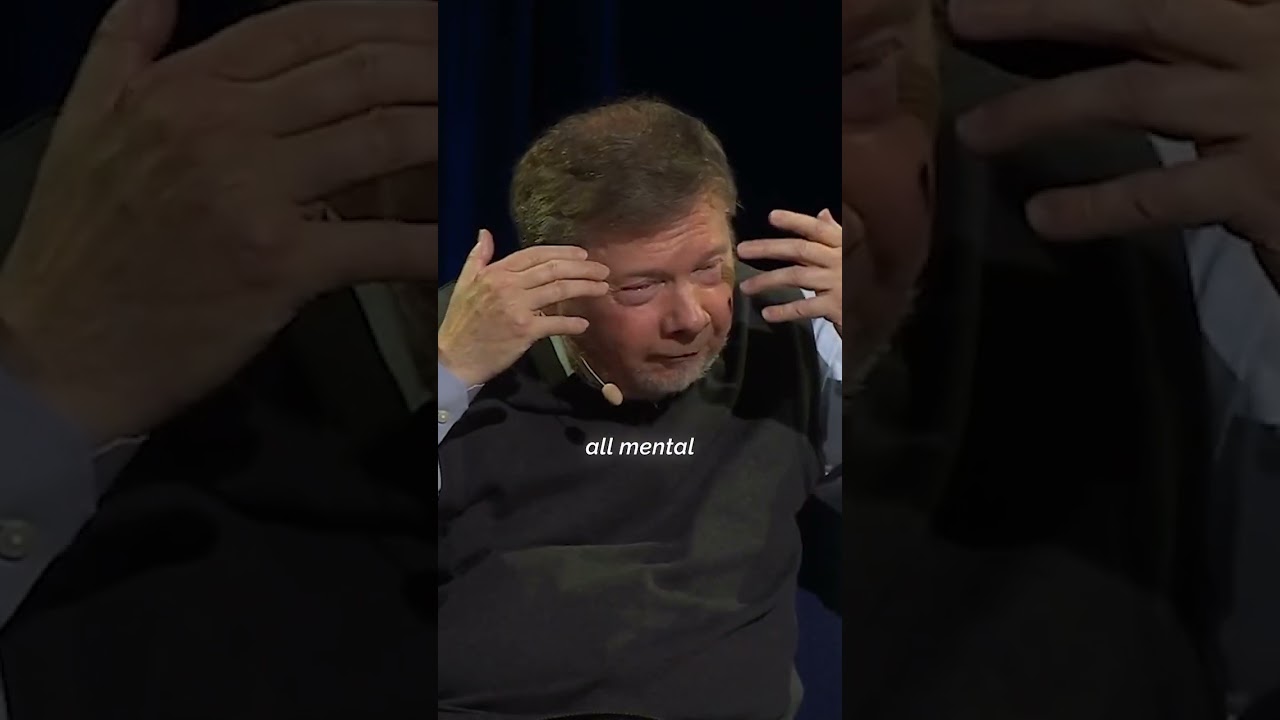
Constant mental noise pulls us away from the present moment, but clarity comes not through escaping thought but through returning to presence. Rather than fighting the mind or trying to quiet it, the practice involves recognizing when you've been lost in thought and gently bringing awareness back to the here and now. This shift from identification with mental content to simple presence—noticing breath, body sensation, or the immediate environment—interrupts the cycle of getting lost and offers a practical anchor when life demands full attention.
Why Do We Get Lost in Our Thoughts?
The human mind generates a constant stream of thinking—commentary, memory, projection, worry, planning. For most people, this internal dialogue runs on autopilot, and awareness becomes completely absorbed in it. We are not aware that we are lost; we are simply the thoughts, the voice in the head, the mental narrative. This is why getting lost in thought feels so seamless and complete.
The issue isn't that thought itself is bad. Thought is useful for practical tasks, problem-solving, and navigating daily life. The problem arises when thinking becomes habitual and continuous, even when it is not needed. The mind creates patterns of rumination, repetitive worry, or obsessive planning that serve no real function in the present moment. We replay past conversations, rehearse future scenarios, and judge our experience—all while the actual moment passes unnoticed.
This habitual thinking has become normal in modern life. We are trained to value the thinking mind, to identify with our thoughts and mental achievements. Few people are taught that there is a way to be conscious without being lost in the flow of thought. As a result, most people experience their lives filtered through a constant lens of mental commentary rather than as direct experience.
What Is the Difference Between Thinking and Being Lost in Thought?
There is a crucial distinction between using thought when it is necessary and being unconsciously lost in thought when awareness is needed. When you are truly present, you can think when required—you can solve a problem, have a conversation, plan a project. But when the task is complete, thinking naturally quiets. Your awareness is not trapped in the mind.
Being lost in thought means your awareness has become identified with the mental content. You are no longer the observer of thought; you have become the thoughts. This creates a kind of trance state where you are operating from habit and pattern rather than from clear perception. The mind dominates consciousness, and presence recedes into the background.
When you are truly thinking—using thought consciously for a specific purpose—you maintain a kind of inner spaciousness. There is an awareness that is aware of the thinking. But when you are lost in thought, this awareness collapses. There is only the thought itself, and no witness to it. This is why people can lose hours in worry or mental loops and not realize where the time went.
Why Escape Is Not the Answer
Many people try to deal with mental noise by attempting to escape it—through distraction, entertainment, substances, or constant activity. The assumption is that if you fill the mind with something else or tire it out enough, the unwanted thoughts will disappear. This approach fails because it does not address the root issue: identification with thought itself.
When you are trying to escape your thoughts, you are still caught in the mind. You are still giving thought primary authority—"I must get away from these thoughts, so I will distract myself." This reinforces the belief that thoughts are powerful and problematic. It also means you are not developing the capacity to be present alongside whatever the mind is generating.
True clarity does not come from a blank mind. It comes from a shift in consciousness—from being lost in thought to being present with experience. You can have thoughts arising while remaining conscious, aware, and centered. The thoughts no longer have the same power over you because they are no longer your whole reality.
The Practice: Recognizing and Returning to Presence
The first step is recognition. Throughout the day, pause and ask yourself: "Am I here right now, or am I lost in thought?" This simple question can wake you up to the present moment. Often, the answer reveals that you have been elsewhere mentally—replaying something, planning ahead, judging, or lost in some internal narrative. That recognition itself is valuable. It is the moment of awakening.
Once you recognize that you have been lost in thought, the next step is to return to presence. This is not a matter of trying hard or forcing the mind to shut up. It is much simpler. You simply shift your attention away from the mental content and toward direct sensory experience. This can be done in several ways:
- Notice your breath: Without trying to change it, simply become aware of the breath moving in and out. Feel the sensations of breathing—the coolness of the inhale, the warmth of the exhale. The breath always exists in the present moment, so attention to breath naturally anchors you to now.
- Feel your body: Bring awareness to physical sensation. Feel your feet on the ground, your hands, the weight of your body in a chair. Notice texture, temperature, or any subtle sensations. The body is always present; it cannot be elsewhere.
- Perceive the environment: Instead of thinking about what you see, simply see. Notice colors, shapes, light and shadow. Listen to sounds without labeling them. Smell, if there are scents present. Use the senses to anchor awareness in the immediate environment rather than in the mind's interpretation of it.
This shift from mental content to sensory presence is immediate and always available. It does not require belief or special ability. The moment you genuinely shift attention to your breath or body or the room around you, you are no longer lost in thought. You are present.
Why This Matters When Life Demands Attention
When life places demands on you—you have important work to do, someone needs your full attention, or a situation requires clear decision-making—being lost in thought is costly. You cannot be fully effective, creative, or responsive if part of your consciousness is trapped in internal mental loops. You may be in the situation physically, but not truly present.
Conversely, when you have developed the capacity to return to presence quickly and easily, you become more effective. You respond to what is actually happening rather than reacting from old patterns and fears. You listen better, think more clearly, and access an intelligence that goes beyond the personal thinking mind. Tasks are accomplished more efficiently because there is less internal resistance and distraction.
The practice is especially valuable in relationships and communication. When someone is speaking to you, your full presence is often the greatest gift you can offer. Yet most people are half-listening while their minds generate responses, judgments, or distractions. By returning to presence—by truly being with the other person rather than in your thoughts about them—you transform the quality of connection.
The Difference Between Trying to Quiet the Mind and Simply Being Present
A common misunderstanding is that presence requires a quiet mind. People then try to suppress thoughts or meditate in order to achieve mental silence. This creates tension because the attempt to force the mind to be quiet is itself a mental activity. You are still in the mind, still identified with it, just trying to control it.
The actual shift does not require the mind to be quiet. Even if thoughts are present, if your primary identification is with awareness rather than with the thoughts, you are present. You can have a busy mind and be fully conscious. Conversely, you can have a quiet mind and still be lost in subtle mental activity—a kind of internal spacing out or drifting.
The shift happens at the level of identification. Where is your sense of "I"? Is it located in the flow of thoughts—are you the thinker? Or is it in the awareness that observes both thought and the external moment? This shift is not intellectual; it is a direct shift in consciousness. And it happens through the simple act of bringing attention back to the body, breath, or senses repeatedly.
Building the Habit: Micro-Practices Throughout the Day
Presence is not a destination you reach and then keep. It is a choice that is available in each moment. The practice is most effective when woven into daily life rather than confined to a meditation cushion. This can be done through brief moments of attention throughout the day.
You might pause for a few breaths before stepping out of your car. You might take three conscious breaths before answering an email. You might feel your feet on the ground while standing in a line. These are micro-practices—small interruptions in the stream of habitual thinking. Over time, they rewire your default mode from "lost in thought" to "present and aware."
Each time you notice you are lost in thought and gently return to presence, you are strengthening the capacity. You are training consciousness itself, not the mind. The mind may still generate thought—that is its function. But increasingly, your identity and power rest in the awareness that is aware of thought, not in the thought itself.
What Happens When You Stop Getting Lost?
As the habit of returning to presence deepens, people report noticeable changes. The sense of constant internal anxiety quiets naturally—not because you are suppressing worry, but because most worry is mental activity that has no present object. Relationships improve because you are more genuinely present with others. Work becomes less stressful because it is not compounded by internal mental resistance and commentary.
More fundamentally, there is a shift in the sense of self. You begin to realize that "you" are not the thoughts, and this is profoundly liberating. The thoughts may continue, but they no longer define you or dictate your experience. You have access to a dimension of being that is deeper than thought—alert, aware, responsive, and peaceful.
This is not about becoming a person without thoughts. It is about no longer being imprisoned by thought. It is about reclaiming the awareness that thought arises within and using the mind as a tool when needed, rather than being used by the mind.
Where to Go From Here
The teaching is simple, but its practice is the most important work you can do. Start with recognizing, throughout the day, when you are lost in thought. Do not judge yourself for it; simply notice. Then, without effort or strain, shift your attention to your breath, your body, or your surroundings. Feel the immediate aliveness of the present moment. Repeat this again and again.
Over weeks and months of gentle practice, you will notice that presence becomes easier to access. The intervals of being lost in thought shorten. The quality of your life—your attention, your relationships, your effectiveness, your peace—shifts. What seemed like a constant mental problem becomes a tool you can put down when it is not needed.
This is the gateway to a different way of being. Not someday, when conditions are perfect or the mind has finally cooperated. But now, in this moment, by simply coming back to what is actually here.