EveryEvent Houston

Sfoglia tutti i Events

Find every event in Houston

events

Concerts & Live Music
Festivals
Sports & Recreation
Food & Drink
Arts & Culture
Community
Family & Kids
Nightlife
Comedy
Theater
Destinazioni popolari
BaliSedonaLos AngelesCosta RicaNew YorkSan FranciscoAustinMiamiJoshua TreeTulum
Vedi tutte le categorieVedi tutte le destinazioni

Esplora tutte le funzionalità

Strumenti potenti per far crescere i tuoi eventi

Funzionalità della piattaforma

Prezzi dinamici intelligenti
Categorie di biglietti
Posti assegnati
Recupero carrelli abbandonati
Recupero visitatori
Donazioni e prezzi variabili
Sistema affiliati
Scanner biglietti
Codici sconto
Domande personalizzate
Condivisione biglietti
Upsell e componenti aggiuntivi
Analisi e report
Sequenze email
Lista d'attesa / Notifica / Promemoria
Esplora
Discovery HubArtists & PerformersVenuesKnowledge Base
Vedi tutte le funzionalitàChi siamo
PrezziBlog
Sfoglia tutti gli eventi

events

Concerts & Live MusicFestivalsSports & RecreationFood & DrinkArts & CultureCommunityFamily & KidsNightlife

Destinazioni popolari

BaliSedonaLos AngelesCosta RicaNew YorkSan Francisco

Esplora

Discovery HubArtists & PerformersVenuesKnowledge Base

Funzionalità della piattaforma

Prezzi dinamici intelligentiCategorie di bigliettiPosti assegnatiRecupero carrelli abbandonatiRecupero visitatoriDonazioni e prezzi variabiliSistema affiliatiScanner bigliettiCodici scontoDomande personalizzateCondivisione bigliettiUpsell e componenti aggiuntiviAnalisi e reportSequenze emailLista d'attesa / Notifica / Promemoria
Vedi tutte le funzionalitàChi siamo
PrezziBlog
AccediRegistratiOrganizzatori di eventi
  • Browse All Events
  • Concerts & Live Music
  • Festivals
  • Sports & Recreation
  • Food & Drink
  • Arts & Culture
  • Community
  • Family & Kids
  • Nightlife
  • Tutte le categorie →
  • Galveston
  • Austin
  • San Antonio
  • Dallas
  • New Orleans
  • All Destinations →
  • For Promoters
  • For Artists
  • For Venues
  • For Festivals
  • For Event Spaces
  • For Nonprofits
  • For Bloggers
  • For Speakers
  • Brand Ambassador
  • Case Studies
  • Rete di 350K+ acquirenti
  • Recupero carrelli abbandonati
  • Prezzi dinamici intelligenti
  • Categorie di biglietti
  • Eventi ricorrenti
  • Posti assegnati
  • Sistema affiliati
  • Lista d'attesa / Notifica
  • Scanner biglietti
  • Widget incorporabile
  • Event Syndication
  • Message Center
  • Integrations
  • Reports
  • Tutte le funzionalità →
  • Chi siamo
  • The Ecosystem
  • Blog
  • Glossario
  • Inspiration
  • Centro assistenza
  • Contatti
  • Documentazione API
  • Risorse del brand
  • Carriere
  • Stampa
  • Termini di servizio
  • Informativa sulla privacy

Events

  • Browse All Events
  • Concerts & Live Music
  • Festivals
  • Sports & Recreation
  • Food & Drink
  • Arts & Culture
  • Community
  • Family & Kids
  • Nightlife
  • Tutte le categorie →

Getaways

  • Galveston
  • Austin
  • San Antonio
  • Dallas
  • New Orleans
  • All Destinations →

For Organizers

  • For Promoters
  • For Artists
  • For Venues
  • For Festivals
  • For Event Spaces
  • For Nonprofits
  • For Bloggers
  • For Speakers
  • Brand Ambassador
  • Case Studies

Funzionalità

  • Rete di 350K+ acquirenti
  • Recupero carrelli abbandonati
  • Prezzi dinamici intelligenti
  • Categorie di biglietti
  • Eventi ricorrenti
  • Posti assegnati
  • Sistema affiliati
  • Lista d'attesa / Notifica
  • Scanner biglietti
  • Widget incorporabile
  • Event Syndication
  • Message Center
  • Integrations
  • Reports
  • Tutte le funzionalità →

Azienda

  • Chi siamo
  • The Ecosystem
  • Blog
  • Glossario
  • Inspiration
  • Centro assistenza
  • Contatti
  • Documentazione API
  • Risorse del brand
  • Carriere
  • Stampa
  • Termini di servizio
  • Informativa sulla privacy
EveryEvent
© 2026 EveryEvent Houston. Tutti i diritti riservati.
Inspiration

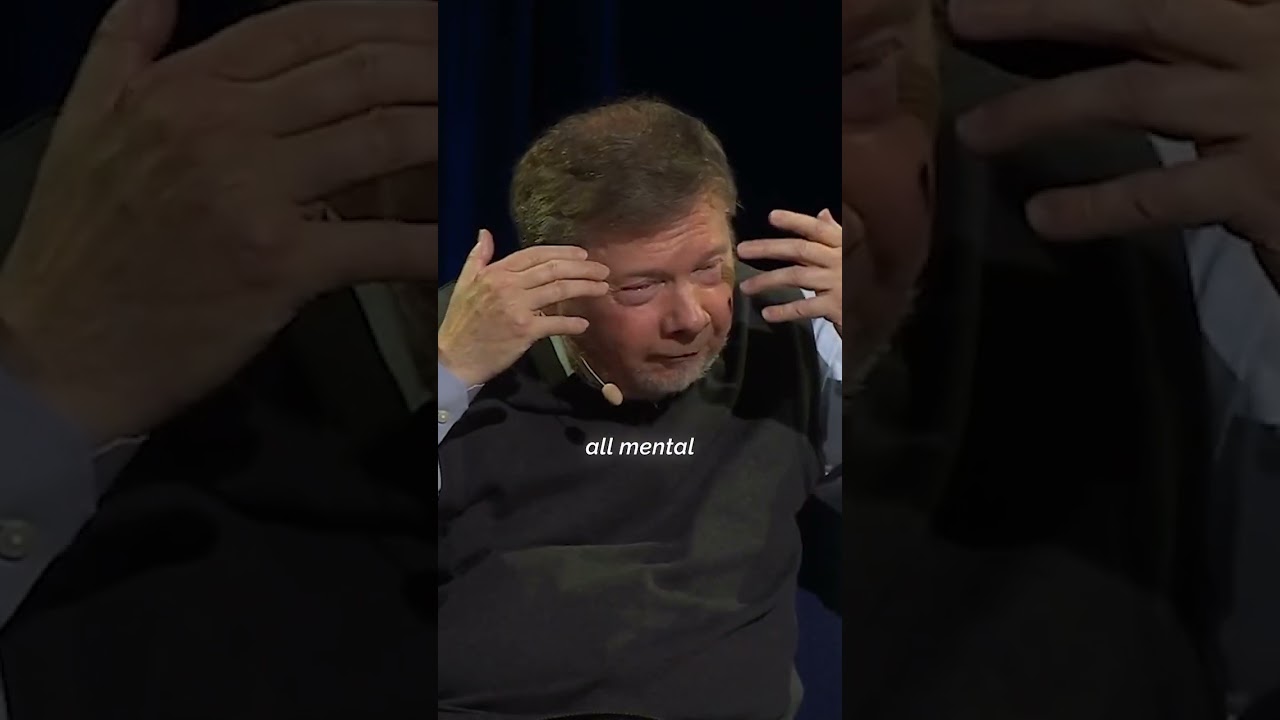
Why Most People AreTrapped in Time

Eckhart Tolle
Eckhart Tolle
Jan 26, 2026
6 min read
Read · 9 sections

Understanding the Paradox of Time

Time presents one of the deepest paradoxes in human existence. It arrives as a gift—a framework that allows us to plan, measure progress, and build toward meaningful goals. Yet for most people, this same temporal structure becomes a prison. The distinction between time as a useful tool and time as a cage lies not in the nature of time itself, but in how consciousness relates to it. When the mind becomes identified with past regrets and future anxieties, the present moment—the only place where actual life unfolds—disappears entirely.

How Time Begins as a Gift

In its initial form, time functions as a genuine aid to human development. The ability to reflect on past experiences allows learning. The capacity to project into the future enables planning and the achievement of long-term goals. Without this temporal dimension, growth would be impossible. A child learns from yesterday's mistakes and applies that knowledge to today's choices. An adult envisions a desired future and takes methodical steps to realize it. In this phase, time is understood correctly—as a practical tool rather than as an identity. The ego has not yet colonized the entire consciousness, and there remains some awareness of the present moment alongside temporal thinking.

When Does Time Transform Into a Prison?

The shift from time-as-tool to time-as-trap occurs gradually and almost imperceptibly. It happens when psychological identification with time becomes total. The mind becomes obsessed with what went wrong in the past—regrets, failures, humiliations—and simultaneously anxious about what might go wrong in the future—loss, rejection, death. This constant mental oscillation between past and future effectively erases the present. The body exists now, but consciousness is elsewhere, trapped in a timeline of suffering that exists only as thought.

In this trapped state, time becomes the enemy because it is experienced as a scarce resource constantly slipping away. The future is approached with dread rather than openness. The past is rehashed obsessively rather than learned from and released. Each moment is contaminated by temporal anxiety rather than lived as it actually is.

The Role of the Ego in Temporal Imprisonment

The ego—the psychological sense of self built from accumulated thoughts and memories—depends entirely on time for its existence. The ego cannot exist in the present moment because presence dissolves the illusion of a separate, continuous self. Therefore, the ego has a vested interest in keeping consciousness trapped in temporal thinking. It rehearses past grievances to prove it has been wronged. It projects future scenarios to prove it needs to remain vigilant and in control. This psychological mechanism is largely unconscious; most people do not realize they are being imprisoned by their own mind's relationship to time.

What Does Temporal Imprisonment Feel Like?

People trapped in time experience a pervasive sense of lack. There is never enough time. There are always unfinished tasks, unresolved conflicts, unrealized dreams. The present moment is experienced as a means to an end rather than as an end in itself. You are always doing something "for" a future moment rather than being fully present to what is occurring now. This creates a low-level anxiety that becomes so normalized it feels like the natural state of human existence. In reality, this anxiety is the signature of temporal imprisonment.

Additionally, people trapped in time often experience a sense of disconnection from life. They feel like observers of their own existence rather than participants in it. This is because presence—the gateway to genuine participation—has been sacrificed to mental time travel.

The Distinction Between Psychological Time and Clock Time

It is crucial to distinguish between clock time and psychological time. Clock time is a practical, objective measure used for coordination and planning. Psychological time, by contrast, is the mind's obsessive narrative about what was and what will be. Clock time can be useful; psychological time is almost always a source of suffering. You can use clock time to make an appointment without being trapped in psychological time. The distinction lies in whether you are identified with the temporal narrative or whether you use time as a tool while remaining primarily anchored in presence.

How Presence Liberates You From Temporal Imprisonment

The path out of temporal imprisonment is through the cultivation of presence—a shift from identification with thought toward direct awareness of what is happening now. When presence is activated, the past loses its grip. You can acknowledge what happened without being defined by it. Regret dissolves because you are no longer identified with the past self as if it were your current identity. Similarly, future anxiety lessens when you realize that the future does not actually exist; it exists only as a thought arising now. By meeting that thought with awareness rather than identification, you remain free.

Presence is not the absence of thought or time perception. Rather, it is awareness that includes thought without being trapped by it. In this state, you can still plan, remember, and anticipate—but from a grounded, conscious position rather than from identification with temporal narratives.

The Body as Gateway to the Present

One practical access point to presence is the body. The body exists only in the now; it cannot exist in past or future. By bringing conscious attention to bodily sensation—breath, heartbeat, the feeling of sitting or standing—consciousness naturally anchors in the present moment. This simple redirection of attention is a direct antidote to temporal imprisonment because it shifts awareness from the thought dimension (where past and future live) back to the sensory dimension (which is always now).

Where to Go From Here

If you recognize yourself in this description of temporal imprisonment, the first step is simply awareness. Notice when you are trapped in past regrets or future anxieties. Notice when the present moment has vanished from your consciousness. This noticing itself begins to loosen the grip of identification. From there, simple practices like conscious breathing, body awareness, and pausing throughout the day to ask "What is real right now?" can gradually shift your relationship to time. The goal is not to eliminate temporal thinking—which remains useful—but to reclaim your primary identity as the aware presence that exists now, while also having access to thought and time when needed.

Eckhart Tolle
AuthorEckhart Tolle

German-born spiritual teacher whose 1997 book The Power of Now became one of the most widely read spiritual works of the 21st century. After a profound transformation at 29 — movin…

View profileWebsite
Explore Topics
Temporal-consciousnessEgo-identityPresence-nowPsychological-timeConsciousness-mind

Got Questions?

Frequently Asked Questions

People become trapped in time through psychological identification with past regrets and future anxieties. The ego depends on temporal thinking for its sense of existence, so it keeps consciousness oscillating between what happened and what might happen, effectively erasing the present moment.
Using time means employing it as a practical tool for planning and learning while remaining anchored in presence. Being trapped in time means being identified with psychological narratives about the past and future, losing awareness of the actual now.
The sense of lack comes from mental time travel rather than actual time scarcity. By shifting awareness to the present moment through body awareness or conscious breathing, you recognize that what is happening now is sufficient. Time anxiety dissolves when you stop being identified with future scenarios.
Yes. Clock time can remain useful for planning and coordination while psychological identification with time narratives is released. The key is maintaining awareness of presence while thinking about past and future, rather than being completely identified with those thoughts.
The body exists only in the present moment; it cannot exist in past or future. By directing conscious attention to bodily sensation—breath, heartbeat, physical feeling—awareness naturally anchors in now, counteracting the mind's tendency to live in temporal narratives.
Psychological time—the mind's obsessive narrative about past and future—causes anxiety. Clock time itself is neutral. The anxiety arises from identification with thoughts about what was wrong or what might go wrong, not from time as a practical measure.

Continue Reading

More from Eckhart

View All
God Beyond the Sky: Rethinking Divine Nature
Featured

God Beyond the Sky: Rethinking Divine Nature

God is not an external judge deciding human suffering. Suffering itself becomes the mechanism through which consciousness awakens to itself.…

1 min read
God, Suffering, and the One Life Across Traditions
Featured

God, Suffering, and the One Life Across Traditions

Eckhart Tolle explores how Islam, Buddhism, and Greek philosophy all point to the same ultimate reality—and why the problem of suffering dis…

1 min read
Why Humanity Cannot Sit in Silence: Disconnection from Being
Featured

Why Humanity Cannot Sit in Silence: Disconnection from Being

The root of human conflict lies in disconnection from the being dimension—the inability to find peace when alone. When disconnected from bei…

1 min read
Who You Really Are Beyond Surface Identity
Featured

Who You Really Are Beyond Surface Identity

You are not your body, name, or conditioned mind. Eckhart Tolle reveals the distinction between surface identity and deeper being.…

1 min read

Keep exploring

Continue your journey

More wisdom and gatherings from across the BrightStar directory.

More Articles

Browse the full library of teachings, interviews, and guides.

Back to all articles →

Teachers & Artists

Explore the lineages, musicians, and guides of the conscious world.

Explore artists →

Find an Event

Kirtan, retreats, sound baths, breathwork, festivals — happening soon.

Browse events →
Read more from BrightStarCreate Free Account
Host your own gatherings?Try the Demo