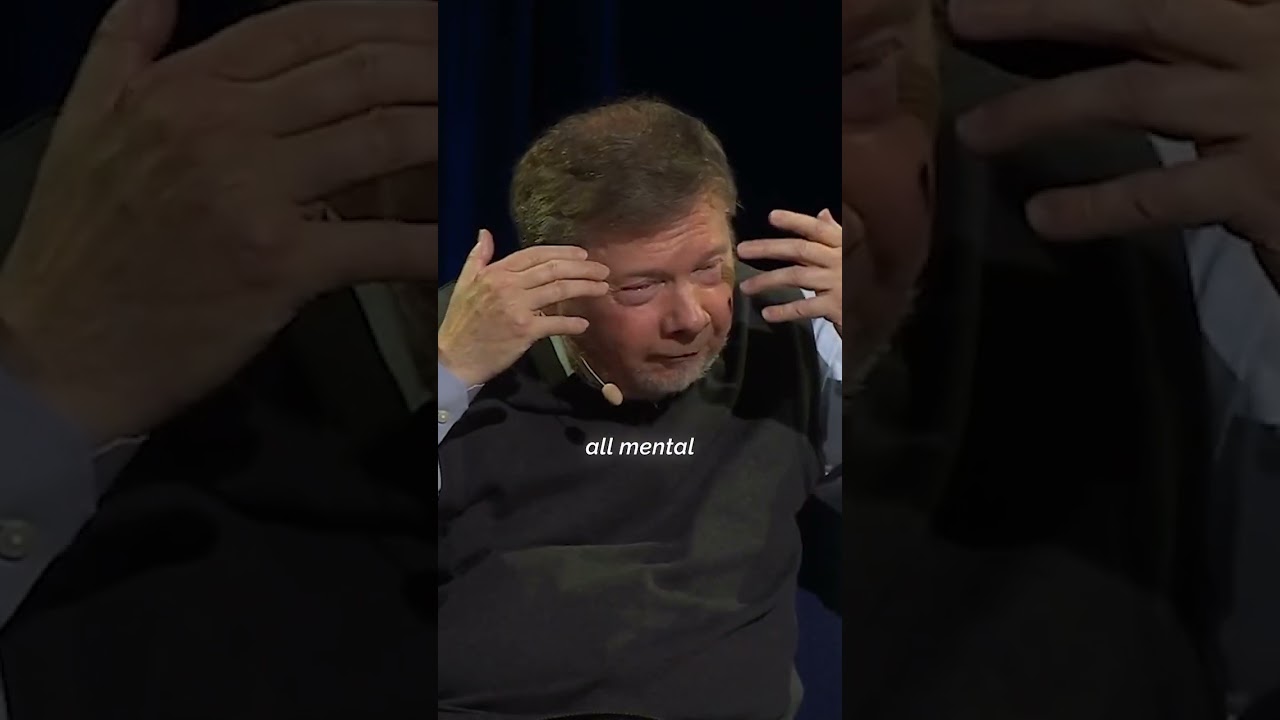
Eckhart Tolle explores why humans persistently suffer by revealing that the victim and perpetrator are not opposing forces but rather two manifestations of the same unconscious, ego-driven mind. Rather than viewing victimhood and perpetration as fundamentally different states, Tolle suggests they are complementary roles within an unconscious system that perpetuates suffering. Breaking this cycle requires recognizing the unconscious patterns that underpin both roles and awakening to presence beyond the ego's narrative.
What Are the Victim and Perpetrator Roles?
In the structure of human consciousness Tolle describes, the victim and perpetrator represent two sides of the same coin—both rooted in unconscious, egoic patterns. The victim identity positions oneself as wronged, powerless, or acted upon by external forces or other people. This role comes with a specific emotional tone: resentment, blame, helplessness, and a sense that one's suffering is caused by circumstances or other people beyond one's control.
The perpetrator, by contrast, appears to be the active agent—the one who causes harm, dominates, or exerts power over others. Yet beneath this surface, both roles serve the same unconscious purpose: they reinforce the ego's sense of separation, justify internal conflict, and maintain the illusion that suffering is inevitable and externally caused.
How Does the Victim-Perpetrator Dynamic Perpetuate Suffering?
The key insight Tolle presents is that neither role is truly separate from the other. When someone identifies as a victim, they unconsciously attract or create situations that reinforce victimhood. This is not about blame—it is about recognizing that the unconscious mind, when trapped in egoic patterns, magnetizes experiences that confirm its existing narrative.
Similarly, the perpetrator role is often adopted by those who have previously identified as victims but have inverted the dynamic. They seek power and control as a reaction to past powerlessness. Both are compensatory mechanisms of an unconscious mind defending itself against the original wound of separation from presence.
This cycle creates what Tolle might describe as a closed loop of suffering:
- The victim believes they are powerless and blames external circumstances. This belief structure generates suffering while simultaneously absolving the person of responsibility for change.
- The perpetrator believes they must dominate or control to feel safe. This generates suffering for both the perpetrator (through constant vigilance and tension) and those around them.
- Neither recognizes the role of their own unconscious mind in creating the situation. Without this recognition, the cycle repeats endlessly, with different people and contexts but the same underlying pattern.
Why Are These Roles Rooted in the Same Unconscious Mind?
Tolle's teaching is grounded in the understanding that the ego—the false sense of self constructed through identification with thoughts, memories, and narratives—operates beneath both roles. The ego, by definition, perceives separation and threat. It creates stories that justify its existence and maintain its control over consciousness.
In the victim role, the ego tells a story: "I am not responsible for my suffering because external forces have harmed me." This story gives the ego a clear enemy and a reason to remain vigilant and reactive.
In the perpetrator role, the ego tells a different story: "I must control others and circumstances to ensure my survival and dominance." This story also provides the ego with enemies (those it must dominate) and a sense of purpose through power.
Both stories are fundamentally unconscious. They are not consciously chosen but rather inherited, conditioned, and automatically activated in response to perceived threats. And both stories are false in the deepest sense—they obscure the reality of what one actually is beneath the ego's narrative.
What Happens When These Roles Interact?
The victim-perpetrator dynamic becomes particularly destructive when two people trapped in these roles encounter each other. A victim may unconsciously attract a perpetrator, confirming their victim narrative. A perpetrator may seek out victims to dominate, confirming their narrative of power through control. The relationship reinforces both parties' unconscious patterns, and each blames the other for the suffering that ensues.
More subtly, the same person may oscillate between these roles over time or even within a single relationship. Someone victimized by a perpetrator may eventually identify with the perpetrator role themselves, becoming the one who dominates or harms others. This role reversal appears to be a break in the cycle, but it is actually a continuation of the same unconscious pattern—merely wearing a different mask.
How Does This Explain Persistent Human Suffering?
Tolle's answer to why humans keep suffering centers on this central point: as long as people remain identified with either the victim or perpetrator role, they are trapped in unconsciousness. Both roles depend on a narrative of separation—the belief that one is fundamentally isolated, at war with the world, and responsible (or not responsible) for one's suffering in a way that justifies ongoing reactivity.
The suffering persists because the unconscious mind is rewarded by these roles. The victim gains sympathy, justification for anger, and an explanation for why change is not possible. The perpetrator gains a sense of power and control. Both gain a sense of identity and purpose, however painful. Unconsciously, the mind prefers the familiar pain of these roles to the unknown territory of awakening to presence.
Furthermore, families, societies, and institutions often reinforce these roles. Cultural narratives celebrate both victimhood (as a source of moral authority) and perpetration (as a source of strength and success). Children grow up learning to inhabit one or both of these roles as normal templates for relating to the world.
How Can One Escape This Cycle?
The path out of the victim-perpetrator cycle, according to Tolle's teaching, is through awakening to presence—to the awareness that exists prior to thought and narrative. This is not about positive thinking or changing one's story to a better version. It is about transcending the need for a story altogether.
The first step is recognition. One must notice when they are operating from the victim or perpetrator narrative. This requires honest self-observation without judgment. Am I blaming others for my suffering? Am I seeking power and control over others? Am I caught in a reactive pattern that confirms my sense of separation?
The second step is to withdraw identification from the narrative. This does not mean denying that harm has occurred or that circumstances are difficult. It means ceasing to build an identity around those facts. The victim role says, "I am someone to whom bad things happen." Presence says, "This is what is happening now—what is my conscious response?"
The third step is to accept what is, without the overlay of victimhood or the need to control. This acceptance is not resignation or passivity. Rather, it is clarity—seeing the situation as it is without the distortion of ego's defensive narratives. From this clarity, genuine change becomes possible.
Where to Go From Here
Understanding the victim-perpetrator dynamic as two faces of the same unconscious mind is a crucial insight for personal and relational healing. It points to the fact that neither blaming others nor trying to assert control over them addresses the root cause of suffering—which is unconsciousness itself, the identification with egoic narrative rather than presence.
To deepen this inquiry, consider exploring Tolle's other teachings on the ego, presence, and the power of now. Notice in your own life where you may identify with either of these roles and what emotional payoff they provide. Observe moments when you naturally step outside these narratives and into a more spacious, present awareness. These moments are glimpses of the consciousness that lies beyond the victim-perpetrator cycle—and that consciousness is available to you now.