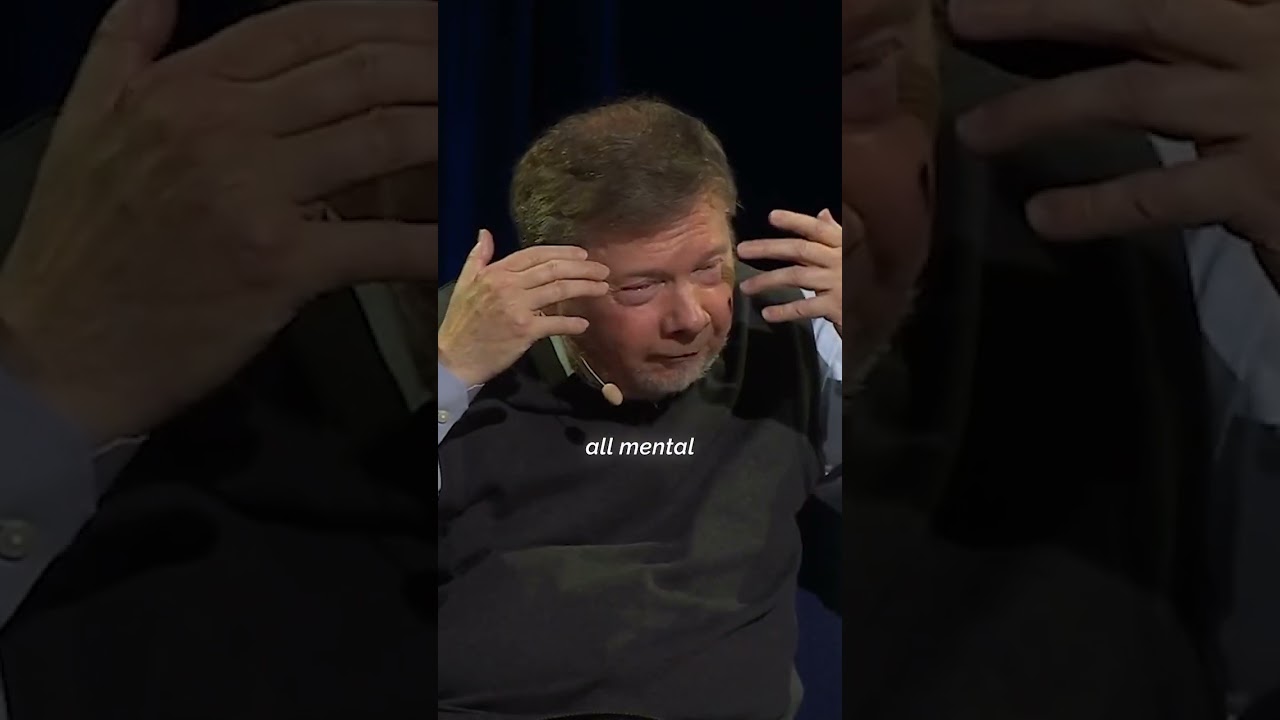
The body dies, but consciousness does not. Eckhart Tolle distinguishes between the personal sense of self—which does not survive death—and the deeper consciousness that inhabits form, which is inseparable from a singular, universal consciousness that transcends birth and death. Reincarnation is not primarily about returning in a new body, but about the habitual identification with thought and form that continues until you recognize your essence beyond these temporary manifestations. The fear of death dissolves the moment you realize what you truly are: consciousness itself, not a separate person.
What Actually Survives Death?
When discussing what happens at death, Tolle begins with a fundamental distinction: the person does not survive, but something deeper does. Most people conflate the two, assuming that "you"—meaning your personality, memories, and individual identity—will persist in some form. This is the central confusion about death and afterlife. What Tolle calls "the personal sense of self" is a temporary construction that dissolves at the body's death, just as the body itself does. Yet this is not the end of consciousness.
The deeper truth, as Tolle explains, requires understanding what you actually are beneath the personal layer. Every human being is consciousness manifesting as temporary form. The form—the body and mind—is what is visible and subject to decay. But the consciousness that inhabits and animates that form is not the same as the form itself. This consciousness is not your personal consciousness; it is a ray or spark of what Tolle calls "the one consciousness." This is the crucial insight: there is not many consciousnesses, but one consciousness expressing itself through countless forms.
What survives is this ray of consciousness in its essence—not as a separate, named individual continuing into an afterlife, but as a particular expression of the universal consciousness that was never born and cannot die. The essence of who you are, stripped of personal identification, does persist. The growth in consciousness you achieve during your lifetime becomes integrated into the whole. As Tolle states, "your growth in consciousness becomes part of the one consciousness. So the who you are in your essence survives."
The Difference Between the Body and Consciousness
Tolle describes a specific moment that makes this real: witnessing someone die or being present at the moment of death. There is an observable transition. While the body is inhabited by consciousness, it appears animated, present, alive with a being. Then, in a moment, the person transitions. The body becomes simply a body. The difference is immediate and undeniable.
This observation reveals what most people miss: "that being, as I said earlier, we are all ultimately invisible. And what you see of another person is relatively insignificant and not destined to survive." The visible form—the face, the body, the appearance—was never actually the being itself. It was a temporary vehicle through which consciousness was expressing. When the vehicle is no longer inhabited, it is obvious that the being and the body were never the same thing.
The person you see—the one with a name, history, personality—is what does not survive. That personal sense of self is so thoroughly identified with form (the body and the mental forms, the thoughts and emotions) that it has no existence apart from form. When the form dissolves, the identification dissolves with it. But the consciousness that was looking through the eyes of that person, aware of that form, is not trapped in form. Consciousness is not a function of the body; the body is an expression of consciousness.
Consciousness and the One Life
At the deepest level, Tolle teaches that consciousness is singular, not plural. There is not "your consciousness" and "my consciousness"—separate units of awareness. This is a fundamental misunderstanding created by identification with form. There is only consciousness, which manifests through you as a particular ray or expression. This consciousness is "inseparable from the one consciousness."
Because consciousness is singular and universal, it cannot be subject to birth and death. Birth and death apply to forms—bodies that emerge and dissolve. But consciousness itself is timeless. It does not begin when a body is born and end when a body dies. What appears to be your individual consciousness is actually the one consciousness experiencing life through the form you inhabit.
This is not mystical abstraction but a recognition with profound practical implications. Every human being, according to Tolle's intuition, is the one consciousness experiencing and learning and evolving. Even the most insignificant life form contributes to the evolution of consciousness itself. When you die, the essence of what you have learned—not the details of your personal story, but the growth in consciousness itself—becomes part of the whole. Your awakening, your clarity, your compassion, these become woven into the fabric of consciousness itself.
What Is Reincarnation Really About?
Tolle reframes reincarnation in a way that moves beyond belief in literal rebirth into new bodies. He acknowledges that reincarnation is real, but says it is "much" more than what most people think. The deeper meaning can be experienced directly, here and now, rather than treated as a metaphysical belief about future lives.
The word itself reveals the teaching: "carnate" comes from flesh, from form. "Reincarnation" literally means re-entering form, or identifying with form. The primary reincarnation happening continuously in the human experience is not what happens after death, but what happens moment to moment in your mind. "The most basic reincarnation that happens continually to human beings is the complete identification with every thought form that comes into their heads and then they become it."
Every time you identify completely with a thought, every time you lose yourself in emotion, every time you collapse your sense of being into a mental or emotional form, you are reincarnating. You are placing your consciousness entirely into form—into the thought, the emotion, the story—and forgetting that you are the consciousness aware of these forms, not the forms themselves. This happens hundreds of times per day in the unconscious mind. This is the mechanism of reincarnation that can be directly observed and transformed.
When consciousness becomes "completely drawn into form" and "does not know itself as consciousness," it only experiences itself as form. This is the state of most humans who are not awakening. And this compulsion to identify with form, to reincarnate into every thought and emotion, does not simply end at physical death. If you are still caught in this pattern at the end of your life, if your consciousness is still habitually diving into form and losing itself there, this pattern will continue. The compulsion to reincarnate—to be born again into form, to take on a new body—follows from this fundamental identification.
However, if you break this pattern in this lifetime by recognizing your essence beyond form, by allowing consciousness to know itself as consciousness rather than being trapped in form, then "that realization does not leave you." When you die, you carry with you the freedom you have already found through this recognition. You have already died to the identification with form, and therefore physical death holds no compulsion, no necessity to be reborn.
How the Fear of Death Dissolves
The fear of death is fundamentally the fear of the ego—the personal sense of self—coming to an end. And that fear is reasonable if you believe the personal self is all that you are. But the moment you recognize what you truly are, the fear evaporates.
Tolle introduces the teaching of "dying before you die." This is not metaphorical suicide but the voluntary surrender of identification with form, with thought, with the personal self. When you meditate, when you rest in awareness beyond thought, when you stop defending and defining yourself through the mind, you are experiencing a small death. In these moments, the ego temporarily dissolves, and you remain—conscious, present, aware. You do not disappear. Nothing essential is lost. Only the false identity, the constructed self, falls away.
"When you die as an ego in this lifetime, that is called die before you die. Then you already know that as a living experience that you in your essence are beyond death." This is not abstract philosophy but a practical realization available to anyone willing to investigate who and what they truly are. As the ego begins to dissolve through this recognition, the fear of death begins to dissolve as well, because you have already experienced that consciousness persists when the personal identity loosens its grip.
The conclusion is stark and liberating: "I'm never going to die. And you are not either. But of course the body will dissolve." The body will die because it is form, and all form is temporary. But you—the consciousness aware of the body—were never born and will never die. You have always been here, in the present moment, the only place where life actually occurs. There is nowhere to go, no future life to achieve or avoid. There is only this, now, and the recognition of what observes this now.
Where to Go from Here
The teaching points to a single practice: notice, throughout your day, when you are identified with form—with thoughts, emotions, reactions, and the story of self. Notice the compulsion to dive into these forms and become them. Notice the moment when you remember that you are not the thought, not the emotion, not even the body. You are the awareness in which all of these appear. This is not a belief to adopt but an experience to discover directly. As this recognition deepens, the fear of death naturally dissolves, and the freedom that awaits you after death is revealed to already be present within you now.