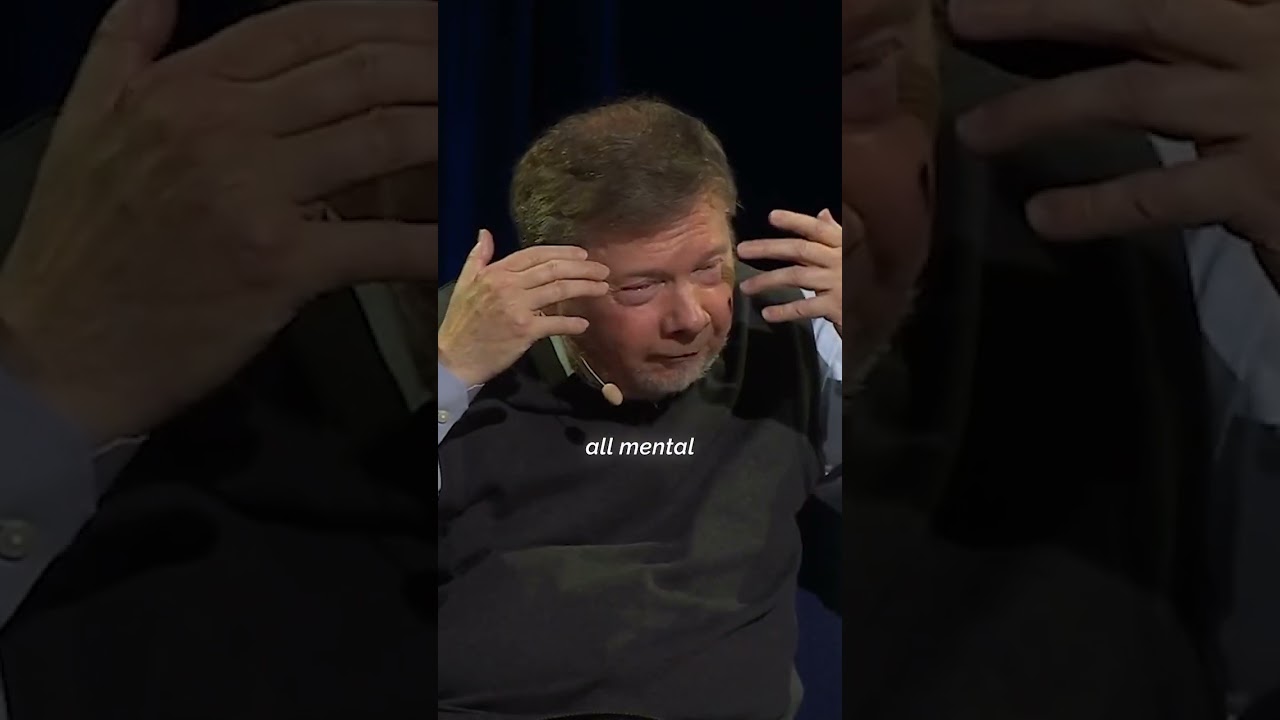
True inner freedom arrives not when external conditions improve, but when you cease identifying with reactive thoughts and emotional patterns triggered by those conditions. Through mindful observation of thoughts without judgment, you discover a spacious awareness—your true Being—that remains untouched by circumstance. This teaching unpacks how habitual mental judgments keep you trapped in reactivity, offers concrete practices for staying grounded when triggered, and reveals how presence itself becomes the foundation of unshakable peace, regardless of what life presents.
Why Do External Events Control Your Emotional State?
Most people operate under a fundamental misunderstanding: that their inner peace depends on outer circumstances being favorable. A rude comment from a colleague, traffic, a family conflict, or an unexpected setback sends them into reactivity. This is not because their circumstances are genuinely difficult—it is because they have unconsciously handed control of their inner state to external conditions. Every time you believe "I can only be at peace when X happens," you have surrendered your freedom.
The mechanism is simple. An event occurs. Immediately, the mind produces a judgment: "This shouldn't be happening" or "This is annoying" or "This is unfair." You identify with that judgment as if it is truth. The identification creates an emotional contraction. You feel disturbed, and you assume the disturbance comes from the event itself. In reality, it comes from the thought-pattern you have activated in response to the event. The event is neutral; your habitual thinking patterns are what generate suffering.
How Do Habitual Mental Judgments Keep You Trapped?
The human mind has a deeply ingrained habit: it constantly judges and labels experience. Something happens, and before you can even observe it clearly, the mind has already labeled it as "good" or "bad," "should" or "shouldn't." This is not evil—it is simply the conditioned mind doing what it has been trained to do. But when you believe these judgments are absolute truth, you become enslaved to reactivity.
Consider an annoyance. Your partner leaves a dish in the sink. The moment you see it, the mind says: "They shouldn't do this. This is inconsiderate. This is like them." Notice what happens next: you feel irritated, and you assume the irritation is justified because the situation is genuinely problematic. But the situation is just a dish. The real problem is that you have contracted your consciousness around a judgment. You have merged your awareness with the thought-pattern, and now your emotional state is hostage to whether the dish gets moved.
This mechanism repeats endlessly. Traffic creates frustration. A work email creates anxiety. A memory creates regret. Each time, the thought-pattern—the judgment, the story, the "should"—comes first. The emotional disturbance follows. And because you have never learned to distinguish between the thought and the reality, you believe the disturbance proves the situation is genuinely bad. The habit goes unexamined.
What Happens When You Stop Identifying With Thoughts?
The teaching here is radical: most of the thoughts that arise are not who you are. They are movements of conditioned mind. When you see a thought arise—"This is unfair," "I am bad," "This will go wrong"—you have a choice. You can identify with it and make it your reality. Or you can observe it as a mental event, the way you might observe a cloud passing across the sky.
This distinction is the beginning of freedom. To observe a thought without identifying with it requires presence. You must be aware of the thought rather than lost in it. And this awareness—this capacity to witness—is not the thought itself. It is something deeper. It is your Being, your consciousness, prior to the mind's activity.
When you learn to stay present with a triggering situation, something shifts. You notice the urge to judge, the urge to contract, but you do not automatically obey it. Instead, you observe. You might notice: "The mind is now producing the story that I should be upset." Just naming it creates space. Instantly, you are no longer completely fused with the thought. A freedom opens. You still see the dish in the sink, but you are not hostage to whether it upsets you. You have reclaimed your inner autonomy.
How Can You Stay Grounded When Triggered?
The practice is straightforward but requires consistent attention. When you notice yourself reactive—irritated, anxious, contracted—pause. Do not try to change the situation or force yourself to feel differently. Instead, become aware of the sensation of the contraction itself. Where do you feel it? Chest? Throat? Stomach? Bring your attention directly to the physical sensation without labeling it as "bad."
This simple act of turning attention inward toward the sensation, rather than outward toward the story about why you are upset, interrupts the reactivity. The story (the thought-pattern) is what drives the emotional charge. When you shift attention to the raw physical sensation and observe it with curiosity rather than resistance, the energy of the contraction begins to move and dissolve. You are no longer feeding it with mental fuel.
You can also practice this in real-time awareness. Someone says something that would normally trigger you. Instead of immediately reacting, notice: "A thought has arisen. I am observing it." This tiny gap—this moment of awareness—is where freedom lives. In that gap, you are not compelled to react according to the old pattern. You can respond consciously, or you can choose not to engage. The difference between reaction and response is this: reaction is unconscious, automatic, habitual. Response is conscious. It comes from presence rather than conditioned patterns.
What Is the Relationship Between Presence and Inner Peace?
Presence is the state of consciousness that is aware of now, without resistance to now. Most people are almost never fully present. Their awareness is tangled in thoughts about past or future. "I should have done that differently." "What if this goes wrong?" The moment consciousness gets caught in time-based thinking, it loses contact with the peace of Being, which only exists now.
Inner peace, then, is not an emotion you achieve. It is not something you have to generate or work hard to create. It is what remains when the mind stops contracting against reality. Right now, beneath all the mental activity, Being is here. It is untouched. It is whole. But you cannot feel it while you are completely identified with the thinking mind, which is always dividing reality into "wanted" and "unwanted."
When you are fully present—aware of the breath, the body, the sounds around you, all without judgment—the quality of aliveness increases. There is a peaceful acceptance of what is. Not resignation, not passivity, but a clarity that comes from not fighting internally with reality. The funny thing is: when you stop fighting reality internally, you often become more effective at addressing actual problems. You act from a clear mind rather than from the fog of reactivity.
Can You Experience Peace in Difficult Circumstances?
One of the deepest misunderstandings is that peace requires a peaceful external situation. In reality, peace is available even in challenging circumstances. It is available because the peace you seek is not created by circumstances—it is obscured or revealed by your relationship to circumstances.
Consider someone dealing with genuine loss or pain. If they are fighting against the reality of the loss, telling themselves "This shouldn't be happening," they will suffer twice: once from the circumstance itself, and again from the internal resistance to it. But if they can meet the circumstance with full presence—acknowledging the pain while not adding a layer of mental denial—something different occurs. The pain is there, but it is not compounded by the suffering of resistance. There is even a strange kind of peace that can coexist with genuine sadness, because consciousness is not fragmented.
This is not about positive thinking or pretending difficulty is fine. It is about relaxing the contraction of the mind against what is true. When you stop insisting that reality should be other than it is, there is freedom within the circumstance itself.
Where to Go From Here
The teaching points toward a daily practice: noticing the moment of reactivity, observing the thought-pattern or judgment that has arisen, and coming back to presence. Notice how often the mind judges throughout your day. Notice when you feel contracted, and ask: "What thought have I believed right now?" Do not judge yourself for having the thought. The goal is not to eliminate thoughts but to stop being completely identified with them.
In each moment that you remember to return to presence, you are reclaiming your freedom. This is not a future achievement. It is available now. And as you practice, you may notice that the fundamental peace of Being is not fragile. It does not depend on everything going your way. It is stable because it is not dependent on changing conditions. It is you prior to the mind's judgment of conditions. That is the unshakable peace this teaching points toward.