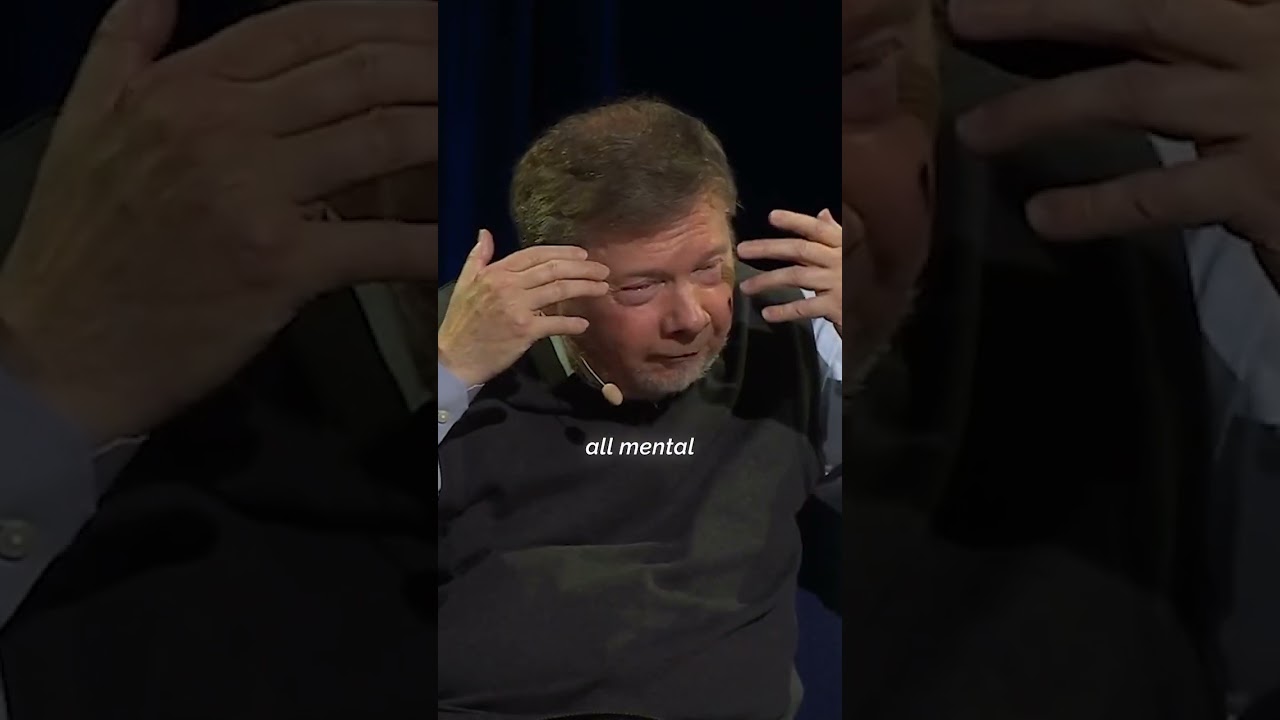
Eckhart Tolle explores the possibility of releasing the compulsive need to fill every moment with thinking, instead resting in a state of simple, pure awareness. Rather than analyzing or conceptualizing stillness, he emphasizes that true stillness is something to be directly experienced—a shift from mind-based understanding to presence itself.
Do You Need to Fill Every Moment with Thought?
Most people operate with an unexamined assumption: that thinking must be continuous. The mind generates a constant stream of thoughts—commentary, planning, analysis, worry, memory—and many believe this is simply what consciousness does. Tolle invites a fundamental question: is this constant mental activity actually necessary, or is it a habit we have been conditioned to accept?
The conditioning runs deep. From childhood, we are taught to value mental activity as synonymous with intelligence, productivity, and control. The mind becomes the primary tool through which we navigate the world. Yet this relentless mental activity often obscures something simpler and more fundamental: the awareness itself that observes all thinking.
The suggestion here is not that thinking has no value. Rather, Tolle points toward a gap or space that exists between thoughts—and more importantly, the awareness that can rest in that space without immediately filling it with more mental content.
What Is Simple Awareness Without Thinking?
Pure awareness is distinct from thought. While thinking is a process—words, images, concepts strung together—awareness is the background presence in which all thought occurs. It is the capacity to be conscious, to perceive, to know. You can be aware without actively thinking.
This state is often called "simple awareness" because it requires no interpretation or mental effort. It is not a blank void but rather a vivid, alert presence. In this state, sensory experience continues: you see, hear, feel, but without the overlay of mental narration. The world is still there; only the compulsive mental commentary has quieted.
Accessing this awareness is not exotic or rare. You have already experienced it in brief moments: when you become absorbed in something—a piece of music, a natural landscape, a conversation where you listen without planning your response. In those moments, thinking has receded into the background. What remains is presence, attention, direct experience.
Can You Rest in Awareness Rather Than Always Figuring Things Out?
The human mind has a strong habit of "figuring things out"—interpreting experience through concepts, analyzing, making sense, strategizing. This is the thinking mind's default mode, and it serves certain practical purposes. Yet when this mode becomes constant, even in moments where figuring things out is unnecessary or counterproductive, it creates unnecessary tension and disconnection from life as it actually is.
Resting in simple awareness means allowing your primary mode to shift from "figuring out" to "experiencing." Instead of asking "What does this mean?" or "What should I do?", you allow yourself to simply perceive without that interpretive layer. A sound is just a sound. A sensation is just a sensation. A moment is just a moment.
This is not passivity or avoidance. When action is genuinely needed, intelligence flows from this rested state more naturally and more appropriately than from anxious thinking. But in the many moments where no action is required—which is most of life—the constant attempt to figure things out creates a subtle exhaustion and disconnection from what is happening now.
Why Is Stillness Not Something to Analyze?
There is a common trap: using the thinking mind to try to understand or achieve stillness. People read about non-dual states, meditation techniques, or spiritual concepts and then attempt to think their way into stillness. They create a mental goal: "I will attain stillness." This approach contains an inherent contradiction. The thinking mind's job is to categorize, explain, and strategize. When it tries to attain something it cannot conceptualize, it only generates more mental activity.
Tolle's key insight is that stillness is not a concept to be analyzed—it is a state to be experienced. You cannot think your way into it; you can only stop thinking and discover that it is already present. This is why he emphasizes that stillness is "something to experience," not something to understand intellectually first.
This distinction is crucial. Many spiritual seekers remain caught in the intellectual realm, believing that if they just understand the right concept or teaching, then stillness will follow. But the actual gateway is different: it is the cessation of the need to understand in that moment, the willingness to simply be, to simply perceive, to simply rest in awareness without grasping for anything more.
How Do You Practice the Absence of Thinking?
The phrase "practice the absence of thinking" may sound paradoxical. You cannot think your way into non-thinking. Rather, this practice involves deliberately stepping back from the automatic habit of continuous thought.
One approach is to bring attention to the present moment in a way that engages your senses directly: notice sounds without naming them, feel your body without analyzing how you feel, observe the space around you without commentary. As you do this, the discursive thinking—the inner narrative—naturally recedes. You are not suppressing thoughts; you are simply withdrawing attention from them.
Another aspect is recognizing the gaps between thoughts. These gaps already exist; the practice is learning to notice them and rest in them for longer. At first, you may only notice gaps that last a fraction of a second. With practice and habitual return to awareness rather than thought, these gaps naturally expand.
Importantly, this is not about achieving a permanent state where thinking never occurs again. Rather, it is about recognizing that you have a choice: you can think when thinking is genuinely useful, and you can rest in awareness when constant thinking is not necessary. Most people have never made this choice consciously; they have assumed thinking must always be on.
What Is the Difference Between Stillness and Blankness?
A common misunderstanding is that stillness equals blankness or unconsciousness. This is not accurate. Stillness is a state of profound aliveness and awareness. The difference is that in stillness, awareness is not being channeled primarily through the thinking function.
When you sit in nature in genuine stillness, your awareness is heightened. You notice subtle sounds, movements, the quality of light, the texture of air. Your senses are awake. Your intuition may be sharper. Yet the constant commentary—"I like this," "I don't like that," "I should be doing something else"—has quieted. This is not blankness; it is clarity without mental noise.
This distinction matters because people sometimes fear that resting in stillness will make them passive, disconnected, or unable to function. In reality, many people report the opposite: decisions come more clearly, responses to situations are more appropriate, and life flows with less resistance when they are not constantly running a mental commentary.
Where to Go From Here
If this perspective resonates, the next step is simple experimentation. Rather than accepting the assumption that your mind must be active at all times, begin to notice moments where thinking is not actually necessary. Notice the quality of awareness in those moments. You do not need special conditions or years of meditation practice to begin. Any moment—while washing dishes, walking, sitting in a waiting room—can become an opportunity to rest in simple awareness instead of engaging the thinking mind.
The invitation is to directly investigate: What happens when I stop trying to figure things out for a moment? What is the quality of awareness when thinking naturally quiets? Does it feel empty or full? Numb or alive? Only direct experience will answer these questions for you. Stillness, after all, is not meant to be understood. It is meant to be lived.