EveryEvent Houston

Parcourir tous les Events

Find every event in Houston

events

Concerts & Live Music
Festivals
Sports & Recreation
Food & Drink
Arts & Culture
Community
Family & Kids
Nightlife
Comedy
Theater
Destinations populaires
BaliSedonaLos AngelesCosta RicaNew YorkSan FranciscoAustinMiamiJoshua TreeTulum
Voir toutes les catégoriesVoir toutes les destinations

Explorer toutes les fonctionnalités

Des outils puissants pour développer vos événements

Fonctionnalités de la plateforme

Tarification dynamique intelligente
Catégories de billets
Places assignées
Récupération des paniers abandonnés
Récupération des visiteurs
Dons & Prix variables
Système d'affiliation
Scanner de billets
Codes promo
Questions personnalisées
Partage de billets
Ventes additionnelles & Options
Analyses & Rapports
Séquences d'emails
Liste d'attente / Notifier / Rappeler
Explorer
Discovery HubArtists & PerformersVenuesKnowledge Base
Voir toutes les fonctionnalitésÀ propos
TarifsBlog
Parcourir tous les événements

events

Concerts & Live MusicFestivalsSports & RecreationFood & DrinkArts & CultureCommunityFamily & KidsNightlife

Destinations populaires

BaliSedonaLos AngelesCosta RicaNew YorkSan Francisco

Explorer

Discovery HubArtists & PerformersVenuesKnowledge Base

Fonctionnalités de la plateforme

Tarification dynamique intelligenteCatégories de billetsPlaces assignéesRécupération des paniers abandonnésRécupération des visiteursDons & Prix variablesSystème d'affiliationScanner de billetsCodes promoQuestions personnaliséesPartage de billetsVentes additionnelles & OptionsAnalyses & RapportsSéquences d'emailsListe d'attente / Notifier / Rappeler
Voir toutes les fonctionnalitésÀ propos
TarifsBlog
ConnexionS'inscrireOrganisateurs d'événements
  • Browse All Events
  • Concerts & Live Music
  • Festivals
  • Sports & Recreation
  • Food & Drink
  • Arts & Culture
  • Community
  • Family & Kids
  • Nightlife
  • Toutes les catégories →
  • Galveston
  • Austin
  • San Antonio
  • Dallas
  • New Orleans
  • All Destinations →
  • For Promoters
  • For Artists
  • For Venues
  • For Festivals
  • For Event Spaces
  • For Nonprofits
  • For Bloggers
  • For Speakers
  • Brand Ambassador
  • Case Studies
  • Réseau de 350K+ acheteurs
  • Récupération des paniers abandonnés
  • Tarification dynamique intelligente
  • Catégories de billets
  • Événements récurrents
  • Places assignées
  • Système d'affiliation
  • Liste d'attente / Notifier
  • Scanner de billets
  • Widget intégrable
  • Event Syndication
  • Message Center
  • Integrations
  • Reports
  • Toutes les fonctionnalités →
  • À propos
  • The Ecosystem
  • Blog
  • Glossaire
  • Inspiration
  • Centre d'aide
  • Contact
  • Documentation API
  • Ressources de marque
  • Carrières
  • Presse
  • Conditions d'utilisation
  • Politique de confidentialité

Events

  • Browse All Events
  • Concerts & Live Music
  • Festivals
  • Sports & Recreation
  • Food & Drink
  • Arts & Culture
  • Community
  • Family & Kids
  • Nightlife
  • Toutes les catégories →

Getaways

  • Galveston
  • Austin
  • San Antonio
  • Dallas
  • New Orleans
  • All Destinations →

For Organizers

  • For Promoters
  • For Artists
  • For Venues
  • For Festivals
  • For Event Spaces
  • For Nonprofits
  • For Bloggers
  • For Speakers
  • Brand Ambassador
  • Case Studies

Fonctionnalités

  • Réseau de 350K+ acheteurs
  • Récupération des paniers abandonnés
  • Tarification dynamique intelligente
  • Catégories de billets
  • Événements récurrents
  • Places assignées
  • Système d'affiliation
  • Liste d'attente / Notifier
  • Scanner de billets
  • Widget intégrable
  • Event Syndication
  • Message Center
  • Integrations
  • Reports
  • Toutes les fonctionnalités →

Entreprise

  • À propos
  • The Ecosystem
  • Blog
  • Glossaire
  • Inspiration
  • Centre d'aide
  • Contact
  • Documentation API
  • Ressources de marque
  • Carrières
  • Presse
  • Conditions d'utilisation
  • Politique de confidentialité
EveryEvent
© 2026 EveryEvent Houston. Tous droits réservés.
Inspiration

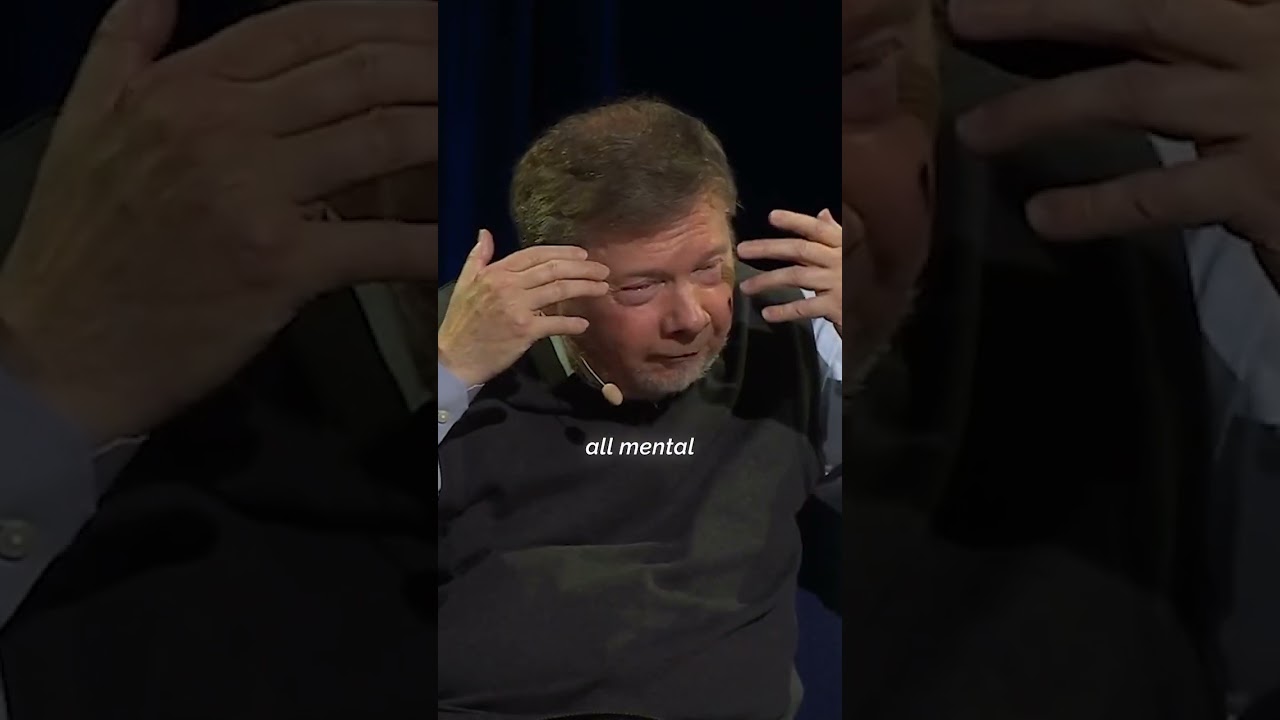
Present Moment Awareness: Whythe Future Isn't Real

Eckhart Tolle
Eckhart Tolle
Apr 7, 2026
8 min read

TLDR: Eckhart Tolle teaches that most people operate under a fundamental misunderstanding about the nature of reality and identity. The future is not real—it exists only as thought in the present moment. Our sense of self is typically constructed from accumulated mental narratives and emotional patterns, a story we believe to be "my life." However, beneath this thought-based identity lies a deeper consciousness that is the living ground from which all thought and emotion arise. The present moment is not a stepping stone to some future achievement, but the only place where life actually unfolds. Recognizing this shift transforms how we relate to time, identity, and existence itself.

Read · 7 sections

What Does It Mean That the Future Isn't Real?

When Eckhart Tolle suggests that the future is not real, he is pointing to a fundamental truth that gets obscured by how we use language and thought. The future exists only as a mental construct—a thought, an image, a projection happening right now in consciousness. There is no actual "tomorrow" that you can touch, feel, or act upon. Tomorrow exists only as concept and imagination arising in the present moment.

This has profound implications for how we live. Most people unconsciously treat the future as more real than the present. They sacrifice the aliveness of this moment for a promise that tomorrow will be better, more complete, or more fulfilling. "When I get the promotion," "when I find the relationship," "when I achieve this goal"—the refrain echoes endlessly. But these future moments, when they arrive, are always experienced as the present moment. No one ever actually lives in the future.

The irony is that by constantly postponing presence for the sake of an imagined future, people miss the only place where life actually occurs. The present moment is not a brief instant that passes—it is the reality of existence itself. Thought may create a timeline in which you exist, but consciousness inhabits only now.

How Do We Confuse Mental Narrative With Identity?

Tolle emphasizes that the ego—the conditioned sense of self—is essentially a story told by thought. This story accumulates over time as a collection of memories, beliefs, interpretations, and emotional reactions. You collect experiences, label them as "good" or "bad," weave them into a coherent narrative, and call it "my life." This narrative becomes your identity.

The problem is that this identity is entirely constructed from the past. It is made of thought about what happened, emotion attached to those memories, and the self-image you have built around them. The "I" that thinks about your identity is actually an abstraction—a useful one for navigation, but not the deepest truth of who you are.

Most people never question this. The mental narrative feels solid, real, and continuous. It provides the illusion of a stable, continuous self moving through time. But Tolle points out that this is precisely what keeps people trapped in unconsciousness. They remain identified with the movement of thought rather than resting in the awareness that observes thought.

When you are caught in the mental narrative of identity, you are unconsciously living in memory and imagination—past and future—while missing the aliveness of what is happening now. The story feels important because it feels like you, but it is a pale reflection of the living awareness from which it arises.

What Is Consciousness as the Ground of Being?

Beneath the level of thought and emotion lies consciousness itself—the aware presence in which all experience occurs. Tolle draws attention to the mystery of thought: where does a thought come from? If you try to trace it, you find that thought arises spontaneously from a field of awareness. You do not generate your thoughts; they emerge from something deeper.

This deeper something is consciousness. It is not your personal consciousness—it is not "yours" in the way the ego thinks it owns things. It is the living awareness that is the ground of being, the field from which all manifestation arises. Thought and emotion are movements within this field. They arise and dissolve, but the awareness remains unchanged.

Tolle suggests that the present moment is actually a gateway to this awareness. When you are fully present—not lost in thought about past and future—you have direct access to consciousness itself. This is not an idea or belief; it is an immediate recognition available to anyone willing to stop and notice.

The significance of this teaching is that your true identity is not the story, not the personality, not the accumulation of mental content. Your true nature is the awareness itself—the aliveness that is aware of all experience. This awareness does not change, accumulate, or suffer the way the thought-self does.

Why Do Most People Never Realize This?

The average human operates in a state of what Tolle might call mechanical unconsciousness. Thought has colonized awareness so thoroughly that people mistake the thinking process for consciousness itself. The constant stream of mental narrative feels like the whole of reality, leaving no space for the recognition of the awareness that contains it.

Additionally, our culture and upbringing emphasize the development of the mental self. We are trained to accumulate knowledge, build a successful identity, achieve goals, and constantly improve ourselves. All of this is activity within the thought realm. There is little cultural or familial permission to rest in awareness itself, to be still and simply present.

The future orientation is also deeply wired into modern life. Progress, ambition, planning, and goal-setting are social values. To question whether the future is real—to suggest that the present moment might be what actually matters—can feel irresponsible or strange. Yet this questioning is exactly what spiritual awakening invites.

What Changes When You Stop Treating the Present as a Stepping Stone?

Tolle invites a radical shift in how you relate to the present moment. Instead of viewing it as a means to a future end, you recognize it as the actual substance of life. The present moment is not empty or insignificant; it is where your aliveness is, where your breath is, where sensation and direct experience occur.

When you stop sacrificing presence for future promise, something shifts. The quality of your attention changes. Rather than being lost in mental narrative about what might happen or what should happen, you become available to what is actually here. This availability brings a quality of peace and aliveness that no future promise can deliver.

This does not mean you stop planning or setting intentions. But the energy with which you engage planning changes. It becomes an activity that arises in presence rather than something that pulls you out of presence. You can think about and prepare for the future while remaining aware that it exists only as thought—that the real action, the real aliveness, is here now.

How Does Identity Shift When You Rest in Consciousness?

As the identification with the mental narrative loosens, a different sense of self becomes available. You begin to notice yourself as the aware presence in which thoughts and emotions move. You are not the thoughts; you are what is aware of the thoughts. You are not the emotions; you are the space in which they arise and dissolve.

This shift is liberation from the tyranny of the personal story. The story does not disappear, but it loses its grip. You can use it as needed—to remember your name, to navigate relationships, to function in the world—but you are no longer hypnotized by it. You know yourself as something deeper, something that does not accumulate and does not age.

Tolle's teaching points to the fact that this deeper identity has always been here. It is not something you achieve in the future. It is the awareness that is present right now, that has been present throughout your entire life. Most people never notice it because they are too absorbed in the movement of thought to recognize the stillness that contains it.

Where to Go From Here

The invitation of this teaching is immediate and simple: stop reading or thinking about it and check your direct experience. Right now, can you notice the awareness that is aware of your thoughts? Can you feel your presence here? What happens if you release the story about who you are and simply rest as the awareness that is having the experience of this moment?

This recognition cannot be forced or achieved. It is not a future goal. It is a present possibility that opens when the grip of mental identification loosens. The practices that support this loosening—presence, stillness, conscious breathing, and simple observation of thought—are available to anyone willing to turn attention inward. The future may never arrive as imagined, but the present moment is always here, waiting to be recognized.

Transcript

[0:00] There is no future. It does not actually

[0:03] exist. That is perhaps a

[0:06] statement that you may not

[0:08] immediately agree with,

[0:11] but

[0:13] if you look at it experientially,

[0:17] you have never experienced the future.

[0:27] The thing that most of the time

[0:30] people or many people,

[0:33] not you perhaps,

[0:36] try to get away from

[0:38] almost habitually

[0:41] and

[0:43] not consciously, they're not

[0:45] consciously telling themselves,

[0:48] "I need to get away from the present

[0:50] moment." No, but

[0:53] the present moment is rarely

[0:56] acknowledged

[0:58] in its fullness.

[1:01] And usually it's at best

[1:04] a stepping stone

[1:07] to the next moment,

[1:09] which

[1:11] unconsciously again, not because you're

[1:13] telling yourself that, the next moment

[1:16] is somehow or the next or the one after

[1:19] that is somehow regarded as

[1:22] more important,

[1:24] potentially more fulfilling

[1:27] than this moment.

[1:29] That's the mind pattern that we inherit

[1:33] from the surrounding culture.

[1:37] And that's a strange way to live

[1:41] if you consider that

[1:44] the present moment is all there ever is.

[1:48] Your entire life

[1:50] unfolds

[1:52] in and as

[1:54] this moment.

[1:57] And although

[1:59] I could say

[2:01] we are going to be here

[2:03] for perhaps 2 hours.

[2:07] Who knows? It might go on and on. I

[2:09] don't know.

[2:11] But 2 hours

[2:13] perhaps again that is a mental concept.

[2:18] Unless you start thinking about the 2

[2:19] hours

[2:21] the future.

[2:24] It's always the present moment. So you

[2:27] don't actually experience this event or

[2:29] this talk

[2:31] as 2 hours unless you understand nothing

[2:34] and then it's it's

[2:36] time but becomes heavy.

[2:39] But even then really you don't

[2:41] all you ever experience is this moment.

[2:45] So the 2 hours is a mental

[2:49] formation

[2:51] called the future.

[2:54] And this is the future

[2:57] doesn't actually in actuality

[3:01] there is no future. It does not actually

[3:03] exist. That is perhaps a

[3:06] statement that you may not

[3:09] immediately agree with.

[3:12] But

[3:13] if you look at it experientially

[3:18] you have never experienced the future.

[3:23] Well, you could say well, this moment

[3:26] was the future a minute ago.

[3:30] So is there no future? Well,

[3:33] a minute ago that was the present

[3:34] moment.

[3:36] And it's now the present moment.

[3:39] Nobody has ever

[3:41] experienced the future the moment it it

[3:45] comes alive

[3:47] other than a mental projection.

[3:50] It's the present moment.

[3:54] That's you can

[3:56] that can be a conceptual thing and yeah,

[3:58] well, that's true.

[4:00] But is it possible to realize that at a

[4:03] deeper level to actually with every

[4:05] fiber of your being

[4:08] that this is it.

[4:10] This is your life.

[4:12] This your life is now.

[4:16] Not yesterday

[4:18] or tomorrow.

[4:20] Yes, yesterday and tomorrow I call that

[4:23] your life situation.

[4:26] Yesterday

[4:27] is

[4:28] that's the past.

[4:31] Tomorrow is the so-called future.

[4:34] Your life Everybody has a life

[4:35] situation. You have a past and you have

[4:39] what we conventionally call future.

[4:43] And normally people when people say my

[4:46] life

[4:48] what they refer to is

[4:52] a narrative in their minds.

[4:56] An accumulation of

[4:59] thought patterns, memories

[5:03] associated

[5:05] together with emotions.

[5:09] And so there is an after a

[5:11] few years of life, a narrative forms in

[5:13] your mind

[5:15] that you call my life.

[5:19] And that narrative

[5:23] consists of the movement of thought.

[5:26] And then

[5:28] the thought emotions reflect the types

[5:31] of thoughts

[5:33] that go through your mind habitually.

[5:37] And there's a certain

[5:40] heaviness about for most humans.

[5:43] Perhaps the older you get, the heavier

[5:45] it gets.

[5:47] To to derive your identity

[5:50] from that narrative

[5:53] that you call my life, that's your past.

[5:56] All the things that have happened. Good

[5:58] things, bad things.

[6:01] Habitual mind patterns.

[6:04] So, you form that there is a

[6:07] mental an entity forms.

[6:10] And that entity consists of thought plus

[6:13] emotion.

[6:15] That differs from person to person.

[6:18] This entity you feel that's me, I. When

[6:22] you use the word I

[6:25] you refer to this, usually you refer to

[6:27] this entity.

[6:30] And but it is a conditioned

[6:34] mind mental emotional

[6:36] pattern that lives in you.

[6:41] So, the word I

[6:43] usually refers to that entity. I is the

[6:47] one one of the favorite words for

[6:49] everybody in the English language.

[6:52] In some other languages the I is used

[6:55] less frequently because it's like

[6:58] Spanish, it's built into the verb form.

[7:00] You don't Unless you want to stress I,

[7:02] you don't actually have to say I, but

[7:03] that's another matter.

[7:06] I I

[7:08] I

[7:10] And

[7:11] uh

[7:12] And so

[7:14] there we have

[7:15] this entity that is in you that

[7:18] this mental

[7:20] structure

[7:22] is that

[7:24] actually

[7:25] who

[7:26] you essentially are?

[7:29] Or is there a deeper

[7:32] identity

[7:34] in you

[7:35] that perhaps

[7:38] has not fully revealed itself?

[7:44] Is there a potential in every human

[7:46] being

[7:48] for this deeper identity

[7:51] to awaken

[7:53] and to reveal itself?

[7:57] And that deeper identity

[7:59] that in many humans is just a potential

[8:03] in others

[8:04] it is in the process of emerging or

[8:09] awakening.

[8:10] That deeper identity

[8:13] is inseparable

[8:15] from

[8:17] what we might call the spiritual

[8:19] dimension, what we might call the

[8:21] transcendent dimension.

[8:24] What we might call, although I'm very

[8:28] reluctant to use the word God, maybe

[8:31] we'll talk about God later, I don't know

[8:33] yet.

[8:35] Uh

[8:36] that deeper identity

[8:39] is far transcends

[8:43] who or what you are as this person.

[8:48] The person is the accumulation, the

[8:52] mental emotional accumulation. And what

[8:55] is that?

[8:57] It's thought plus emotion. What is

[9:00] thought?

[9:01] Thought is an energy form, it's a

[9:04] particular vibrational frequency as is

[9:07] emotion. They're energy formations at a

[9:11] particular frequency.

[9:13] But oh by the way

[9:15] as you probably know, scientists

[9:19] no sci-

[9:20] the science does not really know what a

[9:24] thought is.

[9:26] Nobody really knows what a thought is.

[9:29] There is a certain association between

[9:31] thinking and the neural

[9:33] neural activity in the brain, neurons

[9:36] firing, brain cells. There is a certain

[9:38] correlation between the two, but what is

[9:41] a thought? What is its nature?

[9:45] Could you identify a thought by cutting

[9:47] open the brain, your brain? Brain

[9:50] surgeon can't hold your thought. Could

[9:52] he find a thought? No, he sees

[9:54] the activity of of neurons, but what

[9:58] what is all the stuff that

[10:01] you carry in your memory banks,

[10:04] so-called so to speak?

[10:06] The that does not exist on the level of

[10:08] visibility.

[10:10] You cannot find it

[10:12] by using a microscope or anything.

[10:15] It already exists in the realm of the

[10:17] invisible.

[10:19] All the things that in your all your

[10:23] million hundreds of thousands and

[10:25] million memories that you carry, that

[10:27] you could access at any moment.

[10:30] How does that live in you? So, the

[10:33] thought

[10:34] thought is

[10:36] a mystery, but we can experience it, and

[10:40] we can see that

[10:41] undoubtedly, it is an energy form, as is

[10:45] emotion. Everything is energy. So, that

[10:48] it is invisible energy form, every

[10:51] thought. Now,

[10:53] what does that mean? What does it

[10:54] actually consist of? It's

[10:56] it requires

[10:58] consciousness for a thought to be.

[11:02] It requires consciousness. In fact,

[11:05] there is not thought and consciousness.

[11:09] Thought is a form

[11:12] that consciousness takes temporarily.

[11:15] It assumes a form. Emotion is a form

[11:20] that consciousness assumes, like a

[11:23] disguise. It it is born into

[11:26] form.

[11:52] >> Mhm.

Eckhart Tolle
AuthorEckhart Tolle

German-born spiritual teacher whose 1997 book The Power of Now became one of the most widely read spiritual works of the 21st century. After a profound transformation at 29 — movin…

View profileWebsite
Explore Topics
Present-momentConsciousnessIdentityFuture-illusionThought-patterns

Got Questions?

Frequently Asked Questions

According to this teaching, the future exists only as a thought or mental projection happening in the present moment. It has no independent reality. When a future moment arrives, it is always experienced as the present moment—never as a future event.
Identity based on the mental narrative is constructed from past memories, beliefs, and emotions—it is a story thought creates. Consciousness is the aware presence beneath all thought, the living ground from which thoughts arise. Consciousness does not accumulate; identity is accumulation.
People sacrifice presence because they believe happiness or fulfillment lies ahead. This belief is so strong that the constant promise of a better tomorrow feels more real than the aliveness of the present moment. Cultural emphasis on progress and achievement reinforces this pattern.
Yes. The difference is whether planning pulls you out of presence or happens within presence. You can think about and prepare for the future as a thought-activity while remaining aware that the actual aliveness is here now, not in an imagined tomorrow.
Notice the awareness that is aware of your thoughts right now. You are not your thoughts; you are what observes them. This observer—this awake presence—is what the teaching points to. It is available whenever you stop identifying with the mental narrative and simply rest as aware presence.
The story does not disappear, but its grip loosens. You can still use it to function—remember your name, navigate relationships—but you are no longer hypnotized by it. This creates freedom from the tyranny of the personal narrative and opens access to a deeper, unchanging sense of being.
No. The teaching invites a shift in the energy with which you hold goals. Instead of being pulled into future promise at the expense of presence, goals and intentions can arise naturally from a place of present awareness. This typically leads to clearer decision-making and less suffering.
The present moment is where sensation, breath, and direct aliveness occur. It feels like what is actually happening now—the body breathing, sensations, sights and sounds—without the overlay of mental narrative about it. It is often described as a quality of peace or aliveness available underneath thought.

Continue Reading

More from Eckhart

View All
God Beyond the Sky: Rethinking Divine Nature
Featured

God Beyond the Sky: Rethinking Divine Nature

God is not an external judge deciding human suffering. Suffering itself becomes the mechanism through which consciousness awakens to itself.…

1 min read
God, Suffering, and the One Life Across Traditions
Featured

God, Suffering, and the One Life Across Traditions

Eckhart Tolle explores how Islam, Buddhism, and Greek philosophy all point to the same ultimate reality—and why the problem of suffering dis…

1 min read
Why Humanity Cannot Sit in Silence: Disconnection from Being
Featured

Why Humanity Cannot Sit in Silence: Disconnection from Being

The root of human conflict lies in disconnection from the being dimension—the inability to find peace when alone. When disconnected from bei…

1 min read
Who You Really Are Beyond Surface Identity
Featured

Who You Really Are Beyond Surface Identity

You are not your body, name, or conditioned mind. Eckhart Tolle reveals the distinction between surface identity and deeper being.…

1 min read

Keep exploring

Continue your journey

More wisdom and gatherings from across the BrightStar directory.

More Articles

Browse the full library of teachings, interviews, and guides.

Back to all articles →

Teachers & Artists

Explore the lineages, musicians, and guides of the conscious world.

Explore artists →

Find an Event

Kirtan, retreats, sound baths, breathwork, festivals — happening soon.

Browse events →
Read more from BrightStarCreate Free Account
Host your own gatherings?Try the Demo