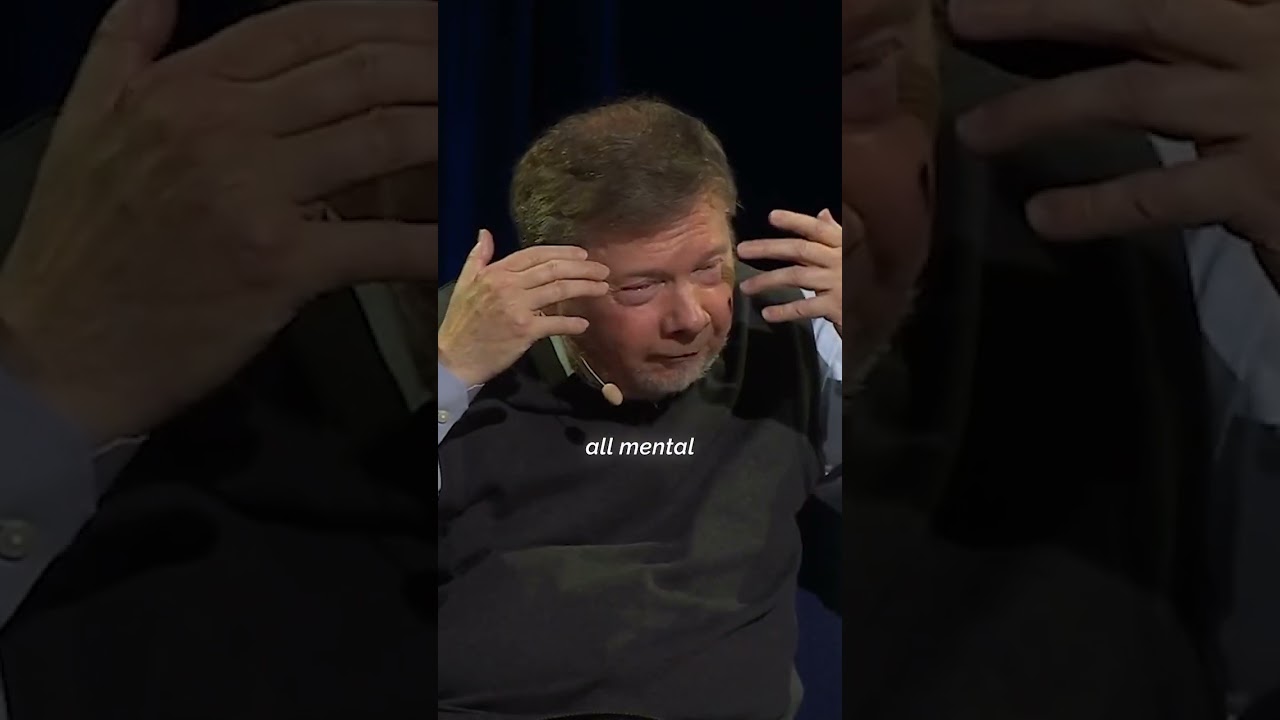
Eckhart Tolle argues that presence—your conscious attention to the present moment—is the foundational skill that determines the quality of your life far more than external circumstances or future achievement. Most people postpone presence, believing they will be present once life becomes easier or problems are solved. This belief traps them in suffering. By understanding that your state of consciousness in this moment is what actually matters, you unlock the capacity to respond wisely to any situation and discover that everything else—success, relationships, wellbeing—becomes secondary to and flows from this primary shift in awareness.
Why You Cannot Postpone Presence Until Life Improves
The core insight Tolle presents is deceptively simple: most people operate from a false assumption that they will become present once circumstances improve. They tell themselves, "Once I get the promotion, find the right partner, solve my financial problems, then I will be peaceful and present." This is a fundamental misunderstanding of how consciousness and life actually work.
When you postpone presence, you are essentially saying that your inner state depends on external conditions. But this creates a trap. External conditions are constantly changing, always presenting new problems, new demands, new reasons to wait. You finish one project and a new one emerges. You solve one problem and another appears. If your peace and presence depend on circumstances aligning perfectly, you will never arrive at peace—because perfect circumstances are not a stable state; they are a fleeting arrangement that inevitably shifts.
The people who seem to have it all—wealth, status, relationships, success—often report feeling just as anxious, unfulfilled, or disconnected as anyone else. This is the paradox Tolle points to: achieving external goals does not automatically grant you presence or peace. In fact, without presence, achieving more often creates more complexity, more responsibility, more pressure.
What Does Presence Actually Mean?
Presence, in Tolle's teaching, is not mere attention or mindfulness in the narrow sense. It is a quality of consciousness—a state of awareness where you are fully inhabiting the current moment without the overlay of past regrets or future anxieties. It is the absence of the noise created by compulsive thinking about what has already happened or what might happen.
When you are present, you are awake to what is rather than lost in thoughts about what is. You notice the sensations in your body. You hear what someone is actually saying rather than planning your response. You perceive the environment with freshness rather than through the filter of familiar assumptions. This clarity and aliveness is not something you need to manufacture or improve yourself into becoming—it is your natural state when the constant commentary of the mind quiets down.
Presence is radical because it breaks the trance of psychological time—the compulsive mental movement between past and future that creates what Tolle calls the ego or the pain-body. This movement is so habitual that most people have never experienced what genuine presence feels like for any sustained period.
How Your State of Consciousness Determines Everything
Your state of consciousness in this moment is the primary creative force in your life. It shapes how you perceive situations, how you respond to challenges, what decisions you make, and what kinds of circumstances you attract or create. Two people facing identical external events will experience them completely differently based on their state of consciousness.
Someone facing a setback while in a state of presence may see it as information, an opportunity to learn or course-correct, or simply as an event to respond to practically. The same setback encountered by someone in a state of worry, resentment, or identification with failure becomes a catastrophe, confirmation of unworthiness, or proof that life is unfair. The external event is identical; the experience is radically different.
This distinction is crucial because it means you do not have to wait for situations to become easier or for circumstances to change in order for your life to improve. You can begin immediately by shifting your state of consciousness. In fact, this shift in consciousness often naturally leads to changes in behavior and circumstance that flow from a clearer, more responsive way of being.
When you operate from presence, you naturally make better choices. You respond rather than react. You see solutions that were invisible when your mind was trapped in anxious or rigid thinking patterns. You communicate more effectively because you are actually listening rather than planning your defense. You become more resilient because you are not adding layers of mental suffering on top of difficulty.
Everything Else Becomes Secondary to Presence
Once you grasp that your state of consciousness is primary, all other pursuits—career advancement, relationship success, financial security, personal growth projects—take on a different character. They become things you do from a place of presence rather than things you pursue in order to achieve presence.
This reversal is transformative. Instead of postponing peace until achievement is complete, you begin with peace and act from that foundation. This does not mean you stop having goals or ambitions. Rather, you pursue them from a different internal place. The quality of your engagement changes. The desperation, the sense that your worth depends on the outcome, the compulsive striving—these dissolve when presence is primary.
Paradoxically, many people find that when they stop making achievement or external change the centerpiece of their life and instead prioritize presence, circumstances naturally improve. This is not magical thinking. It is practical: a present, clear, responsive person makes better decisions, communicates better, and sees opportunities others miss. Results flow more naturally because they are not forced from a place of desperation or fear.
The Role of Difficulty in Awakening Presence
Tolle's teaching acknowledges that difficulty often serves as a catalyst for this shift. When life becomes very hard—when loss, illness, failure, or crisis arrives—the old strategies of distraction and postponement stop working. You cannot think your way out of genuine suffering. You cannot postpone facing a serious diagnosis or the death of someone close to you. Difficulty strips away the illusion that presence can wait.
This is why spiritual traditions have long spoken of difficulty as a gift or opportunity for awakening. Not because suffering is good, but because suffering that cannot be escaped often forces us to stop, to be present with what is, and to discover that presence itself is intact even in the midst of pain. This discovery changes everything. You realize that your fundamental well-being does not depend on circumstances being pleasant.
For this reason, Tolle's teaching points toward what might be called "finding new meaning and purpose after personal crisis." The crisis itself becomes, paradoxically, a door. Through it, people often discover the presence they had been postponing, and with it, a more authentic and grounded way of living.
Practical Implications: Where Presence Changes Everything
In relationships: Presence transforms how you listen, respond, and connect. Instead of being preoccupied with how you are perceived or what you want to say next, you are actually present with the other person. This creates genuine intimacy and understanding that no amount of relationship advice can manufacture.
In work and creativity: Presence brings you into flow. When your full attention is on the task itself rather than on the outcome or on self-judgment, work becomes energized and creative. Problems that seemed intractable become solvable. Innovation emerges from presence, not from anxious effort.
In healing and resilience: Presence allows you to feel difficult emotions fully without being overwhelmed by them. You can experience pain, fear, or grief without the additional suffering created by thoughts like "this shouldn't be happening" or "I can't handle this." This is not dissociation—it is the opposite. It is meeting experience directly, which paradoxically creates resilience.
In decision-making: Present consciousness is intuitive and responsive. Without the noise of habitual fear and thinking, you perceive what is actually needed in a situation and can respond appropriately. Decisions made from presence tend to be wiser and more aligned with reality than decisions made from reactive emotion or anxious planning.
Where to go from here
The implications of Tolle's teaching are both immediate and ongoing. You do not need to accomplish anything or improve yourself before you can begin practicing presence. You can pause right now and notice: what is happening in this moment? What are you actually experiencing through your senses? Where is your attention? Can you release the thoughts about the past or future and inhabit this moment more fully?
This simple practice, repeated throughout your day, gradually shifts your default state of consciousness. Presence becomes not a distant goal but a lived reality that expands naturally. As it does, you will likely notice that the quality of your life—not just your circumstances, but your actual experience of living—fundamentally changes. The skill you have been postponing cultivating turns out to be the one that contains all others.