EveryEvent Houston

Parcourir tous les Events

Find every event in Houston

events

Concerts & Live Music
Festivals
Sports & Recreation
Food & Drink
Arts & Culture
Community
Family & Kids
Nightlife
Comedy
Theater
Destinations populaires
BaliSedonaLos AngelesCosta RicaNew YorkSan FranciscoAustinMiamiJoshua TreeTulum
Voir toutes les catégoriesVoir toutes les destinations

Explorer toutes les fonctionnalités

Des outils puissants pour développer vos événements

Fonctionnalités de la plateforme

Tarification dynamique intelligente
Catégories de billets
Places assignées
Récupération des paniers abandonnés
Récupération des visiteurs
Dons & Prix variables
Système d'affiliation
Scanner de billets
Codes promo
Questions personnalisées
Partage de billets
Ventes additionnelles & Options
Analyses & Rapports
Séquences d'emails
Liste d'attente / Notifier / Rappeler
Explorer
Discovery HubArtists & PerformersVenuesKnowledge Base
Voir toutes les fonctionnalitésÀ propos
TarifsBlog
Parcourir tous les événements

events

Concerts & Live MusicFestivalsSports & RecreationFood & DrinkArts & CultureCommunityFamily & KidsNightlife

Destinations populaires

BaliSedonaLos AngelesCosta RicaNew YorkSan Francisco

Explorer

Discovery HubArtists & PerformersVenuesKnowledge Base

Fonctionnalités de la plateforme

Tarification dynamique intelligenteCatégories de billetsPlaces assignéesRécupération des paniers abandonnésRécupération des visiteursDons & Prix variablesSystème d'affiliationScanner de billetsCodes promoQuestions personnaliséesPartage de billetsVentes additionnelles & OptionsAnalyses & RapportsSéquences d'emailsListe d'attente / Notifier / Rappeler
Voir toutes les fonctionnalitésÀ propos
TarifsBlog
ConnexionS'inscrireOrganisateurs d'événements
  • Browse All Events
  • Concerts & Live Music
  • Festivals
  • Sports & Recreation
  • Food & Drink
  • Arts & Culture
  • Community
  • Family & Kids
  • Nightlife
  • Toutes les catégories →
  • Galveston
  • Austin
  • San Antonio
  • Dallas
  • New Orleans
  • All Destinations →
  • For Promoters
  • For Artists
  • For Venues
  • For Festivals
  • For Event Spaces
  • For Nonprofits
  • For Bloggers
  • For Speakers
  • Brand Ambassador
  • Case Studies
  • Réseau de 350K+ acheteurs
  • Récupération des paniers abandonnés
  • Tarification dynamique intelligente
  • Catégories de billets
  • Événements récurrents
  • Places assignées
  • Système d'affiliation
  • Liste d'attente / Notifier
  • Scanner de billets
  • Widget intégrable
  • Event Syndication
  • Message Center
  • Integrations
  • Reports
  • Toutes les fonctionnalités →
  • À propos
  • The Ecosystem
  • Blog
  • Glossaire
  • Inspiration
  • Centre d'aide
  • Contact
  • Documentation API
  • Ressources de marque
  • Carrières
  • Presse
  • Conditions d'utilisation
  • Politique de confidentialité

Events

  • Browse All Events
  • Concerts & Live Music
  • Festivals
  • Sports & Recreation
  • Food & Drink
  • Arts & Culture
  • Community
  • Family & Kids
  • Nightlife
  • Toutes les catégories →

Getaways

  • Galveston
  • Austin
  • San Antonio
  • Dallas
  • New Orleans
  • All Destinations →

For Organizers

  • For Promoters
  • For Artists
  • For Venues
  • For Festivals
  • For Event Spaces
  • For Nonprofits
  • For Bloggers
  • For Speakers
  • Brand Ambassador
  • Case Studies

Fonctionnalités

  • Réseau de 350K+ acheteurs
  • Récupération des paniers abandonnés
  • Tarification dynamique intelligente
  • Catégories de billets
  • Événements récurrents
  • Places assignées
  • Système d'affiliation
  • Liste d'attente / Notifier
  • Scanner de billets
  • Widget intégrable
  • Event Syndication
  • Message Center
  • Integrations
  • Reports
  • Toutes les fonctionnalités →

Entreprise

  • À propos
  • The Ecosystem
  • Blog
  • Glossaire
  • Inspiration
  • Centre d'aide
  • Contact
  • Documentation API
  • Ressources de marque
  • Carrières
  • Presse
  • Conditions d'utilisation
  • Politique de confidentialité
EveryEvent
© 2026 EveryEvent Houston. Tous droits réservés.
Inspiration

Life Story vs. Reality:How Narrative Creates Suffering

Eckhart Tolle
Eckhart Tolle
May 11, 2026
7 min read

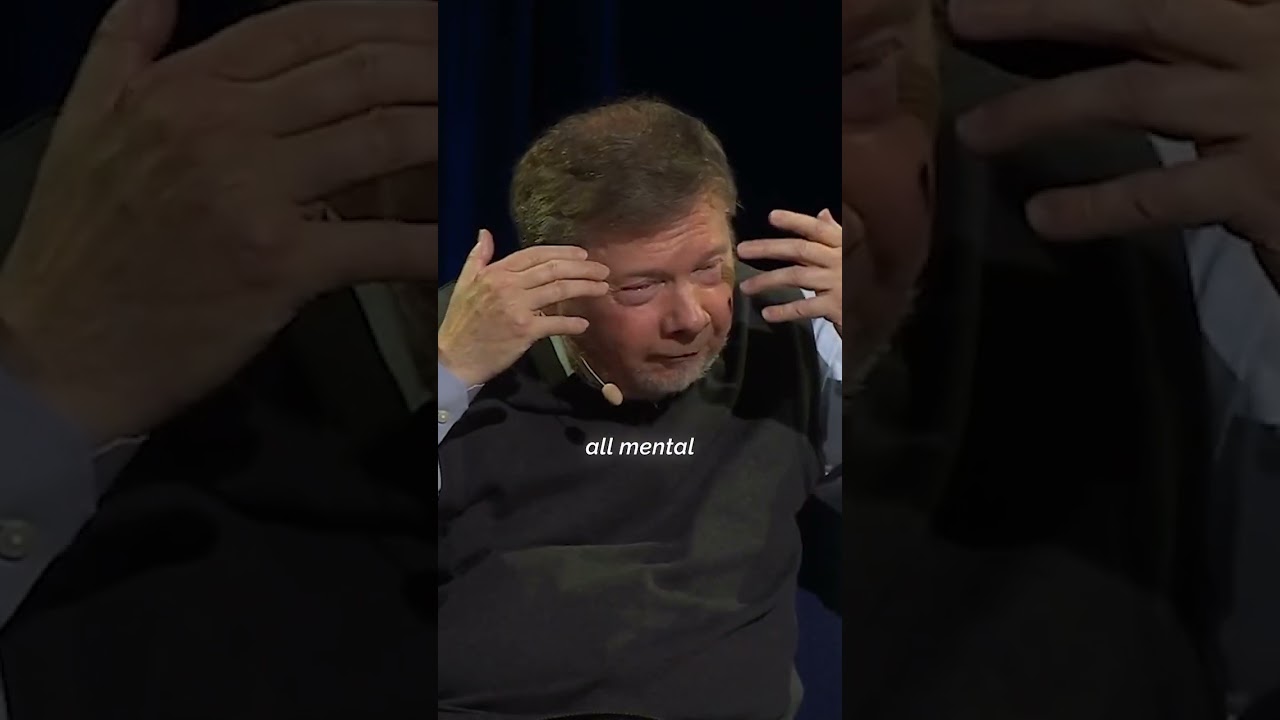
TLDR: The distinction between what is actually happening in your life and the story you habitually tell yourself about it is fundamental to understanding unnecessary suffering. Most people live inside a continuous narrative—a mental construct about their failures, identity, and future—without ever questioning whether this story is true or useful. The moment you recognize this difference between the story and reality, everything shifts. You stop being imprisoned by conclusions you reached years ago and gain access to what is actually occurring now.

Read · 6 sections

What Is the Life Story?

The life story is the running narrative that most people never question. It is not the same as your life. Your life consists of what is actually happening right now—the sensations, the events, the interactions that occur in this moment. The story, by contrast, is a mental construct: the conclusions you have reached about yourself, the interpretation of your past, the judgments about your failures, the predictions about your future, and the identity you have constructed from all of these elements.

This story runs continuously in the background of consciousness. You wake up and it is already there, already narrating events and filtering your experience. "This always happens to me." "I am not good enough." "People don't understand me." "My life is not working out." These are storylines, not descriptions of what is actually occurring. The story feels like reality because you have been living inside it for so long—often since childhood—that it has become transparent. You no longer notice you are in it.

Why Does the Story Feel So Real?

The story feels real because it is made of thought, and thought is very convincing. Thoughts about yourself carry the weight of repetition and emotional resonance. Every time something uncomfortable happens, the story reinterprets it in a way that confirms itself: "See? This proves what I always knew about myself." The story has become self-reinforcing. It selects certain experiences and ignores or reframes others. Over time, it becomes the lens through which you perceive everything.

What most people do not realize is that this narrative is not their life. It is a mental object. It is as separate from your actual existence as a movie is separate from the screen on which it plays. The screen does not change based on the story projected on it. Your actual life—what is happening in this moment—does not change based on the story running through your mind about it. But your experience of your life changes dramatically based on whether you are identifying with the story or seeing through it.

How Does the Story Generate Unhappiness?

The unhappiness most people experience does not come from what is actually happening. It comes from the story about what is happening. If something difficult occurs, the story adds layer upon layer of meaning: shame about the event, fear about future consequences, confirmation of negative beliefs about yourself, worry about how others perceive you. All of this happens in the mind, often within seconds. The original event—the actual difficulty—is compounded enormously by the story built around it.

Consider a simple example. You make a mistake at work. The event itself is neutral—it happened, it can be corrected. But the story immediately adds: "I am incompetent. My boss will think less of me. This is another sign that I am not capable. I will never succeed in this job." Now you are not just dealing with the mistake; you are dealing with the entire narrative structure you have built over years about your competence and worth. The unhappiness comes from the story, not from the mistake itself.

Similarly, people often live with deep unhappiness about their past. The past is over. It no longer exists. What remains is the story about the past—the meaning you have assigned to it, the conclusions you have drawn from it. You carry the story forward, and it becomes your prison. Years of suffering about something that already happened, not because the event is still occurring, but because the story about it is still running.

The Difference Between What Is and the Story About It

There is a crucial distinction to be made. What is actually happening right now is always manageable in this moment. You have resources available to you now. But the story about what is happening often extends into the past and future, adding interpretations that may or may not be true. The story takes something that is occurring and transforms it into an identity: "This happened, therefore I am this kind of person."

What is actually happening is always simpler and more neutral than the story makes it appear. A person did not return your text message. The fact is: they did not return your text message. The story is: "They don't value me. They are showing me I am not important to them. This is consistent with how I have always been treated." The fact is simple. The story is elaborate and deeply connected to your sense of self.

The moment you see this difference, everything changes. You realize that the story is not who you are. It is not your life. It is something your mind has been producing, and you have been living inside it as if it were real. But it is not. What is real is what is happening now, in this moment, without the narrative overlay.

Can You Stop the Story?

The story does not need to be stopped or fought. Fighting it only gives it more energy and keeps you identified with it. Instead, the story can be seen. When you notice that a story is running—when you become aware that you are narrating your experience rather than living it—something shifts. You are no longer completely identified with the story. You have created some space between yourself and it.

Most people try to change their life by trying to change their story. They try to convince themselves of a better narrative: "I am capable. I am worthy. Good things will happen to me." While positive thinking has some value, this approach keeps you inside the story, just with a different plot. It still assumes that the story is what matters, that you need to fix the story in order to fix your life.

The deeper shift comes when you realize that the story itself is not the problem. The problem is taking the story to be who you are, taking it to be your actual life. When you stop treating the story as truth, it loses its grip. It may still arise—minds produce thoughts, and thoughts form narratives—but you are no longer living inside it. You are no longer imprisoned by conclusions you reached years ago, often when you did not have the understanding you have now.

Where to Go From Here

The investigation of the story can begin immediately. Notice what narrative is running through your mind right now. What are you telling yourself about your life, your abilities, your relationships, your future? Can you see that this is a story, not reality? Can you notice the difference between the story and what is actually happening in this moment?

This is not about judging the story or trying to eliminate it. It is about awareness. It is about seeing that you have been living inside a mental construct and mistaking it for your life. As this distinction becomes clearer through repeated noticing, you naturally spend less time imprisoned in narrative and more time in direct experience of what is actually here. This is where freedom begins.

Transcript

[0:00] A great degree of unhappiness

[0:03] in humans

[0:05] that they live with on a daily basis

[0:09] does not arise

[0:11] from the situations they find themselves

[0:14] in.

[0:16] A greater amount of unhappiness arises

[0:21] that is created by an unhappy narrative

[0:25] in their minds

[0:28] which they call me and my life.

[0:32] >> [bell]

[0:37] >> So the important thing is to realize

[0:39] then

[0:41] there are thoughts that continuously go

[0:44] through your head

[0:46] and

[0:48] are you able to be aware for example of

[0:51] certain repetitive thoughts that you

[0:53] tend to have in your mind because they

[0:56] may be there every day. They may

[0:58] resurface in many situations

[1:01] or we go in relation to other people, to

[1:03] yourself.

[1:05] Do you have recurring thoughts about

[1:06] yourself, about your life? Have you

[1:09] already come to a conclusion about what

[1:12] how your life is?

[1:14] Have you reached the conclusion that you

[1:15] you have your life is a has been failed,

[1:18] you have failed in some in the endeavor

[1:21] of your life, your life has been a

[1:24] disaster,

[1:26] you've missed out on everything.

[1:28] >> [laughter]

[1:30] >> Is the the narrative in your head?

[1:33] What's it telling you about yourself?

[1:36] What what is the story of my life? What

[1:39] is it saying? Is it pleasant? Is it

[1:42] unpleasant?

[1:44] Now the question is

[1:47] what reality does it actually have?

[1:51] Of course it it's connected with your

[1:53] past, your historical past. You remember

[1:57] the past, you remember the things that

[1:59] went okay,

[2:00] you remember the things that didn't go

[2:03] according to expectation.

[2:05] So do you and out of that a narrative

[2:08] forms and you call that

[2:10] my life.

[2:11] Now,

[2:14] a great degree of unhappiness

[2:17] in humans

[2:19] that they live with on a daily basis

[2:23] does not arise

[2:25] from the situations they find themselves

[2:27] in.

[2:30] A greater amount of unhappiness arises

[2:34] that is created by an unhappy narrative

[2:39] in their minds.

[2:41] Which they call

[2:43] me and my life.

[2:45] And they don't know that.

[2:48] If they could look through that

[2:51] and see that a large amount of

[2:53] unhappiness in my life and unhappiness

[2:55] could be anger, it could be sadness, it

[2:59] could be resentment,

[3:01] it could unhappiness can take many

[3:03] forms.

[3:04] Even a slight irritation is a small form

[3:07] of unhappiness.

[3:15] And so many people are unhappy with

[3:17] themselves.

[3:19] Or they put all the blame on others,

[3:21] which is still part of your narrative

[3:23] and then you're unhappy with all those

[3:25] people who have messed up your life.

[3:29] I'm not saying that

[3:31] things are done to people that are bad,

[3:35] but I'm talking here about deriving an

[3:38] identity from your historical past

[3:42] or the way in which your mind interprets

[3:44] your historical past.

[3:47] It may not be actual events because if

[3:50] you ask your sibling about a similar

[3:52] thing 20 years ago,

[3:54] he or she might have a completely

[3:55] different story of the same event.

[3:58] Happens quite often.

[4:00] So, me and my life

[4:03] is my And people are trapped in the

[4:05] conceptual

[4:07] my life and the problematic

[4:10] my life and they carry around this

[4:12] burden of my life.

[4:15] I hope it's going to work out in the

[4:16] future

[4:18] because I still have years left.

[4:21] I could still achieve happiness.

[4:26] That's the hope.

[4:28] But then the hope has a downside and

[4:31] that is what if it gets worse?

[4:37] And so you go from hope to fear.

[4:42] And of course,

[4:44] I can tell you it might get better for a

[4:47] while.

[4:50] And then it will get worse.

[4:53] Because you're going to get die in the

[4:54] body. Either you just die suddenly or

[4:57] the body suddenly gets older and older

[4:59] and then you

[5:01] are to walk anymore and you you get

[5:04] retired and you don't have an identity

[5:06] anymore that has to do with your social

[5:08] function and there you sit and really

[5:10] it's getting worse now. Who am I now? I

[5:13] don't have a the job anymore. Nobody

[5:15] tells me who I am.

[5:20] Of course, eventually there's always the

[5:22] form begins to dissolve.

[5:28] I'm not saying that you should not

[5:31] try to improve the conditions of your

[5:34] life.

[5:36] But more importantly is to realize that

[5:42] you do not

[5:44] have a life because that's what say,

[5:48] "My life." Now, if you look at the

[5:50] structure of that sentence, my life,

[5:55] there's a duality there.

[5:58] Because if you say my life, that implies

[6:02] that you have it. It's mine.

[6:06] So, it implies two, duality. If you say

[6:09] my life, there's you and the life that

[6:11] you have.

[6:13] It belongs to me. It's mine.

[6:16] So, the this thought, this language

[6:19] creates a duality in your mind. You call

[6:21] it my life.

[6:23] And that's interesting. So, there's me

[6:26] and I have a life. And then the fear

[6:28] comes in, if I have a life,

[6:31] I might lose it.

Eckhart Tolle
AuthorEckhart Tolle

German-born spiritual teacher whose 1997 book The Power of Now became one of the most widely read spiritual works of the 21st century. After a profound transformation at 29 — movin…

View profileWebsite
Explore Topics
Narrative-identityEgo-selfPresent-momentSuffering-mindConsciousness

Got Questions?

Frequently Asked Questions

The story adds layers of meaning, shame, fear, and self-judgment to what is actually happening. A simple mistake becomes evidence of incompetence; being ignored becomes proof of worthlessness. The unhappiness comes from this mental narrative, not from the original event itself. When you separate the story from reality, you can address what is actually occurring without the emotional weight the narrative carries.
No. Positive thinking tries to replace a negative story with a positive one, but this keeps you identified with the story itself. Real freedom comes from seeing that the story—whether negative or positive—is a mental construct separate from your actual life. Instead of trying to change the story, you learn to recognize it as a story and stop treating it as who you are.
Changing the story may provide some relief, but it keeps you trapped in the narrative level of mind. The deeper shift comes when you realize the story is not your life. Your actual life is what is happening now, without the mental narrative overlay. Once you see this distinction, you naturally operate from reality rather than from the story, which naturally leads to different choices.
If you are experiencing unhappiness about something that already happened, you are in a story. If you are worried about a future that has not occurred, you are in a story. If you are interpreting something as confirmation of an identity belief ("This proves I am not good enough"), you are in a story. Reality is what is actually happening in this moment, without the narrative interpretation attached to it.
Your story affects how you perceive yourself and interpret others' actions, but it does not change what is actually happening. You may tell yourself a story about what someone thinks of you based on your narrative about your worth, but that story may have nothing to do with their actual perception. The story shapes your experience and your responses, which can influence interactions, but the story itself is not your reality.
When you stop treating your life story as truth, you are freed from the conclusions and limitations embedded in it. You become available to what is actually happening now, without the filters of past narratives. This does not mean becoming reckless or ignoring past experience; it means learning from the past without being imprisoned by the story you told about it.
For most people, the story began forming in childhood and has been running continuously ever since. It is so familiar and invisible that it feels like your actual life. But you can begin noticing and questioning it at any moment. The length of time you have been in it does not determine how quickly you can see through it.

Continue Reading

More from Eckhart

View All
God Beyond the Sky: Rethinking Divine Nature
Featured

God Beyond the Sky: Rethinking Divine Nature

God is not an external judge deciding human suffering. Suffering itself becomes the mechanism through which consciousness awakens to itself.…

1 min read
God, Suffering, and the One Life Across Traditions
Featured

God, Suffering, and the One Life Across Traditions

Eckhart Tolle explores how Islam, Buddhism, and Greek philosophy all point to the same ultimate reality—and why the problem of suffering dis…

1 min read
Why Humanity Cannot Sit in Silence: Disconnection from Being
Featured

Why Humanity Cannot Sit in Silence: Disconnection from Being

The root of human conflict lies in disconnection from the being dimension—the inability to find peace when alone. When disconnected from bei…

1 min read
Who You Really Are Beyond Surface Identity
Featured

Who You Really Are Beyond Surface Identity

You are not your body, name, or conditioned mind. Eckhart Tolle reveals the distinction between surface identity and deeper being.…

1 min read

Keep exploring

Continue your journey

More wisdom and gatherings from across the BrightStar directory.

More Articles

Browse the full library of teachings, interviews, and guides.

Back to all articles →

Teachers & Artists

Explore the lineages, musicians, and guides of the conscious world.

Explore artists →

Find an Event

Kirtan, retreats, sound baths, breathwork, festivals — happening soon.

Browse events →
Read more from BrightStarCreate Free Account
Host your own gatherings?Try the Demo