EveryEvent Houston

Parcourir tous les Events

Find every event in Houston

events

Concerts & Live Music
Festivals
Sports & Recreation
Food & Drink
Arts & Culture
Community
Family & Kids
Nightlife
Comedy
Theater
Destinations populaires
BaliSedonaLos AngelesCosta RicaNew YorkSan FranciscoAustinMiamiJoshua TreeTulum
Voir toutes les catégoriesVoir toutes les destinations

Explorer toutes les fonctionnalités

Des outils puissants pour développer vos événements

Fonctionnalités de la plateforme

Tarification dynamique intelligente
Catégories de billets
Places assignées
Récupération des paniers abandonnés
Récupération des visiteurs
Dons & Prix variables
Système d'affiliation
Scanner de billets
Codes promo
Questions personnalisées
Partage de billets
Ventes additionnelles & Options
Analyses & Rapports
Séquences d'emails
Liste d'attente / Notifier / Rappeler
Explorer
Discovery HubArtists & PerformersVenuesKnowledge Base
Voir toutes les fonctionnalitésÀ propos
TarifsBlog
Parcourir tous les événements

events

Concerts & Live MusicFestivalsSports & RecreationFood & DrinkArts & CultureCommunityFamily & KidsNightlife

Destinations populaires

BaliSedonaLos AngelesCosta RicaNew YorkSan Francisco

Explorer

Discovery HubArtists & PerformersVenuesKnowledge Base

Fonctionnalités de la plateforme

Tarification dynamique intelligenteCatégories de billetsPlaces assignéesRécupération des paniers abandonnésRécupération des visiteursDons & Prix variablesSystème d'affiliationScanner de billetsCodes promoQuestions personnaliséesPartage de billetsVentes additionnelles & OptionsAnalyses & RapportsSéquences d'emailsListe d'attente / Notifier / Rappeler
Voir toutes les fonctionnalitésÀ propos
TarifsBlog
ConnexionS'inscrireOrganisateurs d'événements
  • Browse All Events
  • Concerts & Live Music
  • Festivals
  • Sports & Recreation
  • Food & Drink
  • Arts & Culture
  • Community
  • Family & Kids
  • Nightlife
  • Toutes les catégories →
  • Galveston
  • Austin
  • San Antonio
  • Dallas
  • New Orleans
  • All Destinations →
  • For Promoters
  • For Artists
  • For Venues
  • For Festivals
  • For Event Spaces
  • For Nonprofits
  • For Bloggers
  • For Speakers
  • Brand Ambassador
  • Case Studies
  • Réseau de 350K+ acheteurs
  • Récupération des paniers abandonnés
  • Tarification dynamique intelligente
  • Catégories de billets
  • Événements récurrents
  • Places assignées
  • Système d'affiliation
  • Liste d'attente / Notifier
  • Scanner de billets
  • Widget intégrable
  • Event Syndication
  • Message Center
  • Integrations
  • Reports
  • Toutes les fonctionnalités →
  • À propos
  • The Ecosystem
  • Blog
  • Glossaire
  • Inspiration
  • Centre d'aide
  • Contact
  • Documentation API
  • Ressources de marque
  • Carrières
  • Presse
  • Conditions d'utilisation
  • Politique de confidentialité

Events

  • Browse All Events
  • Concerts & Live Music
  • Festivals
  • Sports & Recreation
  • Food & Drink
  • Arts & Culture
  • Community
  • Family & Kids
  • Nightlife
  • Toutes les catégories →

Getaways

  • Galveston
  • Austin
  • San Antonio
  • Dallas
  • New Orleans
  • All Destinations →

For Organizers

  • For Promoters
  • For Artists
  • For Venues
  • For Festivals
  • For Event Spaces
  • For Nonprofits
  • For Bloggers
  • For Speakers
  • Brand Ambassador
  • Case Studies

Fonctionnalités

  • Réseau de 350K+ acheteurs
  • Récupération des paniers abandonnés
  • Tarification dynamique intelligente
  • Catégories de billets
  • Événements récurrents
  • Places assignées
  • Système d'affiliation
  • Liste d'attente / Notifier
  • Scanner de billets
  • Widget intégrable
  • Event Syndication
  • Message Center
  • Integrations
  • Reports
  • Toutes les fonctionnalités →

Entreprise

  • À propos
  • The Ecosystem
  • Blog
  • Glossaire
  • Inspiration
  • Centre d'aide
  • Contact
  • Documentation API
  • Ressources de marque
  • Carrières
  • Presse
  • Conditions d'utilisation
  • Politique de confidentialité
EveryEvent
© 2026 EveryEvent Houston. Tous droits réservés.
Inspiration

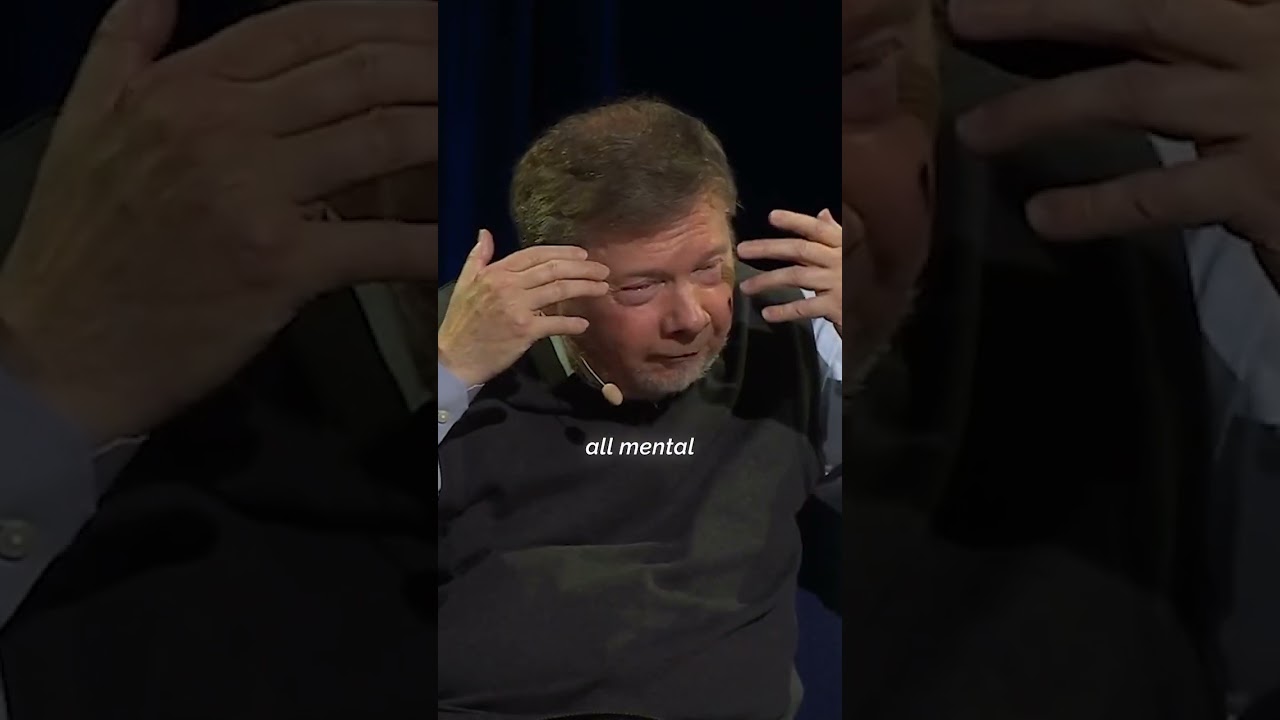
How Unconscious ThinkingCreates Mental Suffering

Eckhart Tolle
Eckhart Tolle
Feb 4, 2026
6 min read

TLDR: Most people experience ongoing mental suffering without recognizing it stems from unconscious, automatic thinking patterns. These habitual thoughts construct and reinforce an unhappy identity—a false sense of self built from repetitive mental loops. The torture is not from external circumstances alone, but from identification with compulsive, often negative thought patterns that run without conscious awareness. Freedom comes through recognizing these patterns and accessing a deeper awareness that exists independent of thinking itself.

Read · 6 sections

What Is the Torture of the Mind?

The "torture of the mind" described here is not acute or dramatic pain, but a chronic, low-level suffering that most people experience as normal. This torture operates invisibly because it becomes so familiar that we stop noticing it. You might describe it as constant worry, self-criticism, rumination about the past, or anxiety about the future—yet you experience it as "just how life is," rather than as a problem you're suffering from.

The core mechanism is that your mind generates thoughts automatically, often unconsciously, and you identify with those thoughts as if they are truth or identity. A critical thought about yourself becomes "proof" that you are inadequate. A worry about tomorrow becomes "proof" that danger is coming. This process happens so quickly and habitually that you don't recognize it as a mental process at all—it feels like reality.

How Does Unconscious Thinking Create Unhappy Identity?

Identity is not something fixed or innate. It is constructed continuously through thought. When you repeatedly think "I am not good enough," "I am unlovable," "I am a failure," or "I don't belong," these thoughts accumulate and crystallize into a sense of self. This constructed identity then filters how you perceive everything. You interpret feedback, relationships, and events through the lens of this unhappy identity.

The problem is that most of this identity-building happens unconsciously. You are not deliberately choosing these thoughts; they arise automatically from conditioning, past experiences, and cultural programming. Yet because they are habitual and because you have identified with them for years or decades, they feel true and unchangeable. The torture comes from living as if an artificially constructed, negative identity is the truth of who you are.

When your mind is operating unconsciously, you are essentially being run by old programs. Your thoughts are shaped by fears learned in childhood, comparisons learned from culture, and patterns of self-criticism learned from authority figures. You experience these as your own authentic thoughts and feelings, but they are largely inherited patterns running on autopilot. This autopilot is the source of the torture—because autopilot does not allow for genuine choice, growth, or freedom.

What Is the Difference Between Unconscious and Conscious Thinking?

Unconscious thinking happens automatically, without your noticing. You are identified with it; you believe it without question. When an unconscious thought arises—"I'm going to fail at this"—you don't examine it. You simply act as though it's true. Your body tenses, your energy contracts, and you move through the day under the weight of this unexamined belief.

Conscious thinking, by contrast, involves awareness. You notice a thought arising. You can observe it. You can question it. You can recognize it as a thought—a mental product—rather than as absolute truth or final identity. This simple shift—from being thoughts to observing thoughts—is fundamentally liberating.

When you become conscious of your thinking, you also gain the capacity to choose which thoughts to engage with and which to let pass. You are no longer entirely run by conditioning. Some thoughts will continue to arise—that is normal—but you are no longer enslaved by them because you are not identified with them.

What Role Does Identification Play in Mental Suffering?

Identification is the mechanism that transforms a thought into suffering. A thought like "That person didn't greet me warmly" is just a thought. But if you identify with the thought and use it to reinforce a belief like "I am unlikeable," then you have added a layer of identity-based suffering on top of the event itself.

Most people are identified with the content of their thoughts. You believe your thoughts are you—that they reveal your true nature, your capabilities, your worth. When this happens, a critical thought feels like a statement of fact about yourself. Anxiety feels like accurate prediction. Self-doubt feels like self-knowledge.

The torture intensifies because you are not just thinking negative thoughts; you are using those thoughts to define yourself. You are in dialogue with yourself in which you are both the torturer (the part generating criticism) and the tortured (the part receiving and believing the criticism). This internal split, invisible and unconscious, is where much mental suffering comes from.

The path to freedom involves recognizing this identification and loosening it. You begin to see thoughts as mental events that arise and pass, rather than as commands or truths about your identity. This doesn't eliminate thoughts, but it changes your relationship to them fundamentally.

How Can You Access Freedom From Unconscious Thinking?

Freedom begins with awareness. You cannot free yourself from what you are not conscious of. The first step is to notice that you are suffering—to recognize the torture, rather than accepting it as inevitable. This recognition itself is a form of consciousness breaking through the unconscious pattern.

Once you notice unconscious thinking, you can begin to observe it without judgment. This is not about trying to change your thoughts or eliminate negative thinking. It is about creating space between yourself and your thoughts. When a critical thought arises, instead of immediately believing it and acting on it, you pause. You notice: "There is a thought occurring." This simple noticing is the beginning of freedom.

As you practice this awareness, you also begin to access a dimension of consciousness that exists prior to and independent of thinking. This is not another thought or belief system. It is a direct, present awareness—sometimes called presence or being. In this state, you are conscious, alert, and alive, but you are not identified with the stream of thinking. The torture of the mind cannot reach you here because the torture depends on identification with thought.

This shift does not happen all at once. Old patterns of unconscious thinking continue to arise. But as your awareness grows, you spend less time trapped in these patterns and more time in a state of conscious presence. Over time, the grip of unconscious thinking loosens, and you experience genuine freedom—freedom that is not dependent on having positive thoughts, but on not being enslaved by any automatic identification with thoughts at all.

Where to go from here

If you recognize yourself in this description, the next step is to practice noticing your thinking without trying to fix it. Throughout the day, pause periodically and ask yourself: "What thought am I identified with right now?" Notice the thought without judgment. This simple practice of observation is the gateway to the freedom described here. Over time, this awareness will naturally expand, and the torture of the mind will lose its power over you.

Eckhart Tolle
AuthorEckhart Tolle

German-born spiritual teacher whose 1997 book The Power of Now became one of the most widely read spiritual works of the 21st century. After a profound transformation at 29 — movin…

View profileWebsite
Explore Topics
Unconscious-thinkingMental-sufferingIdentityConsciousnessPresence

Got Questions?

Frequently Asked Questions

Unconscious thinking operates automatically and without awareness, meaning you identify with thoughts as absolute truth without examining them. This identification causes you to use these thoughts to construct an unhappy identity, which then filters how you perceive everything. The suffering arises not from the thoughts themselves, but from the automatic belief in and identification with them as truth about who you are.
Having negative thoughts is normal and universal; everyone's mind generates critical or anxious thoughts. The torture comes when you are identified with these thoughts—when you believe them as absolute truth and use them to define yourself. Conscious awareness of thoughts as mental events, rather than identity, breaks this torture because you stop being enslaved by automatic identification.
No—and that is not the goal. The goal is to change your relationship to thoughts rather than eliminate them. Thoughts will continue to arise, including negative or critical ones. Freedom comes from noticing these thoughts without identifying with them, creating space between your awareness and the thought stream. This space is where true freedom exists.
Start by simply noticing your thoughts and recognizing them as mental events arising in consciousness. You can practice pausing throughout the day and observing: "What thought am I identified with right now?" Without trying to change anything, this awareness itself begins to loosen the identification. Over time, you access a state of conscious presence that is independent of thinking, which is the source of genuine freedom.
No—the mind is a useful tool for thinking, planning, and problem-solving. The torture comes specifically from unconscious identification with automatic thought patterns. A conscious mind, used deliberately, is valuable. The problem is when the mind operates without awareness and you are enslaved by its automatic patterns rather than using it as a tool.
Presence is a direct, aware state that exists prior to and independent of thinking. It is not another belief or positive thought—it is consciousness itself, alert and alive without identification with the mind's chatter. You access this through awareness and observation. In this state, the torture of unconscious thinking cannot reach you because it depends on identification with automatic thought.

Continue Reading

More from Eckhart

View All
God Beyond the Sky: Rethinking Divine Nature
Featured

God Beyond the Sky: Rethinking Divine Nature

God is not an external judge deciding human suffering. Suffering itself becomes the mechanism through which consciousness awakens to itself.…

1 min read
God, Suffering, and the One Life Across Traditions
Featured

God, Suffering, and the One Life Across Traditions

Eckhart Tolle explores how Islam, Buddhism, and Greek philosophy all point to the same ultimate reality—and why the problem of suffering dis…

1 min read
Why Humanity Cannot Sit in Silence: Disconnection from Being
Featured

Why Humanity Cannot Sit in Silence: Disconnection from Being

The root of human conflict lies in disconnection from the being dimension—the inability to find peace when alone. When disconnected from bei…

1 min read
Who You Really Are Beyond Surface Identity
Featured

Who You Really Are Beyond Surface Identity

You are not your body, name, or conditioned mind. Eckhart Tolle reveals the distinction between surface identity and deeper being.…

1 min read

Keep exploring

Continue your journey

More wisdom and gatherings from across the BrightStar directory.

More Articles

Browse the full library of teachings, interviews, and guides.

Back to all articles →

Teachers & Artists

Explore the lineages, musicians, and guides of the conscious world.

Explore artists →

Find an Event

Kirtan, retreats, sound baths, breathwork, festivals — happening soon.

Browse events →
Read more from BrightStarCreate Free Account
Host your own gatherings?Try the Demo