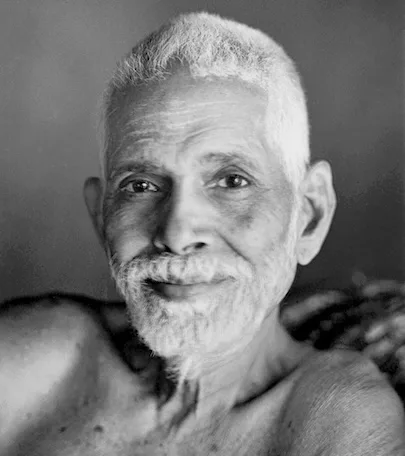
Unveiling the Subject: The Paradox of Self-Knowledge
Ramana Maharshi's assertion that "the self cannot be known objectively because it is the very subject of knowledge itself" invites us into a profound exploration of consciousness and identity. This statement challenges our conventional understanding of self-awareness, suggesting that the essence of who we are eludes objective scrutiny. The implications of this insight are vast, touching upon the nature of reality, the pursuit of truth, and the journey toward awakening. In a world where we often seek to define ourselves through external measures, Maharshi's words remind us that true understanding lies beyond the grasp of the intellect.
To delve deeper, we must recognize that the self, as the subject of knowledge, operates in a realm that transcends mere observation. It is not an object to be dissected or categorized; rather, it is the very lens through which we perceive existence. This distinction is crucial, as it compels us to reconsider our relationship with our own consciousness. By acknowledging that the self cannot be fully captured or understood through objective means, we open ourselves to a more intimate, experiential understanding of our being—a journey that invites us to explore the depths of our inner landscape.
The image / the metaphor
The imagery embedded in Maharshi's quote evokes a sense of paradox. The self, often perceived as a fixed entity, is revealed to be fluid and elusive. The verbs "know" and "objectively" suggest a process of examination that is inherently limited when applied to the self. This creates a felt sense of tension between the observer and the observed, highlighting the impossibility of fully grasping the essence of our own consciousness through detached analysis. The self is not merely a subject to be studied; it is the very foundation of all knowledge, a dynamic force that shapes our understanding of reality.
In the speaker's tradition
Ramana Maharshi's teachings are deeply rooted in the Vedantic tradition, which emphasizes the non-dual nature of reality. Concepts such as *Advaita* (non-duality) and *Brahman* (the ultimate reality) resonate with his assertion about the self. In this context, the self is not a separate entity but rather an expression of the universal consciousness that pervades all existence. This understanding aligns with the notion of *kenosis*, or self-emptying, where one relinquishes the ego to realize their true nature. By recognizing that the self cannot be objectified, we are invited to transcend the limitations of individual identity and embrace our interconnectedness with all beings.
In the *Upanishads*, ancient texts that form the philosophical foundation of Vedanta, we find echoes of Maharshi's insight. The *Chandogya Upanishad* states, "Tat Tvam Asi," meaning "You are That," which underscores the unity of the individual self with the universal self. This profound realization invites seekers to look beyond the confines of personal identity and recognize their inherent connection to the cosmos. Maharshi's teaching serves as a contemporary reminder of this timeless wisdom, urging us to explore the depths of our consciousness and awaken to our true nature.
Living the teaching
Consider a modern scenario where an individual grapples with self-doubt and insecurity in their professional life. They may seek validation through external achievements, believing that success will provide a clearer understanding of their worth. However, Maharshi's teaching reminds us that such pursuits are ultimately futile if they are rooted in an objective understanding of the self. Instead, by turning inward and engaging in self-inquiry, one can begin to dismantle the layers of conditioned beliefs and discover a more authentic sense of self that is not contingent upon external validation.
In the realm of relationships, this teaching can manifest in the way we perceive ourselves in connection with others. When conflicts arise, we often cling to our subjective experiences, viewing ourselves as separate from those we interact with. Maharshi's insight encourages us to recognize that our perceptions are shaped by our consciousness, which is inherently interconnected with the consciousness of others. By embracing this understanding, we can cultivate empathy and compassion, allowing for deeper connections that transcend the limitations of individual identity.
A reflection
As we contemplate Maharshi's profound assertion, we are invited to engage with a contemplative question: How do I define my sense of self, and what layers of conditioning might I need to peel away to uncover my true essence? This inquiry encourages us to reflect on the narratives we hold about ourselves and to consider how they shape our perceptions of reality. In this exploration, we may find that the journey toward self-knowledge is not about accumulating information but rather about embracing the mystery of our being, allowing us to awaken to the fullness of our existence.



Join the BrightStar Community
Stay connected with daily inspiration, event announcements, and community wisdom