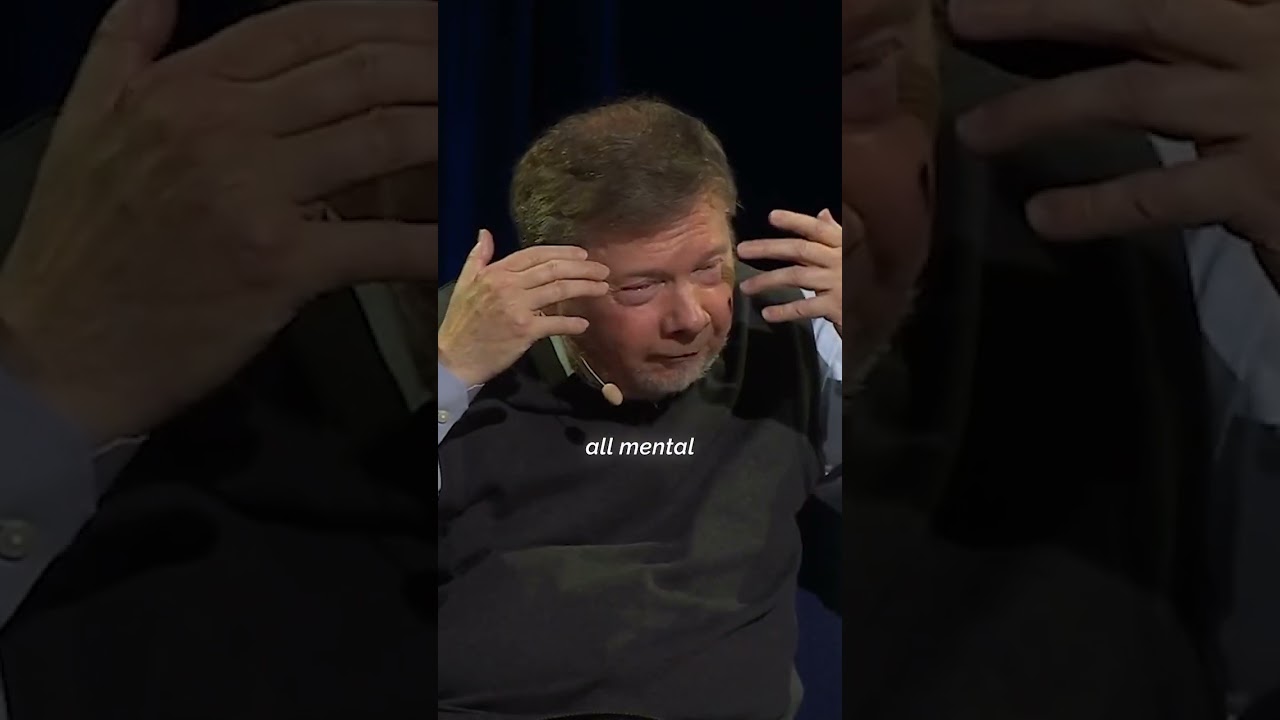
The future never actually arrives in experience—when you reach it, you experience it only as the present moment. This fundamental truth about time reshapes how we understand consciousness, anxiety, and where life actually happens. Most human suffering arises from mental projections into a future that can only ever be encountered as now, yet the mind spends enormous energy worrying about and planning for an event that will never be "future" when it occurs.
What Does "The Future Doesn't Exist" Actually Mean?
Eckhart Tolle's core observation is deceptively simple but profoundly disorienting when fully considered: the future is not a real location in time that you can inhabit. It is an abstraction, a mental construct. At any moment—this one, the next, the one after that—the only thing you ever directly experience is the present. You cannot experience Tuesday from Tuesday's perspective on Monday; you can only imagine what Tuesday will be like from today's perspective.
This is not a mystical claim but an observation about the nature of consciousness itself. Every conscious experience, by definition, happens now. You do not have experiences in the past (you have memories, which occur now). You do not have experiences in the future (you have anticipations and fears, which occur now). The future is purely a mental phenomenon—thoughts, images, and narratives projected forward from the present moment.
When Monday becomes Tuesday, you do not suddenly "arrive" in the future. Tuesday is experienced as another present moment. The future you imagined on Monday will never be encountered as "future"—only as new present moments, each of which will contain its own thoughts, sensations, and surprises that were never fully predictable from the perspective of Monday.
Why Does the Mind Obsess About a Time That Doesn't Exist?
The human mind has evolved to anticipate, plan, and model potential scenarios. These capacities were useful for survival: imagining where predators might be, where food could be found, and how to avoid physical danger. However, in modern life, this same mechanism operates almost constantly, even when there is no immediate threat requiring strategic planning.
The mind generates continuous narratives about the future: "What if I fail?" "What if they reject me?" "What if I don't have enough money?" "What if I make the wrong choice?" These thoughts feel urgent and important precisely because the mind treats them as real problems that need to be solved. But the actual problem being solved is a phantom—a mental simulation of something that doesn't yet exist and may never exist in the form imagined.
This is where suffering originates. Most anxiety, worry, and dread are not responses to what is actually happening right now. They are responses to mental stories about a future moment. The content of those stories may or may not occur, but the suffering is real and happening now, in the present, as a result of identifying with the thought-narrative. You are suffering in the present because of a future that does not exist.
The Paradox of Planning Without Over-Identification
Recognizing that the future doesn't exist doesn't mean planning is pointless. The mind can engage in functional planning—thinking through logistics, considering options, preparing for contingencies—without fusing your sense of self to imagined outcomes. The distinction is subtle but critical.
Functional planning: "I need to save money for next month's rent. I'll adjust my spending this week." The mind engages with practical reality, then releases the thought and returns to present awareness.
Ego-based future-thinking: "What if I can't save enough? What if I lose my job? What if I end up homeless? I'm such a failure for worrying about this." The mind creates a narrative, identifies with it as "my problem," generates more thoughts to defend or elaborate the story, and consciousness becomes trapped in an anxiety loop that has no present-moment anchor.
The second pattern is what Tolle emphasizes as the primary source of psychological suffering. It is the over-identification with future-scenarios—the sense that these imagined problems say something about who you are or what you are capable of—that creates the trapped, anxious quality of suffering. The future doesn't exist, but the thoughts about it do exist, and if you believe those thoughts represent reality, you suffer.
How Present-Moment Awareness Changes Your Relationship to Time
If the future doesn't exist, then what is actually available to address right now? Always, there is the present moment—the only time in which you can actually take action, feel, perceive, or be. This is not a poetic statement but a practical one. Every action you take happens in the present. Every choice happens in the present. Every sensation happens in the present.
When consciousness is anchored in present-moment awareness—noticing what you're sensing, what your body is doing, what is actually here—the constant pull into future-narrative quiets. This doesn't mean the mind stops planning. It means planning becomes a tool you use rather than a trance state you inhabit.
For example: while washing dishes, if consciousness is fused with thoughts about "what comes next," the present action is hollow; you experience the dishes as obstacles between you and where you "want" to be. If consciousness is in the present moment—noticing the temperature of the water, the texture of the plates, the movement of your hands—then washing dishes is complete and itself. When you finish, you move to the next activity from a grounded, clear state rather than from a state of resistance and fantasy.
This shift has profound consequences. Much of human suffering comes from the sense that "now" is not enough, not right, not where you should be. The future is always framed as better, more complete, more real. Present-moment awareness reveals this as a delusion. Now is where everything actually is. Now is where life actually happens.
What About Legitimate Concerns About Future Consequences?
A common objection arises: "Shouldn't I worry about consequences? If I don't plan for the future, won't bad things happen?" This misunderstands the teaching. The point is not to eliminate all thought about consequences but to notice the difference between clarity and worry.
Clarity: "This decision might lead to that outcome. Here's how I'll respond if it does." The mind assesses, decides, and releases. Consciousness remains in the present, ready to adapt as reality unfolds.
Worry: "What if this happens? And then that? And then everything collapses?" The mind generates cascading scenarios, each one triggering a stress response, and consciousness becomes trapped in a loop that accomplishes nothing but the generation of suffering. The future hasn't arrived, but your nervous system is already activated as if it has.
In the moment when the future does arrive (becomes present), you will face whatever is actually there—not what you worried about, which was a mental fabrication. Your clarity and present-moment responsiveness will serve you far better than the mental rehearsal of disaster scenarios.
The Collapse of Time in Direct Experience
One of the most disorienting aspects of Tolle's perspective is recognizing that past and future only exist as thoughts in the present moment. You are not actually separated from your past by time; you are separated from it by the mind's inability to fully inhabit it again. Memories are images and narratives that occur now. The past itself—the raw fact of what happened—is not available to consciousness except as a present representation of it.
Similarly, anticipations of the future are not windows into what will happen; they are thoughts happening now, shaped by past experience and current psychological patterns. The future remains fundamentally open, despite what your mind projects.
This means that the solid sense of a timeline—a sequence of moments extending backward and forward—is partly a mental construct. Consciousness doesn't actually move through time; it experiences a sequence of present moments, each of which the mind narrativizes as part of a timeline. But the timeline is the story; the actual experience is the succession of nows.
Where to Go From Here
If you accept that the future doesn't exist, the immediate practical question becomes: how do I train my attention to rest in the present moment rather than habitually project into imagined scenarios? This is not about suppressing thoughts of the future but about not fusing your identity and emotional state to those thoughts.
Simple practices include: noticing one physical sensation fully while it's happening; listening to sounds without labeling them; observing thoughts about the future as thoughts, not as descriptions of reality; and gradually building the capacity to return to the present moment when the mind wanders into future-narrative.
The implications extend beyond anxiety reduction. If all direct experience is present, and the future doesn't exist, then the only life you actually have is now. This is not a limitation—it is total freedom. You are not bound by what your mind fears about the future. You are not stuck in what happened before. Every moment offers complete presence, complete agency, and the chance to be fully alive.