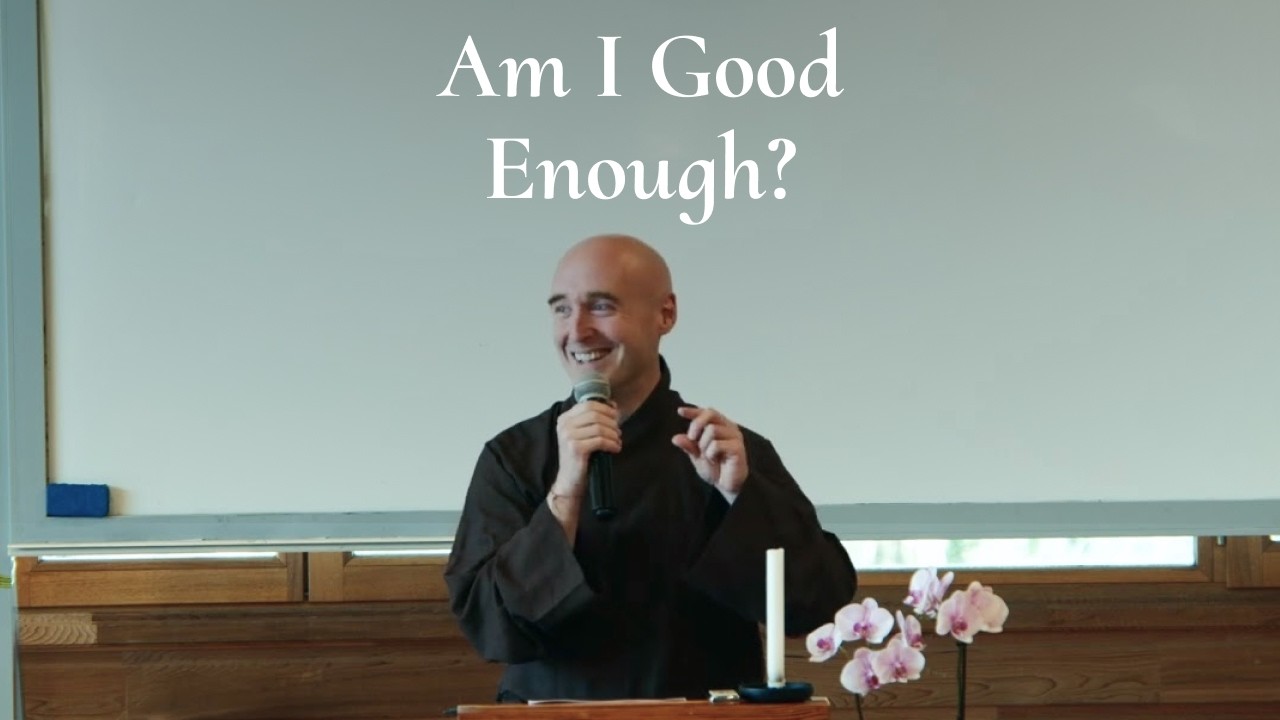
Transcript
[0:01] So, um,
[0:03] I would like to request that you leave
[0:07] your expertise
[0:09] at the door
[0:11] and you come in as a baby practitioner
[0:17] who's trying to understand what this
[0:19] practice is all about
[0:23] and
[0:25] see what happens. Um, of course you're
[0:29] free to uh take care of yourselves
[0:33] uh to
[0:35] uh follow the invitations or not or
[0:39] adapt them in any way you'd like to uh
[0:43] suit how you are in this moment. But as
[0:47] far as a professional,
[0:50] um I really want to encourage you if you
[0:53] can to leave that mindset
[0:58] um out of the room.
[1:01] Um and
[1:03] bring your awareness down out of the
[1:07] head if you happen to be um residing
[1:11] there.
[1:13] So, u we'll start with three sounds of
[1:16] the bell and then uh we'll offer a song
[1:22] and the words are on the board. If you I
[1:24] don't know if everybody can see them. Uh
[1:28] just so that you can
[1:31] know what the song is saying in case you
[1:34] can't understand the words.
[1:36] And if you would like to sing along,
[1:38] you're very welcome. Uh, and if you'd
[1:41] like to just uh
[1:44] be with the song, uh, that's fine, too.
[1:47] And, uh, to notice what happens inside,
[1:52] uh, from where you are in this moment.
[1:55] And perhaps as the bell sounds, you
[1:58] check inside and see where you're at,
[2:02] whatever that means to you in this
[2:03] moment.
[2:06] And uh then to just keep noticing and
[2:11] not only noticing what goes on inside of
[2:13] you, but you can peek around and see
[2:17] what's going on inside of others.
[2:21] Um
[2:24] maybe we should introduce ourselves
[2:26] first.
[2:28] Okay. So you introduce me and I'll
[2:30] introduce you.
[2:35] Uh dear community, this is my dharma
[2:38] teacher Joanne Rosen and great friend.
[2:41] Uh she's a
[2:44] longtime psychotherapist and um has been
[2:49] working very hard to kind of um
[2:54] bring together her practice as a Plum
[2:57] Village practitioner um as a therapist
[3:00] and her keen interest in neurobiology
[3:04] and trauma informed studies. Um and all
[3:09] of those things together have manifested
[3:11] in the book Unshakable and also um the
[3:15] study groups and other offerings of the
[3:17] embrace sa
[3:23] and this is Yousef Gabber um who has
[3:27] been a wonderful
[3:30] budding part of Embrace which we'll talk
[3:33] about later and uh Yousef just finished
[3:38] uh his masters in social work and so he
[3:41] really knows some neurobiology. I just
[3:45] know the really simplified simplified
[3:48] version and that was that's good enough
[3:51] for me. Um that's I think good enough
[3:53] for most of us as practitioners
[3:56] and uh great gratitude to those
[3:59] scientist those minds that have uh led
[4:03] us to this moment. So, we'll start with
[4:07] three sounds of the bell.
[4:52] And we will care
[4:55] for each other
[4:58] as the world around us unravels.
[5:03] And we will tend
[5:06] to the spark
[5:09] of hope that lives within our grieving
[5:13] hearts. And we are here
[5:17] now in this present moment lifting our
[5:21] voices and hearts.
[5:25] And we are here
[5:28] now. We have come together. We are
[5:32] tending the spark
[5:36] of hope.
[5:46] Oh, made it grow.
[5:57] And we will care
[6:00] for each other
[6:03] as the world around us unravels.
[6:08] And we will tend
[6:11] to the spark
[6:14] of hope that lives within our grieving
[6:18] hearts. And we are here
[6:22] now in this present moment lifting our
[6:26] voices and hearts.
[6:29] And we are here
[6:33] now. We have come together. We are
[6:37] tending the spark
[6:41] of hope.
[6:43] [Music]
[6:45] Oh,
[6:50] all made it grow.
[7:02] And we will care
[7:04] for each other
[7:07] as the world around us unravels.
[7:12] And we will tend
[7:15] to the spark
[7:18] of hope that lives within our grieving
[7:22] hearts. And we are here
[7:26] now in this present moment lifting our
[7:31] voices and hearts.
[7:34] And we are here
[7:37] now. We have come together. We are
[7:41] tending the spark
[7:45] of hope.
[7:55] All may grow.
[8:06] and we will care
[8:09] for each other.
[8:11] [Music]
[8:16] Just go inside and just notice
[8:40] The human being has been
[8:44] singing together
[8:46] as a way to
[8:49] regulate themselves and co-regulate with
[8:52] each other to feel each other.
[8:58] since uh we were hunter gatherers,
[9:03] which isn't a very long time ago in the
[9:09] world of evolutionary biology.
[9:14] We're walking around with the nervous
[9:17] system of a hunter gatherer
[9:21] because uh nervous systems evolve very
[9:24] slowly.
[9:28] human civilization,
[9:30] whatever that means,
[9:33] um has evolved much faster and our
[9:36] nervous systems have not been able to
[9:39] keep up.
[9:41] And so we find ourselves in a pickle
[9:45] because
[9:48] we're made to uh
[9:52] try and eat everything we can
[9:55] all day long.
[9:57] whether we're hungry or not because we
[10:00] don't know when the next food may be
[10:02] coming.
[10:04] Except that's not the way it is anymore.
[10:08] But our biology doesn't tell us
[10:11] necessarily when to stop until it's way
[10:14] too late.
[10:18] And we're uh also programmed to
[10:22] procreate
[10:23] and take good care of our babies so that
[10:26] they survive and uh can contribute to
[10:30] the group.
[10:33] And we are meant to make decisions very
[10:38] quickly.
[10:39] And our nervous systems
[10:42] gear up really fast to uh meet
[10:46] unexpected threats.
[10:50] And then our nervous systems are meant
[10:52] to relax and eat berries and sit around
[10:57] a fire if fire was developed by then.
[11:04] We're not meant, our nervous systems
[11:07] aren't ready for unrelenting stresses.
[11:12] Um, our quick decisions
[11:15] um are meant for much simpler
[11:18] situations.
[11:20] The ways that we are threatened in these
[11:22] days take a lot of thinking in terms of
[11:27] how to respond and be safe.
[11:32] So
[11:33] while Buddhism talks about greed, hatred
[11:37] and delusion,
[11:39] the roots of greed, hatred and delusion
[11:43] in our biology
[11:45] are just what kept us surviving.
[11:50] And uh as we
[11:53] developed
[11:55] different ways of living together,
[11:58] those instincts
[12:02] didn't really work for us
[12:05] and certainly don't work for us now.
[12:08] Um, we're we're made with the the
[12:12] possibility
[12:14] of being aware and uh checking our
[12:20] voracious appetites.
[12:23] Those who didn't have voracious
[12:25] appetites
[12:26] perished.
[12:28] So if we're a jolly overeater or we want
[12:33] to be an overeater,
[12:35] um we have to appreciate that that's
[12:37] what kept our species alive and take
[12:41] this spin off of greed and thank that
[12:46] appetite inside of us or the appetite to
[12:50] jump to conclusions so that we keep our
[12:53] safe. to take off that negative,
[12:57] shameful spin and rather greet it with
[13:02] an ability to begin cultivating
[13:06] away from the habits that don't serve
[13:09] us.
[13:13] So if you think about some habit that
[13:16] you have
[13:19] and you want to change it,
[13:22] we can become very self aacing and
[13:28] self-absorbed
[13:29] by judging ourselves that we're too this
[13:32] or that. and to just appreciate that
[13:36] those are coping mechanisms that are
[13:38] outdated
[13:40] and that our practice helps us update.
[13:45] Uh not that we want to um become
[13:50] friendly with everything in our
[13:52] environment that may be toxic
[13:55] um but at least to be able to stop and
[13:59] see it for what it is that that's our
[14:02] practice. So everything we do is to be
[14:06] able to see the present moment in as
[14:10] full of view as we can.
[14:14] That's enough of that.
[14:16] Let's see.
[14:20] So um to continue thinking about the
[14:23] present moment and our nervous systems
[14:26] going to put uh some of these up on the
[14:28] board.
[14:30] Yeah, that would be nice.
[14:37] So
[14:39] we know that uh as we go through life
[14:43] and engage in different situations,
[14:47] we get a lot of input from the world
[14:49] around us. And our nervous system
[14:53] uh is built to respond to inputs whether
[14:57] they come externally or internally. And
[15:01] it kind of has different
[15:04] settings or modes you might consider
[15:06] them for different quantities and
[15:09] qualities of energy that we are
[15:11] receiving.
[15:13] So in this chart you can see that green
[15:17] zone. And so what I'd like to invite
[15:19] everybody to do is just to take a moment
[15:22] and remember a time when you felt really
[15:25] well. not super high energy, joyous and
[15:28] happy, but just well and easy. Um, and
[15:34] just take a moment to think of think of
[15:36] that time.
[15:47] And if as you're
[15:50] thinking about that time some kind of a
[15:52] gesture perhaps a hand on the heart, a
[15:56] pat on the back or anything like that
[15:59] comes about
[16:02] just uh allowing that gesture to happen.
[16:07] So when our nervous system is
[16:11] uh has kind of um a sense of ease, calm,
[16:17] uh we're in that I'm eating berries and
[16:20] resting mode.
[16:22] This is what we call uh being inside of
[16:25] our uh window of mindful opportunity.
[16:28] Sometimes it's called the window of
[16:30] tolerance.
[16:31] And when we're here, we can experience a
[16:35] range of different emotions. They might
[16:38] be pleasant like peace or contentment or
[16:41] joy,
[16:42] but they might also be uh difficult
[16:45] feelings like anger or sadness. But our
[16:49] nervous system can still hold um those
[16:53] feelings without really getting too
[16:56] activated or hyped up. We don't get
[16:58] swept away in our thinking.
[17:01] or uh in our actions
[17:05] or in our speech.
[17:09] So now let's think a little bit about
[17:12] what happens when we get a little bit
[17:14] more energy and maybe that energy is a
[17:16] little bit more challenging for our
[17:18] nervous system. Mhm.
[17:21] Um, so if you'd like again an experiment
[17:25] to try, I invite you to just stretch a
[17:28] little bit in whatever way you'd like
[17:31] and stretch until
[17:33] you're uncomfortable,
[17:35] but not uh not too hard. Just kind of at
[17:39] that edge of comfort and discomfort
[17:42] and just taking a notice.
[17:47] What's it like to be there?
[17:56] So
[17:58] this
[17:59] place in our nervous system is described
[18:03] in this little egg model in the yellow
[18:05] here.
[18:07] And this is the zone when maybe our
[18:10] nervous systems, maybe we're receiving
[18:12] input in life. Things are happening
[18:14] around us that are challenging us in
[18:16] some way. It could be physical, it could
[18:18] be mental, it could be emotional or
[18:20] spiritual.
[18:22] But uh we have the space or capacity to
[18:25] handle the challenge. It doesn't
[18:27] necessarily mean um that we will be
[18:31] comfortable in that moment in in our
[18:33] life. But uh that moment doesn't carry
[18:37] us away or if it does, we're able to
[18:41] find a way to bring ourselves back into
[18:43] the present moment into our body. we can
[18:46] uh be with the discomfort and the
[18:49] difficult feelings. So that's kind of
[18:52] this yellow zone here.
[18:56] And um
[18:58] we're going to do one more stretching
[19:00] experiment.
[19:02] And please uh do not uh hurt yourself
[19:05] this time. Uh just take it easily, but
[19:08] experiment. See where you can find just
[19:10] your edge of stretching a little bit too
[19:13] far. just at the edge of ooh it's too
[19:18] much.
[19:20] And when you find that place just come
[19:22] back
[19:29] perhaps taking a moment to remember
[19:31] whatever that thing that gave you a
[19:33] sense of well-being earlier was.
[19:43] So when we receive energy in too great a
[19:46] quantity or too difficult a quality for
[19:49] us to handle, our nervous system goes
[19:52] into its instinctual kind of protective
[19:55] mode. Often times you'll hear this
[19:58] referred to as the fight, flight or
[20:00] freeze response. And that's out here in
[20:03] this red zone.
[20:06] really critically in this red zone. It
[20:10] is not possible to engage with the parts
[20:13] of our brain that mindfulness
[20:16] um is is alive in. And
[20:21] when we're pushed here, we can be swept
[20:25] away by our thoughts, by our feelings,
[20:27] by our actions. We might act
[20:29] unskillfully or in ways we regret. And
[20:32] um
[20:34] it is uh as Joanne was saying earlier,
[20:37] kind of our natural biological response
[20:40] to high stress. We're just trying to
[20:44] find the solution right then and there.
[20:46] And our brains, our bodies, our spirits
[20:49] are testing every possibility as fast as
[20:51] they can to get us back into a place
[20:54] where we feel comfortable and safe. Um
[20:59] but we don't necessarily have access to
[21:02] the full picture of what's going on uh
[21:06] to create that condition for us because
[21:09] again the body is just really trying to
[21:12] get back to its its comfort place.
[21:16] And
[21:21] if we spend
[21:23] all of our time or much of our time in
[21:26] this red zone,
[21:28] our window tends to shrink a little bit.
[21:31] You know, what we find comfortable
[21:33] becomes smaller and smaller because our
[21:36] nervous system is alerted to danger
[21:38] everywhere. On the flip side, when um we
[21:42] spend too much time in this comfortable
[21:46] green zone and we don't give ourselves
[21:50] opportunity to stretch, to grow, to
[21:52] challenge ourselves, our way of
[21:54] thinking, our way of being, um that
[21:57] window also shrinks. We get too uh
[22:00] comfortable. And then Joanne has used
[22:02] this analogy before and I really like
[22:04] it. the princess and the pee, you know,
[22:06] the one pee under her mattress, as tiny
[22:09] as it is, is enough to make her unable
[22:11] to sleep. So
[22:14] we have uh each of us at different times
[22:17] in our lives at different places in our
[22:19] lives um
[22:23] different needs to grow to be
[22:26] comfortable and also to notice when
[22:29] we've uh come into this red zone here
[22:32] and maybe are in need of some kind of a
[22:35] support to uh help us find our way back
[22:38] into a place where we can practice
[22:40] mindfulness where we and observe a
[22:44] bigger picture of what's going on and
[22:46] and how our bodies instinctually are
[22:50] responding to situations.
[22:53] And I think uh I'll give the microphone
[22:55] back to Joan now
[23:00] just to say um the red isn't bad. Um,
[23:07] it's what mobilizes us uh to run away
[23:10] and to fight. And those were really
[23:13] necessary. Um, they're less necessary uh
[23:17] in modern life and more necessary to
[23:20] stay in here, but uh it's not bad. And
[23:25] throughout the day, we fluctuate all
[23:27] over the place. And uh part of our
[23:31] practice is to be noticing where am I?
[23:36] Where am I? So I know whether I need to
[23:41] bring up the energy or bring it down.
[23:45] Let's take this away.
[23:57] One of the things that made me fall in
[24:00] love with Tai was the way he could make
[24:04] a circle.
[24:06] I won't be doing so well.
[24:14] So, we've uh had a lesson in this
[24:19] already this week. So, uh, just to
[24:24] what is this?
[24:27] The seeds, right? And there's a
[24:30] beautiful flower.
[24:33] And there's a kind of messy one. And um,
[24:40] uh, the right effort is to first know
[24:44] what is coming up. you're having an
[24:48] experience and do we like it? Does it
[24:51] feel good? Does it feel wholesome and
[24:53] nourishing or does it feel kind of
[24:56] creepy or
[24:59] And so we're always asking is this a
[25:02] wholesome seed or an unh wholesome seed?
[25:06] And one way we can uh test it is if it
[25:12] is creating a sense of well-being or a
[25:16] sense of illbeing.
[25:19] And so if it's over here uh well-being,
[25:24] we want we have two tasks. One is to
[25:27] name it. Um, joy, uh, gratitude,
[25:34] uh, compassion
[25:36] and to feel it, to just savor it, to
[25:40] create a neural pathway that goes
[25:45] and makes this stronger and quicker and
[25:50] more likely to come up in the future.
[25:53] And the other thing we can do with this
[25:55] neural pathway is call it up on purpose.
[25:59] We sit down on the cushion. We think of
[26:02] something that brought us a sense of
[26:04] well-being. And we hold it and we notice
[26:08] all its qualities, where it is in our
[26:12] body, what thoughts and images come up.
[26:16] We go through the scandas
[26:19] to to see what it's made of so that we
[26:23] can appreciate it in that moment and we
[26:26] can perhaps coax it up in the future
[26:30] maybe even in a different situation.
[26:34] Now with this one
[26:36] we know that if we give it its full
[26:40] attention like anger and we giving some
[26:43] shouts or some h um that also waters
[26:47] that seed and makes that neural pathway
[26:50] go quicker and more intensively and we
[26:54] don't want that to happen. So we
[26:57] surround it.
[27:02] we surround it.
[27:05] Well, so much for that. Obviously, I'm
[27:09] in the red and I can't surround it. That
[27:12] happens.
[27:15] Okay, we surround it with our
[27:17] mindfulness
[27:19] and then we're able to look at it the
[27:22] same way we looked at this. We notice
[27:25] where it is in our body, whether it's
[27:27] increasing or decreasing. Um what images
[27:31] and
[27:33] um
[27:35] thoughts that come up, what perceptions
[27:37] we have, what history we have with it.
[27:40] We see how it's made so we don't make it
[27:43] again. And then that seed is smaller and
[27:48] less likely to manifest.
[27:51] But the thing is, we don't always have
[27:55] mindfulness. When we're in this red
[27:58] zone, mindfulness isn't happening.
[28:01] What's happening is habit energy. We're
[28:05] on automatic pilot to save our lives.
[28:08] Whether that's realistic or not, uh we
[28:11] can get on a uh a red light and feel
[28:15] like we're going to die if it doesn't
[28:17] turn green really fast. And so that's
[28:21] kind of a mismatch between our nervous
[28:25] system that we're stuck with and and our
[28:29] civilization which we're also
[28:32] temporarily stuck with.
[28:34] So the question is always do I have the
[28:39] mindfulness
[28:41] to
[28:43] pay attention to this? And we all have
[28:46] kind of a tendency to go to one extreme
[28:50] or another. There are some people who
[28:52] say, "I'm going to dig in there and I'm
[28:55] going to feel this thing no matter how
[28:57] freaked out I am so I can make that
[29:00] thing go down." And that is not
[29:04] mindfulness.
[29:05] That is watering the seeds of tension
[29:10] and
[29:11] stretching way out here. It's just
[29:14] making it worse. And you feel it in your
[29:16] body. Your body is getting more tense or
[29:20] perhaps more like wiped out. And so when
[29:26] you go to surround it with mindfulness
[29:29] and that's not working very well, you
[29:32] have to stop and acknowledge I do not
[29:35] have the capacity
[29:37] to put mindfulness around this. So your
[29:40] job is to come back here and work on
[29:43] those seeds. Now it may take a little
[29:46] transition
[29:47] to go from here to here. And there there
[29:50] are things we can do in a pinch which uh
[29:54] Tai calls changing the peg. So we'll
[29:58] we'll talk about that later. But the the
[30:02] important part is that we're practicing
[30:05] all day long like a bell of mindfulness.
[30:09] If we hear a bell, where am I in here?
[30:12] Am I in here? Am I in here? Or am I
[30:15] here? That those of us who tend to
[30:20] overboard and hang on with our
[30:22] fingernails, we tend to like to be out
[30:26] here.
[30:28] And those of us who really know how to
[30:32] get in this green area and just like
[30:36] hang out there or hide there.
[30:40] We also have a tendency not to shy away
[30:45] from this to just keep going over here.
[30:49] So we need to know ourselves. What is
[30:51] our habit? Do we overdo or do we underdo
[30:56] when we're not in the middle?
[31:02] So,
[31:04] this is the foundation of our practice.
[31:11] And let's see what happens when we hang
[31:14] out here too much. So, let's get
[31:20] Yeah.
[31:31] Now it's your turn.
[31:36] So um we have this word in our common
[31:41] cultural dialogue now trauma right which
[31:44] is a very big word
[31:46] um and has many definitions.
[31:50] When we enter that uh red zone, there
[31:54] are kind of two different ways our
[31:57] nervous system goes. There's up here in
[32:01] the hyper zone. This is our fight and
[32:05] our flight response. Up here we get
[32:07] those um anxious, angry,
[32:11] um very scared kinds of feelings. And
[32:15] those are the high energy states that
[32:18] again survival instincts trying to bring
[32:21] us to a place of safety.
[32:24] The other end of the equation is the
[32:27] hypo states. So those are when we get
[32:30] really low and slow, lethargic or sad,
[32:35] depression, dissociation.
[32:38] And um when we get into those states uh
[32:42] those are kind of like conservation of
[32:43] energy states where like our nervous
[32:46] systems our body are feeling like I
[32:48] don't have uh any options. I'm going to
[32:50] b my time and wait until options become
[32:54] available.
[32:59] When we have like we do on the daily
[33:01] sometimes experiences that bring us into
[33:04] the red, if we have enough support,
[33:07] whether that's internal resources,
[33:09] community resources, spiritual
[33:11] resources, we can bring ourselves back
[33:14] into our window. But sometimes we
[33:18] experience stressors that we don't have
[33:20] adequate support for or are too
[33:23] difficult.
[33:29] I forgot something
[33:31] and so let's take it as an opportunity
[33:35] just like where are you at when I did
[33:37] that?
[33:42] Curious about what you forgot and uh
[33:47] maybe very mildly uh a little anxious
[33:50] for a moment but after you asked the
[33:53] question feeling calm.
[33:55] Well, I was right cozying up to the red
[33:58] myself. I was like, "Oh, this is too
[34:01] much too fast. This is actually what
[34:04] we're talking about, right?" It's like,
[34:07] "It's late at night. We've had a long
[34:09] day. Now we're going to talk about
[34:11] trauma." It's like, "Oh my gosh." So,
[34:15] um, I forgot to do the experiential
[34:19] part. Yes.
[34:23] Okay. So take just like
[34:27] and just notice where you're at in this
[34:30] moment in one of these diagrams.
[34:37] [Music]
[34:40] And for me just acknowledging
[34:43] that uh I got got a little too close to
[34:46] the red um is already bringing my
[34:50] cognitive online.
[34:52] it it's bringing myself into the moment
[34:56] and that helps me regulate a little bit.
[34:59] But we're going to walk through uh a
[35:02] number of the exercises in the
[35:05] Anapanosati sutra. This is the sutra
[35:09] that Tai discovered um which is actually
[35:12] part of the vapasa tradition
[35:16] um that he said this was the luckiest
[35:18] day of his life something like that.
[35:22] um because it's a road mapap for
[35:27] looking deeply for stopping and looking
[35:30] deeply.
[35:31] And the first thing we do is we find our
[35:35] balance. We sit up in a way that is both
[35:41] relaxed
[35:44] and alert. And what that is is
[35:49] bringing online
[35:52] the mindfulness is the optimal balance
[35:56] between
[35:58] onepointed concentration
[36:01] and kind of being aware of the whole
[36:05] picture. It's this kind of relaxed state
[36:09] in between. And so our body is the first
[36:14] place where we find that balance.
[36:19] And for each of us it may be different.
[36:22] And you can even experiment with like
[36:26] just slouch a little
[36:29] and just notice whether how your mind is
[36:33] and then sit up in a balance.
[36:36] So this this is neurobiology
[36:42] and tailor making it to you in this
[36:46] moment.
[36:50] And we're always looking for ways to
[36:53] feel solid. Some of you will have your
[36:57] arms crossed across your chest to feel
[37:00] solid. Others will hold their hands or
[37:05] um the the way we fold our legs to make
[37:10] ourselves feel solid. This is a basic
[37:15] well-being feeling
[37:17] in our neurobiology.
[37:22] So feeling where our body is contacting
[37:27] the earth, where it's contacting the
[37:29] chair, where we're feeling supported,
[37:32] how our spine holds up our head.
[37:37] So even to notice when you're in that
[37:40] red,
[37:42] where do I feel the weight?
[37:47] That can calm your nervous system. that
[37:49] can help regulate you up or down the way
[37:54] your body needs to have a sense of
[37:56] well-being.
[38:00] And then there's the eyes. The eyes must
[38:04] be open or closed, not to get
[38:07] distracted, but also not to feel like,
[38:12] uh-oh, if I close my eyes, something bad
[38:14] might happen. So that's adapting again,
[38:19] adapting to what brings you a sense of
[38:23] well-being because when we're sitting,
[38:28] we're trying to stay within the yellow,
[38:32] not necessarily in the green, but it's
[38:35] nice to start as close to the green.
[38:39] We don't always have control over the
[38:42] situation. So you feel your body and
[38:46] then uh some people may follow their
[38:50] breath
[38:52] as a way to anchor as a way to do
[38:56] something. They talk about an elephant
[38:58] in the marketplace needing a little
[39:01] piece of bamboo to hold on to so that
[39:05] trunk doesn't fly all over the place and
[39:08] cause havoc. And our mind is like that.
[39:12] We need something to anchor us.
[39:15] But some people when they follow their
[39:19] breath
[39:21] and they can't quite get a full breath
[39:24] and they keep
[39:27] focused on that, it gives the body and
[39:30] the mind a message that you're not quite
[39:34] safe because you can't take a full
[39:35] breath.
[39:37] So you notice how is breathing helping
[39:42] us to settle and we don't need to run
[39:45] away from it instantly if we don't like
[39:48] it but just to be curious. That yellow
[39:52] zone is a zone of curiosity.
[39:56] So we pick something that we can focus
[39:59] on easily that doesn't cause us
[40:04] constrination.
[40:06] that helps us just relax the mind. Just
[40:11] have one little thing to do.
[40:14] So
[40:16] you can pick whether it's the breath in
[40:19] this moment
[40:21] or perhaps uh
[40:25] the weight of your body on the cushion
[40:28] or perhaps
[40:32] um just allowing your gaze to find a a
[40:37] color that is pleasant and just relax
[40:41] with that color.
[40:43] Or sometimes if I'm not talking, you
[40:46] might be able to hear the birds.
[40:49] Just one thing.
[40:57] And we keep noticing as we do this, how
[41:01] does that affect us inside?
[41:06] So we have
[41:10] knowing about our breath or about our
[41:12] anchor
[41:14] and then noticing the body. That's
[41:19] the next step in the anapana sati sutra
[41:23] is to just be aware of our entire body.
[41:28] But we may need to do that one little
[41:31] bit at a time because trying to focus on
[41:35] the entire body may be too much.
[41:38] So you can maybe just focus on your feet
[41:42] and we won't go through the entire body
[41:45] just the feet in this moment but to give
[41:48] a notion of how we can tear it down to
[41:51] be very simple.
[41:54] Just noticing, do my two feet feel the
[41:58] same or do they feel different
[42:02] or can I feel them at all?
[42:05] Our daily life is so geared to looking
[42:08] outward
[42:10] that we don't take the time to be in
[42:13] tune with our body. And yet our body has
[42:18] all these subtle messages that we miss
[42:22] if we're not in tune.
[42:24] So we notice our feet. We notice the
[42:27] temperature.
[42:30] We notice what our feet are touching and
[42:34] what the quality of that texture might
[42:36] be.
[42:42] And we have the programming, the
[42:47] neurobiology
[42:48] to really slant our attention towards
[42:53] problems. So if we have an ache or a
[42:56] pain, chances are it's going to hijack
[42:59] your attention.
[43:02] So your job is not to let that happen.
[43:07] And when it does happen, because it's
[43:09] inevitable,
[43:11] to lovingly bring it back because as
[43:14] soon as you judge yourself, you scoot
[43:18] yourself towards the red because that's
[43:21] threatening yourself.
[43:24] So
[43:26] when Tai says, "If you're not enjoying
[43:29] your practice, you're doing it wrong."
[43:32] This is what he's pointing to.
[43:36] And it doesn't mean that it's all
[43:38] happiness and delight,
[43:41] but it can be all curiosity.
[43:45] So we we notice what's happening in our
[43:50] feet and when we get hijacked by uh our
[43:53] back, we go back to the feet and then we
[43:57] can move on to the legs and the organs
[43:59] and all the facial muscles and the like.
[44:05] But right now, just take a brief look
[44:09] through your body and see if you can
[44:12] find one part of the body that feels
[44:15] either pleasant or good enough, like
[44:19] doesn't hurt as much as yesterday,
[44:22] some good news about your body. There's
[44:26] always somewhere.
[44:29] So, and it doesn't need to be the very
[44:32] best part.
[44:34] Just somewhere that feels good enough.
[44:37] And allow your attention to rest there.
[44:47] And to notice whether the
[44:51] resting in a place of well-being or good
[44:56] enough
[44:59] makes a difference in the body or in the
[45:03] mind.
[45:15] And then
[45:18] I want to invite you to
[45:22] um listen to the frogs
[45:26] and just notice what happens as you
[45:29] listen to the frogs.
[45:42] Notice if the body is involved in what
[45:46] happens when you listen to the frogs
[45:49] and if there's some pleasant sensation
[45:54] in your body by listening to the frogs.
[45:59] Uh, you can even put a hand on that
[46:01] part.
[46:03] Hey frogs, keep it up.
[46:13] Okay, change to the birds.
[46:24] This is really magical, isn't it?
[46:28] So much power to ah the the frogs are
[46:32] laughing.
[46:35] So just notice
[46:38] this silliness and how does this
[46:40] silliness sit in the body? Or perhaps
[46:44] there was something that touched you
[46:46] today that brought you a sense of
[46:50] connection or delight.
[46:58] And as you bring it to mind to ask
[47:02] yourself, what are the best parts of
[47:04] this?
[47:15] Perhaps to isolate just one moment and
[47:19] feel
[47:20] how that might be alive in the body.
[47:26] This is gladdening the body.
[47:39] And in a similar way, we can gladden the
[47:42] mind.
[47:44] Uh also picking out some
[47:47] moment in time during the day that
[47:50] perhaps you didn't spend enough time
[47:53] savoring and that it's not too late to
[47:56] savor it. now
[47:59] to develop a lifestyle of watching for
[48:04] these moments of well-being
[48:08] and
[48:10] allowing yourself to
[48:13] savor and create the neural pathways
[48:16] that water those wholesome seeds.
[48:21] And that this little by little gives you
[48:24] more and more ability
[48:27] to sit with those
[48:31] moments of ill-being and surround them
[48:34] with mindfulness that develops
[48:38] uh by watering the wholesome seeds.
[48:45] So now we're going to return to trauma.
[48:53] And to just make uh clear that um we all
[48:59] uh experience trauma I guess. Um depends
[49:04] on your definition.
[49:06] Yeah. Uh it's really hot. If we let's
[49:10] shut all the doors and windows so we can
[49:14] all have the same experience of it being
[49:17] really hot.
[49:20] No. Okay, there we go.
[49:27] Just taking a moment inside of me to
[49:30] continue savoring because that was a
[49:33] very pleasant meditation. Thank you,
[49:35] Joanne.
[49:37] Um, okay.
[49:40] So, uh, we talked kind of a little bit
[49:43] about the up and the down. Yeah.
[49:49] when uh we get those stressors
[49:53] that uh
[49:56] like I was saying before, sometimes we
[49:58] get those stressors that we have the
[50:01] right support to bring ourselves back
[50:03] to. Maybe we have enough moments of
[50:06] savoring to kind of do that hopping back
[50:09] and forth and surrounding. or we have a
[50:13] good friend who uh holds our hand or
[50:16] pats us on the back, reminds us that
[50:18] it's going to be okay. Those moments
[50:21] help us come out of the red and back
[50:24] into the green.
[50:26] Sometimes we find circumstances
[50:30] that for any number of reasons
[50:33] um keep us in the red.
[50:36] And this is our nervous system again
[50:40] trying to protect us. But uh if we stay
[50:45] in that red zone on either end for too
[50:48] long and we don't have the adequate
[50:52] support or resources to bring ourselves
[50:54] back into the green, we um
[51:00] build that neural pathway into us really
[51:02] strongly. And uh that ends up sitting in
[51:06] our body, in our mind, in our feelings
[51:08] very strongly. And it's this kind of
[51:12] extended stay in the red that uh we call
[51:16] trauma in the in the brain and in the
[51:19] body.
[51:26] And there are a number of different
[51:28] kinds of trauma. And I don't think I
[51:30] need to break them all down.
[51:32] Yeah. Yeah,
[51:40] you don't have to do that one.
[51:44] Everybody raise a hand.
[51:46] Ah, yeah.
[51:53] So, uh, raise if you like to raise two
[51:56] hands, you can raise two hands. If you
[51:58] get tired, you can always put one down.
[52:00] Um so uh just to name a few of the kinds
[52:05] of um trauma, trauma is when we're stuck
[52:10] and when the threat is gone and when uh
[52:14] the body is continuing to uh feel the
[52:19] the danger. So um often times uh people
[52:25] who live through war
[52:27] uh or
[52:29] um feel that kind of uh stress, the
[52:34] unrelenting stress of living through
[52:36] war. So if you live through a war, just
[52:40] put down one of your hands. And if you
[52:43] were raised by somebody who was uh a
[52:47] person who lived through war, you can
[52:49] put down a hand. Um if you were raised
[52:53] in a place where uh your particular
[52:57] demographic,
[52:59] whether it was race, religion,
[53:02] um uh sexual orientation, preference,
[53:07] um
[53:09] was problematic.
[53:11] uh you can put your hand down. And if
[53:14] you were raised by someone who lived
[53:16] through that, you can put your hand
[53:18] down. And if you uh lived through
[53:22] poverty or you were raised by somebody
[53:25] who lived through poverty, you could put
[53:27] a hand down. And uh if you were raised
[53:31] in a family where somebody had a grave
[53:34] illness or you had a grave illness or a
[53:38] death in the family that was important,
[53:40] you can put your hand down.
[53:43] And uh
[53:48] if uh
[53:51] if you lived in a place where there was
[53:54] some kind of natural disaster
[53:58] um or uh what else
[54:05] what else is there that eats away at us?
[54:08] either all of a sudden uh somebody who
[54:13] was raised by someone who suffered
[54:16] sexual abuse or domestic violence or
[54:20] drug addiction or any one of those
[54:23] things yourself can put your hand down.
[54:30] If uh if you come from uh a uh
[54:36] profession where you are looking at uh
[54:41] doing things that are counter to your
[54:43] own ethics.
[54:45] Um it's called moral injury. You may put
[54:49] your hand down.
[54:52] If you come from a situation of great
[54:55] wealth
[54:57] or great beauty,
[55:01] you could put your hand down. Wow.
[55:06] Well, for those who still have their
[55:08] hands up, we'll just leave them up and
[55:10] you'll be suffering some other kind of
[55:13] trauma.
[55:15] Um, sometimes I leave things out that
[55:19] feel very important. Um, if you have
[55:23] been uh adopted or raised by somebody
[55:27] who was adopted, you can put your hand
[55:30] down.
[55:38] So, um, not too many hands are still up.
[55:43] Uh, we are all
[55:46] suffering something. We all live in a
[55:49] world that is on fire
[55:53] and that affects all of us. So in some
[55:56] ways or other
[56:00] we all experience this at some point.
[56:13] H
[56:14] moral wounding
[56:16] moral wounding. I I mentioned that uh
[56:20] yeah people in the who work for uh
[56:25] universities where you have to publish a
[56:27] certain kind of stuff.
[56:31] Do you want to uh
[56:34] an accident? Yes. Something that is big
[56:37] on your body. Absolutely. Um
[56:42] yes. Thank you.
[56:44] Neglect.
[56:46] Yes. Yes. Neglect is uh very similar to
[56:51] uh um it's something that grates on you
[56:55] that one little bit of neglect builds on
[56:58] the next on the next on the next. If you
[57:01] were
[57:05] uh neurodeiverse
[57:06] and your parents didn't recognize it and
[57:09] couldn't see who you were, um that can
[57:13] be very damaging and can put you on
[57:16] edge.
[57:18] So, what do you do when that happens?
[57:22] What do you do when you're stuck in the
[57:24] red?
[57:27] Um,
[57:29] so
[57:31] the idea is that you chip away with it a
[57:35] little tiny bit at a time. I I liken it
[57:40] to roasting a marshmallow.
[57:43] Um, you have a stick and a marshmallow
[57:47] and you put it on there. you put it in
[57:50] your attention and for those who like uh
[57:54] overdo it, you just stick it right into
[57:57] the fire and it turns
[58:00] on to flame and it's just an ashy mess
[58:05] and you wouldn't want to eat it. So, um
[58:09] then there's the person who keeps it
[58:12] really safe. They put it on the end of
[58:14] the stick and the fire is over there and
[58:16] they hold it like here and they're
[58:19] they're like waiting for it to melt and
[58:22] it is just not going to do it. So you
[58:25] have to bring it to the fire to go as
[58:30] close to the red as you can but still
[58:34] you're in the yellow. You're not
[58:36] completely carried away and you know
[58:39] what it feels like to be carried away.
[58:43] So you have to know that and you you put
[58:46] it into the fire with just one side just
[58:50] maybe noticing what happens in your feet
[58:55] and then if that's a little too much you
[58:59] bring it out of the fire.
[59:02] You notice how it's affecting your body.
[59:05] You can either start with your body or
[59:08] you can start with your your images. or
[59:12] your stories. It doesn't matter where
[59:14] you start.
[59:16] It helps to start with the body if
[59:19] you're comfortable with that. So
[59:22] something happens for me.
[59:25] I feel it. Oh, I feel it everywhere. Are
[59:28] you sure? Well, actually, I don't feel
[59:32] it in my ankles. Okay. Where do you feel
[59:35] it the least? A little bit. I feel it in
[59:38] my calves. Okay. I can feel it in my
[59:41] calves for a moment, but that's really
[59:43] enough. And I bring the marshmallow out
[59:47] so that it doesn't start to burn.
[59:50] And then I maybe I turn it a little bit
[59:52] and I think, okay, can what what image
[59:56] came up? Oh, I can't look at that whole
[59:59] thing. Well, can you look at one corner
[1:00:02] of it? And just maybe for a second, you
[1:00:05] put it in the fire. Then you bring it
[1:00:08] out.
[1:00:12] And you ask yourself, do I have the
[1:00:14] capacity to try it again for two
[1:00:18] seconds? Maybe yes and maybe no. You
[1:00:22] really don't want to push your capacity.
[1:00:26] So I think, oh yeah, I got it. I push it
[1:00:29] in. I was like, nope. And so I wait
[1:00:33] until tomorrow or I wait until next
[1:00:36] week. Meanwhile, I'm watering those
[1:00:39] wholesome seeds. Watering. I'm never not
[1:00:42] practicing.
[1:00:44] I'm noticing where I am all day long
[1:00:49] and I'm watering the wholesome seeds.
[1:00:52] And I don't do it alone.
[1:00:55] Um Yousef was saying
[1:00:59] much of
[1:01:01] trauma you know two people experience a
[1:01:04] similar thing and one comes out it's
[1:01:08] okay and another person comes out very
[1:01:12] traumatized
[1:01:13] is generally because there was emotional
[1:01:17] support.
[1:01:19] So when we have dharma sharing
[1:01:23] the the idea is that we sit
[1:01:27] non-judging we have a compassionate
[1:01:31] connection with a person who's sharing
[1:01:34] so that they feel some support
[1:01:38] and then we encourage them to share
[1:01:41] what's on their heart and stay in the
[1:01:45] yellow.
[1:01:46] Not just like
[1:01:49] Because
[1:01:50] you may not as a sharer
[1:01:54] have the capacity to bring yourself back
[1:01:56] into the yellow. And the people in the
[1:02:01] group, especially if they don't know you
[1:02:03] and you don't know them, they may also
[1:02:06] become disregulated
[1:02:09] and then they're feeding you back like
[1:02:13] this and or judging. And that's not a a
[1:02:18] good message
[1:02:19] to sit with. So in dharma sharing we try
[1:02:25] to stay within the yellow both as a
[1:02:28] listener
[1:02:30] and as a sharer.
[1:02:32] And that
[1:02:34] when that becomes too much for the
[1:02:37] sharer and they're carried away, we can
[1:02:42] sound the bell
[1:02:44] and give everyone a chance to re
[1:02:50] regulate themselves
[1:02:52] and that as sister Chung says, if one
[1:02:55] person in the boat can have a calm
[1:02:58] presence, then we can tune into that
[1:03:01] person. So that the dharma sharing is a
[1:03:06] deep practice in healing and that the
[1:03:11] the really
[1:03:14] skillful dharma sharing group can hold
[1:03:18] the mindfulness
[1:03:20] when a practitioner is not able.
[1:03:25] But sometimes
[1:03:27] that's really unrealistic.
[1:03:30] that it's just too much for the the
[1:03:32] sharer and that they may need one-
[1:03:36] on-one support of someone who can hold
[1:03:40] the mindfulness for them,
[1:03:43] who can remind them that like open your
[1:03:47] eyes, look around, listen to the birds,
[1:03:51] take a drink of water, wrap yourself up
[1:03:56] to have the very simplest of exercises.
[1:04:01] Um, and to know in advance that those
[1:04:04] are the things that help you reeregulate
[1:04:07] yourself and maybe even keep a list of
[1:04:11] those in your pocket.
[1:04:14] Um, and when we do like retreats or
[1:04:18] longer workshops,
[1:04:20] um,
[1:04:21] uh, we we practice those as well. But
[1:04:25] I'm realizing, oh my goodness, it's it's
[1:04:28] 9:05. Um,
[1:04:33] maybe you can give a pitch for the
[1:04:36] things that Embrace is doing while I
[1:04:38] look at my notes and see what I forgot.
[1:04:44] So, um, this, uh, material is the kind
[1:04:47] of thing that we dive pretty deeply
[1:04:49] into. um in the embrace sa um we've been
[1:04:53] having um kind of study groups using uh
[1:04:57] Joannne's book and um coming together
[1:05:00] over Zoom. We have a few different
[1:05:03] sections to accommodate for people all
[1:05:05] around the world. Um, and we take the
[1:05:08] chance to go through this material
[1:05:10] slowly to do exercises and guided
[1:05:13] meditations together to kind of embody
[1:05:17] some of the the the learning. Um, so
[1:05:21] that's been uh a lot of what the Embrace
[1:05:24] SA has been up to. We have a website
[1:05:27] online embraces.org or where you can
[1:05:29] find um more resources, videos,
[1:05:34] information about hopefully some
[1:05:36] upcoming study groups um and keep up
[1:05:40] with uh what else is going on.
[1:05:44] And just to say, we're not
[1:05:46] neuroscientists doing this. We're
[1:05:48] practitioners and we're learning
[1:05:50] together and supporting each other and
[1:05:53] just like pulling each other up. And uh
[1:05:58] I wanted to say briefly that um looking
[1:06:02] through a kind of a neuroscience lens at
[1:06:05] the five mindfulness trainings
[1:06:08] uh is very interesting that it gives us
[1:06:11] a container
[1:06:14] to
[1:06:15] be able to reflect on all of these
[1:06:20] energies that we inherited as our
[1:06:23] huntergatherer selves. and see how they
[1:06:26] interface with society as it is today.
[1:06:31] And so those mindfulness trainings are
[1:06:35] really like the container that we need
[1:06:40] in order not to snowball out into the
[1:06:44] red. That every one of those trainings
[1:06:47] is a training to say, "Are you getting
[1:06:50] close to the red? Would you be in the
[1:06:53] red if you did this? Uh, and how can we
[1:06:58] protect ourselves from getting into the
[1:07:00] red? And you know, we'll be bouncing in
[1:07:02] and out of the red because that's what
[1:07:04] we are as human beings. We're really
[1:07:08] limited as human beings.
[1:07:11] And I think that that's both the good
[1:07:14] news and the bad news.
[1:07:17] The bad news is that we are not what we
[1:07:21] think we are. And it's all of the wars
[1:07:26] and feuds and the terrible impacts on
[1:07:31] the environment and climate catastrophe
[1:07:36] are the natural outcome of uncultivated
[1:07:40] minds over
[1:07:43] millennia upon millennia upon millennia.
[1:07:46] And the good news is that the Buddha
[1:07:49] figured out how to stop it little by
[1:07:52] little with our practice.
[1:07:55] And that neuroscientists
[1:07:57] give us some glimpse into
[1:08:02] the things that the Buddha didn't have a
[1:08:04] chance to see. But uh if he were alive
[1:08:09] today, perhaps he would be sticking his
[1:08:13] head in a scanner.
[1:08:15] So, uh,
[1:08:18] I I highly recommend,
[1:08:21] um, whether you take them formally or
[1:08:23] not, there's such a good protection. And
[1:08:28] now we're going to,
[1:08:31] uh, try and get you into the red zone.
[1:08:36] Um, just because we want you to
[1:08:38] experience everything that we have to
[1:08:41] offer. Um, so, uh, so here's what we're
[1:08:46] going to do is, uh, we're going to make
[1:08:49] these. Now, don't start yet. Don't touch
[1:08:52] the paper. I'll say start and then you
[1:08:55] can start and you'll have all the time
[1:08:58] you need um, in one minute to do it.
[1:09:02] And, um, you'll notice some glitches
[1:09:06] along the way and just notice where you
[1:09:08] are in the process. So, here's what you
[1:09:11] do.
[1:09:12] You um fold it in eighs.
[1:09:15] So you just fold. Now don't do it. I
[1:09:17] said I'll tell you when to do it.
[1:09:20] Can you hold this for me? All right. So
[1:09:28] you fold it in eighs
[1:09:31] by going like this and like that. And
[1:09:33] then you take the center
[1:09:37] and you lick it
[1:09:40] like that to uh make the the um fibers
[1:09:45] weak. And then you go this way and you
[1:09:48] go and you and you fold it. I mean you
[1:09:52] unfold it and then you pinch it like a
[1:09:55] little mouth and then you go like that
[1:09:58] and it's done. Now you'll have
[1:10:02] 45 seconds to do yours. Uh, start now.
[1:10:08] And you have to get it really careful or
[1:10:12] you'll make the words lap over onto the
[1:10:15] wrong page. Um, it's 15 seconds already.
[1:10:20] Yeah. Okay. Keep going. and make those
[1:10:22] creases really strong so that it and
[1:10:26] then you want to make them like both
[1:10:29] ways. Uh,
[1:10:33] no, sorry.
[1:10:35] That's the idea. Okay, it's 40 seconds.
[1:10:40] Okay. Um, so just finish up now and
[1:10:44] notice uh No, no, not all the way. Then
[1:10:48] you'll rip the whole thing in half.
[1:10:51] That's very bad.
[1:10:53] Ah, we have a star pupil here. Why don't
[1:10:57] you flaunt it with everybody else and
[1:10:59] show them how you did that? Okay.
[1:11:02] Anybody feeling a little bit uh uh
[1:11:05] activated? You do you notice that it
[1:11:09] would be really cruel to do that just
[1:11:11] before you're going to sleep? H it's
[1:11:15] just like thinking of like you got this
[1:11:18] bad thing you're going to do tomorrow
[1:11:21] and you think about it just as you turn
[1:11:23] off the light. Ah another person to
[1:11:27] flaunt success. Okay. Now if you notice
[1:11:32] on your folding was it accurate or is it
[1:11:35] lapping over?
[1:11:38] You know what
[1:11:40] is off center?
[1:11:41] No it's not off center. I I made the
[1:11:44] assumption that the whole world has the
[1:11:47] same size paper as the United States and
[1:11:51] that's just wrong.
[1:11:54] It's just not the same size. And I just
[1:11:57] discovered it as we came in here. So, we
[1:12:00] have a nice 150 copies that are wrong.
[1:12:06] Oh well.
[1:12:08] Um, okay. Stop for a moment. Please
[1:12:11] stop.
[1:12:14] Stop
[1:12:17] and just look around and I want you to
[1:12:22] just like look at somebody smiling and
[1:12:25] ask yourself, is that a a real smile or
[1:12:28] a fake smile?
[1:12:31] You know, we're so fine-tuned, we can
[1:12:34] tell the difference even with a mask on.
[1:12:39] We can tell the difference between a
[1:12:41] genuine smile. We are a wonder
[1:12:46] the more you get into neurobiology
[1:12:49] and the way we co-regulate and how we
[1:12:52] can really sense not only the feelings
[1:12:57] that a person is having but their
[1:12:59] intention.
[1:13:02] We are miraculous
[1:13:04] and we need to cultivate it and then
[1:13:08] we'll have a different default
[1:13:11] and create a different world.
[1:13:20] Is that it?
[1:13:23] So, um
[1:13:27] um
[1:13:30] it's 9:14.
[1:13:32] I think it's it's time to stop, but just
[1:13:36] just go inside.
[1:13:39] Um
[1:13:41] and maybe pick out one moment that we've
[1:13:45] been together
[1:13:48] that
[1:13:50] spoke to you.
[1:13:52] in whatever ways you needed to be spoken
[1:13:55] to
[1:13:59] and just feel how that is in the body.
[1:14:06] And maybe there's some words
[1:14:10] that go with it or an image
[1:14:15] or
[1:14:17] a gesture.
[1:14:19] We didn't even touch on gestures hardly
[1:14:22] at all. And gestures are completely
[1:14:25] magic.
[1:14:27] Um,
[1:14:31] and
[1:14:34] just savor it for three breaths.
[1:14:39] And know that that neural pathway to
[1:14:43] this flavor of well-being
[1:14:48] is getting stronger
[1:14:51] and faster.
[1:14:54] And that you can do that with every
[1:14:57] encounter,
[1:14:59] whether you do it right at the time or
[1:15:02] you do it after the fact. You can build
[1:15:05] these neural pathways and strengthen the
[1:15:08] wholesome seeds and shrink those creepy
[1:15:13] little seeds
[1:15:15] that get in our way.
[1:15:19] And we can do it much better when we do
[1:15:23] it together as a SA.