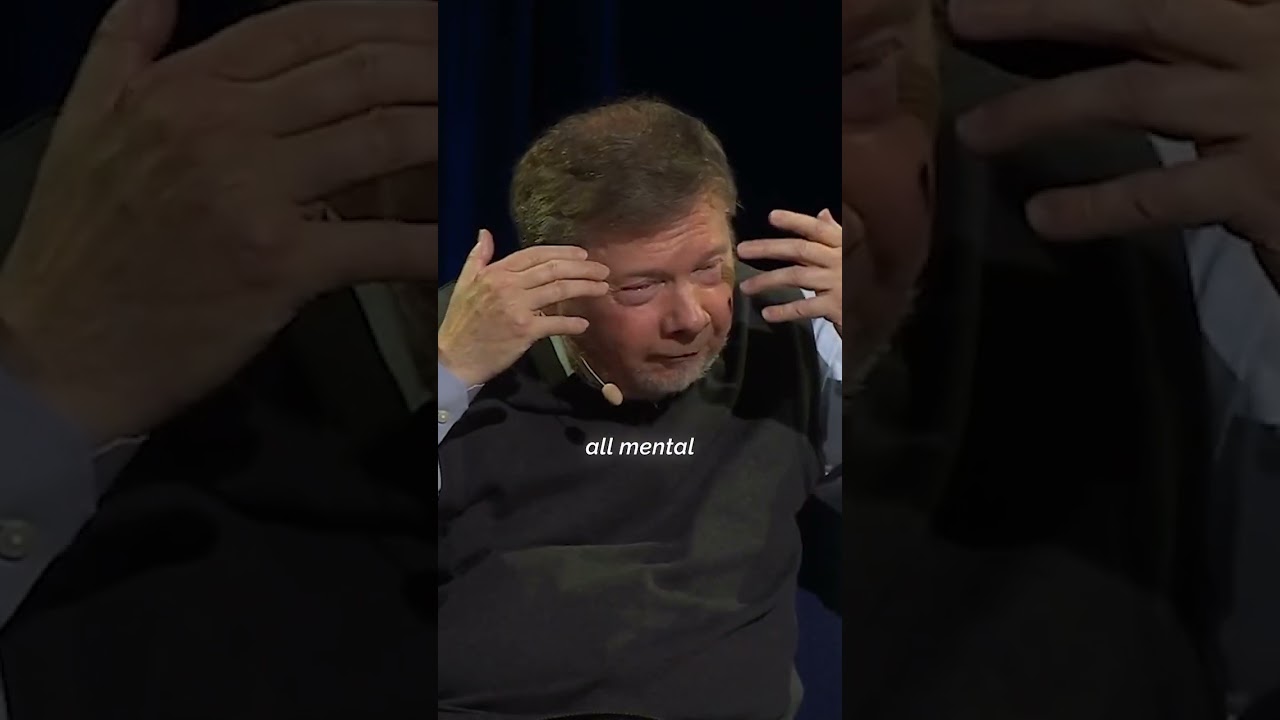
Why Young People Are Experiencing an Unprecedented Depression Surge
The statistics are stark: depression among young people has risen significantly in recent years, yet the conventional explanations—chemical imbalance, genetic predisposition, stress—tell only part of the story. Eckhart Tolle begins by asking a question that most mental health frameworks avoid: is all suffering the same? This distinction matters, because it opens a path toward understanding what he calls the "quiet crisis beneath the surface of modern life."
Rather than dismissing rising depression as solely a clinical phenomenon requiring medication, Tolle invites a more nuanced examination. Yes, clinical depression exists and requires proper treatment. But beneath the epidemic statistics lies another pattern—one rooted not in brain chemistry alone, but in how modern life systematically drains the primary resource that makes consciousness itself viable: attention.
What Is the Difference Between Clinical Depression and the Dark Night of the Soul?
Tolle draws a careful boundary between two distinct experiences that can appear similar on the surface but carry very different meanings and invitations.
Clinical depression is a medical condition characterized by persistent low mood, loss of pleasure, changes in sleep and appetite, and neurochemical imbalances. It is a legitimate illness that responds to professional treatment—therapy, medication, lifestyle changes—and should never be minimized or spiritualized away. A person in clinical depression needs concrete, evidence-based support.
The dark night of the soul, by contrast, is a phenomenon documented across spiritual traditions for centuries. It appears as a period of darkness, confusion, or meaninglessness, but it is not pathological. Rather, it is often a threshold—a breakdown of the ego's familiar structures that can lead, if navigated consciously, to a deeper awakening or spiritual reorganization. In the dark night, a person is not broken; they are being unmade in order to be remade at a deeper level.
The confusion between these two states has real consequences. Someone in a genuine dark night of the soul may be medicated for depression when what they actually need is a guide to navigate the transformation underway. Conversely, someone in clinical depression may be told to "sit with it" or "surrender to it" spiritually when they need psychiatric care. The discernment matters immensely.
Tolle's point is not to argue against treatment for depression, but to widen the lens: some of what young people are experiencing may indeed be a dark night—a loss of meaning, a dissolution of the false self, an invitation to awaken to something more real—rather than a disease state requiring suppression.
The Silent Energy Drain: How Screens Disperse Attention
Tolle identifies a mechanism that operates largely below conscious awareness: the relentless dispersal of attention through screens and digital devices. This is not about "screen time" as a simple measure. It is about the *direction* and *quality* of attention itself.
In traditional human life, attention had clear channels. It flowed toward necessary tasks, relationships, creation, survival, meaning-making. The outflow of awareness had purpose and led to tangible results: a meal prepared, a conversation deepened, a problem solved, a work of art made. There was a natural cycle: attention out, result back, integration, rest.
Digital devices have fractured this cycle. Attention now flows outward constantly—into infinite feeds, notifications, videos, images, news cycles, social comparisons—without any corresponding creative purpose or meaningful return. You scroll, you absorb, you react, you move to the next stimulus. The cycle is broken. Awareness disperses into a void.
Tolle's insight is that this creates a chronic energy leak at the level of consciousness itself. When awareness flows outward without purpose or creation, "something essential is lost." This is not a metaphor; it is a description of how consciousness actually operates. Attention is not infinite. It is a precious resource. And when it is drained continuously without replenishment through creation, meaning, or genuine connection, the psyche begins to collapse into a state that *resembles* depression—emptiness, depletion, loss of vital force.
For young people especially, who have grown up entirely within this attention-dispersal system, the effect may be cumulative and profound. They may not even know what it feels like to have attention gathered, present, and available for their own lives. The baseline has shifted toward fragmentation.
Attention as a Sacred Resource
Tolle reframes attention not as a cognitive tool or a productivity metric, but as fundamentally sacred. In contemplative traditions, attention is consciousness itself—the capacity to be aware, to be present. To give your attention is to give your presence, your aliveness, to something or someone. This is why attention matters so much.
When attention is constantly pulled outward into stimulation, the person's own inner life goes dark. They are not present to their own existence. They do not meet themselves. They exist in a perpetual state of elsewhere-ness. Over time, this creates a particular kind of suffering: not pathological illness, but spiritual absence—a person not at home in their own life.
Reclaiming attention, then, becomes an act of spiritual reclamation. It is not about willpower or discipline (though those help). It is about recognizing that where you place your attention is where you place your consciousness, and therefore where you place your life. To withdraw attention from compulsive digital dispersal and redirect it toward presence—toward your breath, your body, the room you inhabit, the people in front of you—is to begin taking your life back.
Recognizing the Invitation Within Crisis
Tolle's teaching here invites a subtle shift in how we perceive the depression crisis. Rather than seeing it only as a problem to be fixed, he suggests asking: what is this crisis trying to teach? What is it calling us toward?
The rising experience of emptiness and meaninglessness among young people may not be accidental. It may be a collective dark night—a breakdown of the structures (consumerism, external validation, endless distraction) that have long kept people asleep. The crisis becomes an invitation to awaken to what is actually true: that presence is the only real life available, that attention is precious, that authentic connection cannot be mediated by screens, that meaning cannot be purchased or downloaded.
This does not minimize suffering or suggest that no one needs help. It simply opens the possibility that the dissolution underway might contain within it the seeds of genuine awakening—if we have the wisdom to recognize it and the courage to navigate it consciously.
Where to Go From Here
Tolle's teaching points toward several practical directions. First, a commitment to discernment: recognizing whether what you or someone you care about is experiencing is clinical depression (requiring professional treatment) or a dark night of the soul (requiring presence and possibly spiritual guidance). Second, a radical reassessment of attention itself—where it goes, why, and what it costs. Third, a deliberate practice of reclaiming presence as a form of spiritual resistance and self-care. This might look like periods of digital fasting, sustained attention to one thing at a time, presence in relationship, or contemplative practice. Finally, Tolle's teaching invites us to see the current crisis not only as a problem, but as a potential threshold—an opportunity for a collective awakening to what truly matters.
]]>