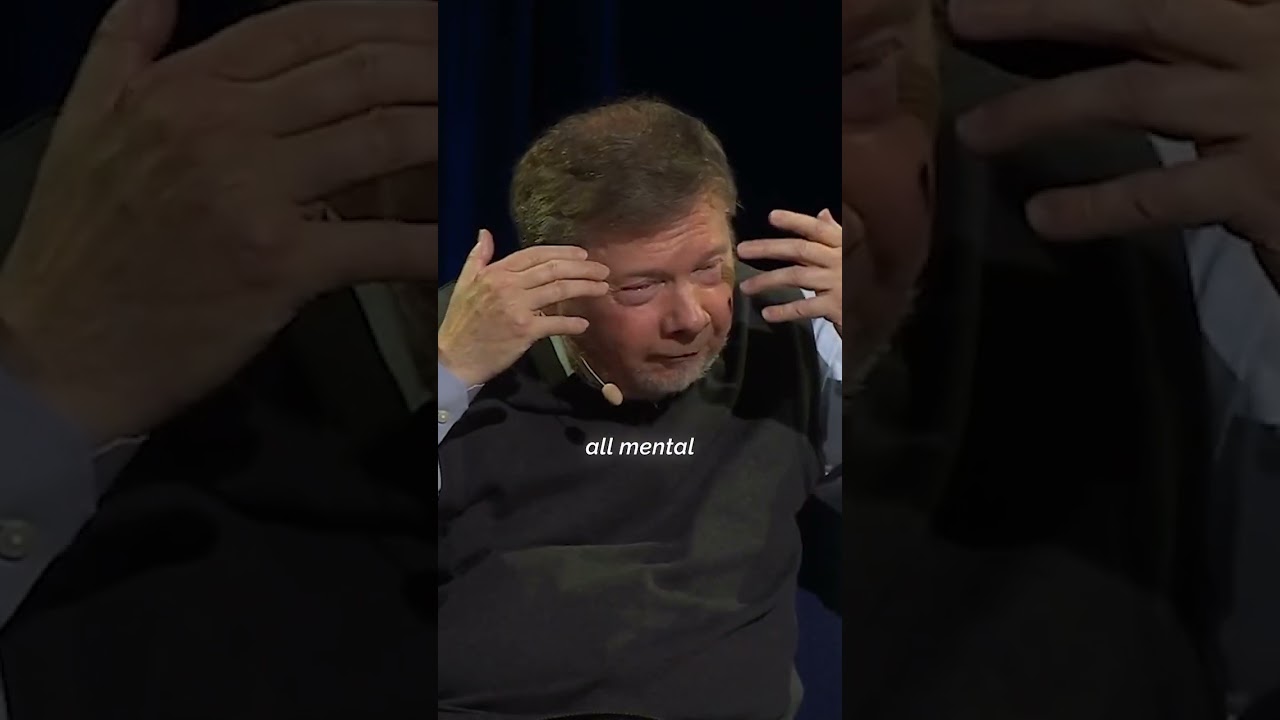
Most people find themselves trapped in cycles—the same relationship conflicts, the same self-sabotaging decisions, the same emotional reactions repeating across years or decades. These are not random. They are unconscious mental patterns, and according to Eckhart Tolle's teaching, they persist because awareness has not yet penetrated them. This talk offers a practical map for recognizing these patterns and accessing the present-moment awareness that can dissolve them.
What Are Unconscious Mental Patterns?
Unconscious mental patterns are habitual structures of thought, emotion, and behavior that operate largely outside of conscious awareness. They form early in life, often through repeated experiences, cultural conditioning, and the protective strategies the mind develops in response to threat or loss. Once established, these patterns run on autopilot—they activate in particular situations and play out the same script over and over.
The key word here is unconscious. Because we are not aware that a pattern is operating, we cannot make a conscious choice to step out of it. Instead, we experience its effects as inevitable: "This always happens to me" or "I always sabotage good things." What feels like fate is actually a loop of conditioning that has become so familiar it is invisible.
Common examples include patterns of abandonment, perfectionism, control, conflict avoidance, or self-deprecation. A person may find that every intimate relationship follows the same trajectory—initial closeness, gradual withdrawal, a particular trigger, conflict, and either reconciliation or abandonment. Another may repeatedly succeed professionally only to undermine their own advancement. These are not personality traits; they are programs running beneath the surface of awareness.
How Does the Mind Keep Patterns Alive?
The mind preserves these patterns through a process of constant mental commentary, interpretation, and projection. When a situation arises that resembles past experiences, the mind instantly generates thoughts about it—narratives, judgments, predictions—based on the pattern. These thoughts feel true because they are automatic and often confirmed by selective attention: we notice evidence that supports the pattern and overlook what contradicts it.
Moreover, the patterns are defended by the ego, which derives a sense of identity from them. The mind "knows" itself through these patterns. A person who has organized their life around being abandoned may unconsciously prefer abandonment—which feels familiar and confirms their sense of self—to genuine acceptance, which feels alien and destabilizing. The pattern becomes a prison the prisoner doesn't know they are occupying.
The Role of Present-Moment Awareness
Tolle's central insight is that present-moment awareness is the key that unlocks this prison. When awareness rests in the now—not in memory, thought, or anticipation—the pattern loses its power. Why? Because patterns are mental constructs; they exist in time, in the past and future. They are stories the mind tells about what happened and what will happen next. When awareness is fully present, the story temporarily stops.
This does not mean that patterns disappear after one moment of presence. Rather, each moment of genuine presence is a moment in which the pattern is not running, and in which a different quality of consciousness is accessible. Over time, as presence deepens and becomes more stable, the grip of the pattern loosens. The person begins to respond to situations from a different place—from awareness itself, rather than from the conditioned mind.
Presence also reveals the pattern more clearly. When you are caught in a pattern, you are identified with it; you are the pattern. You cannot see it from outside. But when awareness becomes observing—when you step back and notice the thought, emotion, or impulse arising—the pattern becomes visible as a thing, not as the totality of who you are. This shift from identification to observation is itself liberating.
Why Awareness Dissolves Conditioning
A central teaching in Tolle's work is that conditioning cannot survive genuine awareness. Conditioning operates in the dark—in unconsciousness. The moment the light of awareness shines on a pattern, its grip begins to weaken. This is not because you try to change it or fight it, but because the pattern's existence depends on its being invisible.
Consider an analogy: imagine a room you have always thought was full of obstacles. You move through it cautiously, bumping into things, following what you believe is a necessary path. Then the lights turn on. You see that most of the obstacles you have been avoiding do not actually exist; they were shadows. In the light, you move freely. The pattern is similar—it only has power when you move through life in the dark of unconsciousness.
This is why Tolle emphasizes that awareness itself is the solution. You do not need to heal the pattern, understand it psychologically, or negotiate with it. You need only become aware of it. Awareness is like disinfectant applied to a wound—it changes the conditions under which the pattern can persist.
Accessing the Unconditioned Dimension Beyond Thought
Tolle's teaching points to a dimension of consciousness that is fundamentally different from thought and personality. This dimension is not produced by the mind; it is the space in which the mind arises. It has no content, no identity, no personal story. It is pure presence, pure being.
All conditioning—all patterns, beliefs, identities, narratives—exists at the level of thought and personality. But beneath and beyond thought is an unconditioned awareness that is not touched by any pattern. This is what Tolle sometimes calls the Self or the I Am—not as a thought or sense of self, but as the aliveness and presence that is here before any thought arises.
When you access this dimension, even briefly, the hold of conditioning naturally loosens. You realize that you are not your thoughts, not your patterns, not your history. You are the awareness in which all of these arise. From that realization, a different kind of living becomes possible—one that is not driven by unconscious reactivity but by presence and responsiveness to what is.
The Practical Path: Presence as Practice
This might sound abstract, but it has practical implications. Developing present-moment awareness is not mystical or complicated—it begins with simple attention. Notice what is happening right now: the sensation of breath, the sounds around you, the feeling of your body, the quality of awareness itself. These are doorways to presence.
As presence deepens, you begin to notice the moment a pattern is triggered. You feel the familiar emotion arise, the old thought beginning to loop, the impulse to react in the habitual way. At that moment, you have a choice that was not available when the pattern was completely unconscious. You can pause. You can breathe. You can rest in awareness rather than being swept along by the thought.
This is not a process of self-control or willpower—those are still mind-based. It is a natural consequence of awareness. When you are aware, you are no longer completely identified with the pattern. The pattern may still be present, but it no longer has your full participation. It gradually loses its charge and its compulsiveness.
Where to Go from Here
The teaching offered here is an invitation to shift from a life run by unconscious patterns to a life grounded in present-moment awareness. This shift does not happen all at once, nor does it require that you understand the patterns intellectually. It requires only that you practice returning to the present moment, again and again, with gentleness and patience.
Each time you notice that you are lost in thought about past or future, and you return to the breath or the body or the quality of awareness itself, you are weakening the hold of conditioning. Each moment of genuine presence is a moment of freedom. Over time, these moments accumulate and begin to reshape your life.
The aim is not to become a perfect person without patterns—that would still be an achievement of the conditioned mind. The aim is to live increasingly from the unconditioned awareness that is already here, beneath all patterns and conditioning. From that place, life becomes simpler, more responsive, and more aligned with what is true.