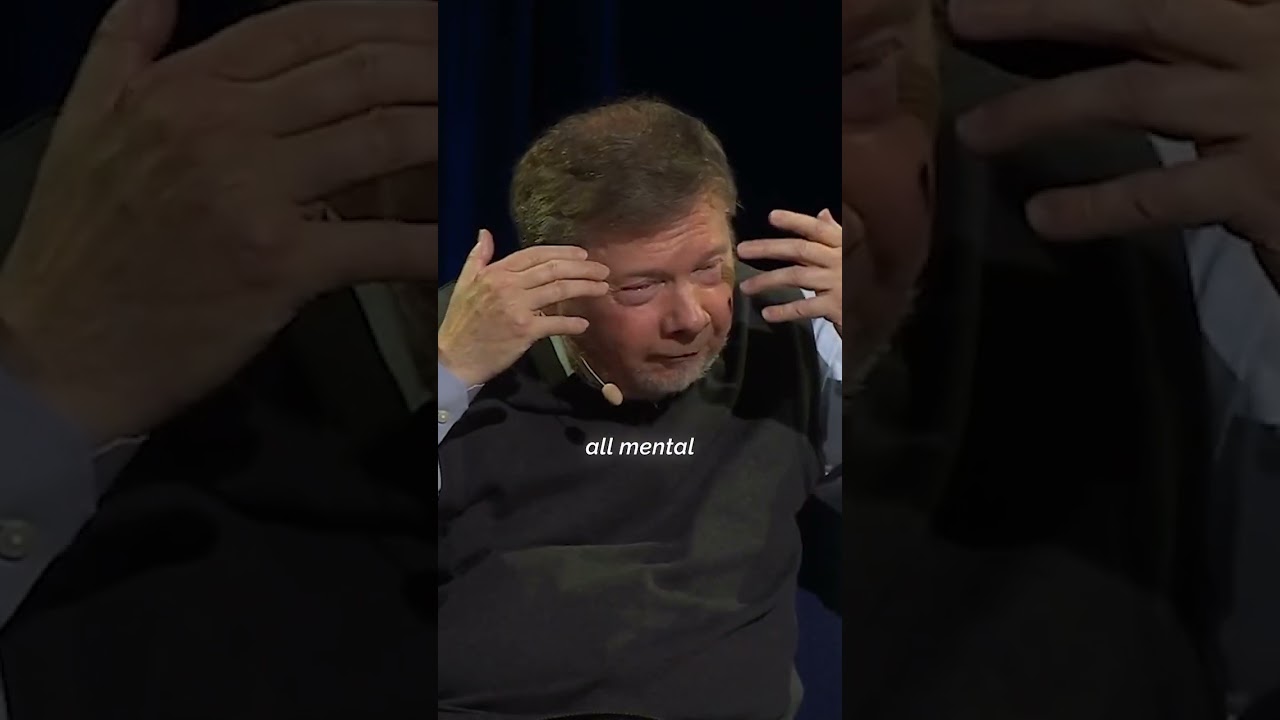
This teaching reframes the fundamental error embedded in how we speak and think about existence. The phrase "my life" creates a psychological split—a false barrier between you and life itself. In truth, you are not in the universe; you are the universe experiencing itself through consciousness. Awakening means dissolving this conceptual divide and recognizing yourself as the underlying presence through which all existence flows. When you walk through nature without imposing labels, when you perceive with open senses and rest in still awareness, you access the direct experience of oneness that language obscures.
The Language Problem: How "My Life" Separates You From Life
The teaching begins with a startling observation about ordinary speech. Almost everyone says "my life." It sounds natural, even necessary. But Tolle points to the linguistic trap embedded in those two words. The moment you claim "my life," you have split reality into two things: you, on one side, and your life, on the other. Life becomes an object you possess—something external to your being, something you could potentially lose. This linguistic habit reflects and reinforces a deeper perceptual mistake.
Thought and language, Tolle explains, work by creating categories and separations. Words cut reality into pieces. When we speak, we impose labels and boundaries on the seamless flow of existence. "My life" is one such boundary—it places a wall between your identity and the flow of existence itself. And once that boundary is established linguistically and conceptually, the fear follows naturally: "What am I going to do with my life? I could lose my life." The very structure of the phrase generates existential anxiety.
But the structure is false. It rests on a misunderstanding of what you are.
What You Actually Are: Not In The Universe, But Of It
Tolle's central inversion challenges the default assumption of separation. Most people imagine they are inside the universe, like objects in a container—separate entities inhabiting a larger, alien space. This is the "misconception," as Tolle calls it. The actual truth reverses it: you are not in the universe. You are the universe. You are an expression of one timeless, universal life taking temporary form in this body, in this moment.
This is not metaphor. It is a statement about the nature of consciousness and existence. Consciousness itself—the light of awareness in which all experience arises—is not your private possession. It is not bounded by your skin. You are a focal point through which universal consciousness experiences itself. Whatever arises in your awareness—joy, sorrow, perception, thought—the universe is experiencing. If you are in joy, the universe is in joy. Your experience is not separate from cosmic experience; it is cosmic experience happening locally.
The question Tolle poses is simple and devastating: Who are you without life? If your identity depends on "having" a life, then you are already lost. You cannot exist separately from life. Life is not something you have; it is something you are. The moment this shifts from intellectual understanding to direct recognition, the whole structure of fear built on separation begins to dissolve.
How Labels Create the Illusion of Separation in Perception
The illusion of separation is not only linguistic. It is also perceptual. When you walk through nature and label what you see—tree, rock, sky, bird—you are imposing conceptual boundaries onto a seamless continuum. Each label creates a mental category, a boundary between "that thing" and "me perceiving it." The moment you think "tree," you have already stepped back from direct contact with the reality of the tree. You have substituted a mental symbol for a living presence.
Tolle describes what happens when you release this labeling habit. When you walk through nature without imposing these mental divisions, when you simply perceive with all your senses open and your mind still, the continuum of existence becomes apparent. There is no hard boundary between you and what you perceive. There is permeability, flow, mutual arising. The nature of oneness becomes directly available—not as an idea, but as lived experience.
This is not mere aesthetic pleasure, though it may feel pleasant. It is the dissolution of the cognitive barrier that thought creates. Without thought constantly dividing and labeling, you encounter the underlying unity of existence. The boundary collapses. And with it collapses the sense of being a separate self facing a world of other things.
The Deeper Dimension: Consciousness as the Light in Which All Arises
Tolle points to something even more fundamental than the dissolving of boundaries between self and nature. It is the recognition of consciousness itself—the light of awareness in which all experience occurs. He describes it this way: you are aware not only of the sensory perceptions that arise—what you see, hear, feel—but more fundamentally, you are aware of yourself as the underlying presence without which none of these perceptions could occur. Consciousness is the medium. It is the light in which all phenomena appear.
This light of consciousness is not your individual possession. It does not belong to you alone. There are not separate lights for each person, each isolated in its own body. There is one light, one consciousness, and it moves through all forms. Your awareness is not your private property. It is a focal point of the universal awareness—the same awareness looking through your eyes and also through the eyes of all beings.
When you recognize this, the entire structure of possessiveness collapses. Your life is not your life. You do not own your consciousness. These come through you, but they are not yours to keep or to lose. You are an instrument through which life and consciousness move. The universe experiences itself through your form, your senses, your presence.
From Oneness to Love: The Recognition Beneath Words
Tolle acknowledges that oneness, when thought about and labeled, disappears. The moment you conceptualize it, the gap reopens. Intellectual understanding of oneness is not the same as the lived experience of it. But there is a way in which this oneness becomes continuous and tangible: through stillness and presence.
He speaks of oneness as ultimately pointing to something deeper still—what he calls love, though not in the conventional sense. Not the emotional attachment or the "sticky love" of grasping and possession. Rather, love as a fundamental recognition of unity with what is. When you rest in the presence of another being—a tree, a person, an animal—without the barrier of thought and label, what remains is recognition. A meeting without judgment, without distance. This recognition itself is love.
This is why presence in nature is so powerful. When you become still and attentive as you walk through a forest or stand before a mountain, when you release the compulsion to name and categorize, you open directly to this dimension. Nature, perceived in this way, reveals the oneness. And oneness, when fully realized, is indistinguishable from love—not as sentiment, but as the ground tone of existence, the felt sense of non-separation.
The Practical Teaching: How to Access This Directly
Tolle offers a clear practice embedded in the teaching: become still and present as you encounter nature. Use sensory awareness as your anchor. Perceive with all your senses fully open, but without the constant overlay of mental labeling. Notice what happens when you stop naming things and simply allow them to be present to you.
In that gap between stimulus and mental reaction, the light of consciousness becomes apparent. You become aware of yourself as the awareness in which the perception arises, not as a separate entity observing an external world. The walk through nature becomes a direct teaching in the nature of your being.
This teaching does not require belief. It is available to direct experience. The moment you stop the habit of conceptual division, even for a few moments, the unity becomes apparent. Not as something you achieve, but as something you cease to obscure. The oneness is already here. The separation was always a thought-generated illusion.
Where to go from here
If this teaching resonates, the natural next step is experiential. Rather than thinking more about the oneness, practice it. Take time in nature without your phone, without the constant input of language and concept. Notice how the mind attempts to return to labeling, and gently release it. Stay with direct perception—the texture, the smell, the light, the movement of living things around you. Notice what happens to the sense of separation when thought quiets.
You might also explore this principle in everyday moments: in conversation, in eating, in simple tasks. What happens to your sense of identity when you are fully present to what is happening right now, without narrating it? The teaching of oneness is not confined to nature. It is available everywhere, in every moment, whenever you release the habit of thought-generated separation and rest in simple awareness of what is.