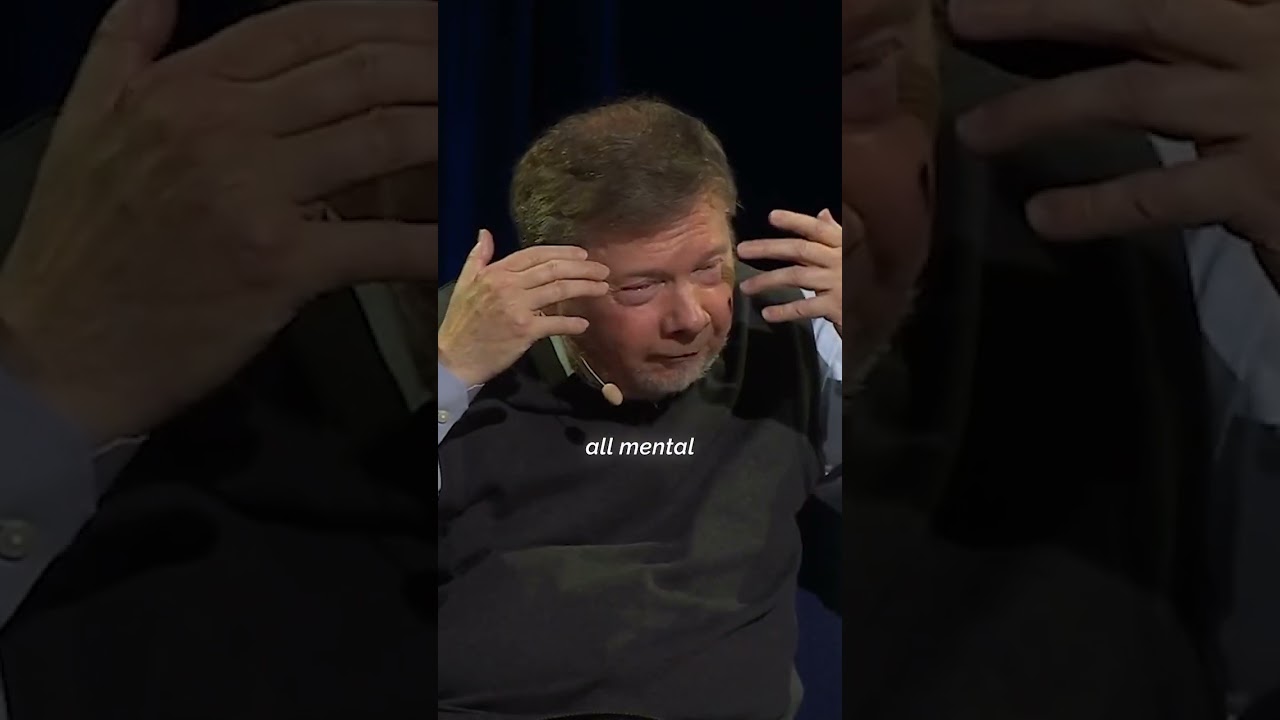
Eckhart Tolle teaches that the suffering we experience doesn't come from challenges themselves, but from our resistance to them. When you stop fighting what is happening and instead meet difficulties with presence and acceptance, you access a deeper wisdom beyond the thinking mind. Awakening occurs not through solving problems intellectually, but through surrendering to what is, embracing uncertainty, and recognizing yourself as something more fundamental than your personal story. This shift in consciousness transforms how you relate to life's difficulties and opens access to clarity, peace, and genuine growth.
Why Resistance to Problems Creates Suffering
The fundamental insight Tolle offers is deceptively simple yet profound: the problem is not the problem itself, but our resistance to it. When life presents a challenge—whether emotional, relational, financial, or circumstantial—most people's immediate response is to mentally fight against it. The mind says, "This shouldn't be happening," or "I need to eliminate this immediately." This mental opposition creates a secondary layer of suffering on top of the situation itself.
Resistance operates as a denial of what is actually present in this moment. When you resist a problem, you are essentially at war with reality as it is manifesting right now. This inner conflict is exhausting because you are splitting your energy in two directions: one part of you trying to manage the situation, and another part refusing to accept that it exists. The more intensely you fight, the more present and powerful the problem becomes in your consciousness.
Consider a situation where you face financial difficulty, health challenges, or relationship conflict. If your entire approach is rooted in "I must fix this immediately and get it away from me," your nervous system remains in a heightened state of contraction and stress. This contracted state actually limits your access to creative solutions and wisdom. The mind becomes rigid, caught in repetitive thought patterns about the problem, rather than open and fluid enough to perceive new possibilities.
What Does Acceptance Actually Mean?
Tolle's teaching on acceptance is often misunderstood as passive resignation or giving up. Acceptance, in his framework, is not about becoming a victim who allows harm to continue unchecked. Rather, it is a shift in your relationship to what is happening—a mental and emotional stance that says, "This is here now. I acknowledge it fully. I am not in denial about it."
Acceptance means you stop expending energy on the denial layer and instead direct all your resources toward responding intelligently to the situation. When you accept that a problem is present, your mind becomes available for actual solutions rather than stuck in cycles of "why is this happening to me?" or "this is unfair."
True acceptance includes the recognition that challenges are not aberrations—they are fundamental to existence. Life is dynamic, not static. Growth, change, and difficulty are woven into the fabric of being alive. The flowers bloom and fade. Bodies age. Relationships evolve and sometimes end. Markets fluctuate. This is not a malfunction of reality; this is how reality works.
How Presence Opens Access to Wisdom
Tolle emphasizes that awakening happens not through the thinking mind but through presence. The mind, especially when caught in resistance, can only recycled past knowledge and project it into imagined futures. The present moment, however, is where life is actually happening and where genuine intelligence resides.
When you are fully present with a challenge—not lost in thoughts about it, but directly aware of what is unfolding—something shifts. You access a kind of knowing that doesn't come from your accumulated experience or knowledge. This is intuitive wisdom, a clarity that arises when the mind is not in the way.
Presence also reveals that you are not the same as your problem. You are the awareness in which the problem appears. When you identify completely with your thoughts about the problem—"I am someone with this financial issue," "I am a person who failed at this"—you lose perspective. But when you step back into presence, you recognize that these difficulties happen within your awareness. They are part of your experience, but they are not your fundamental identity.
Embracing Not-Knowing as a Gateway
One of the most counterintuitive aspects of Tolle's teaching is the value of not-knowing. The ego mind desperately wants to know—to analyze, categorize, and have certainty about outcomes. When you face a problem, the mind immediately tries to know: "How will this turn out? Will I be able to handle it? What if it gets worse?"
This compulsive knowing-seeking creates anxiety because the future cannot be known with certainty. You are fighting against the fundamental nature of existence when you demand that you know what will happen. But when you can rest in not-knowing—when you can say, "I don't know how this will unfold, and that's okay"—something remarkable happens. You release the mental strain of trying to control the uncontrollable.
Not-knowing is not ignorance or carelessness. Rather, it is a spacious awareness that is open to whatever comes, ready to respond intelligently as each moment unfolds. This stance actually makes you more adaptable and resilient because you're not locked into a rigid expectation of how things should go.
Recognizing Your Depth Beyond the Personal Self
Tolle points toward a crucial realization: you are not fundamentally the person you think you are—the one with the job title, the history, the problems, the particular personality. These are all part of your personal story, which is real on one level but not your deepest nature.
Beneath the person with problems is awareness itself, consciousness, being. This deeper dimension of yourself does not have problems. It simply observes and responds. When you identify with this deeper level instead of exclusively with your personal narrative, your entire relationship to challenges transforms.
A situation that feels like "my problem" when you're identified with your persona becomes simply "something that is happening in this moment" when you identify with the witnessing awareness. This is not dissociation or numbness; it is actually a clearer, more grounded perspective. From this place, you can engage with the situation more effectively because you're not emotionally fused with the outcome.
The Lightness That Comes With Surrender
When resistance falls away and acceptance settles in, people often report a surprising experience: life becomes lighter. This happens not because the external circumstances have suddenly changed for the better, but because the internal weight of fighting reality has lifted.
Imagine you're pulling against a rope. The effort creates tension and fatigue throughout your body. But when you stop pulling and release the rope, you immediately feel relief and restored energy, even if the rope is still there. Similarly, when you stop fighting your problems through mental resistance, enormous energy is freed up. This energy can now be used for actual engagement with life rather than internal conflict.
This lightness also involves a shift in perception. When you're in resistance, you see only the problem. When you accept and move into presence, you can perceive the larger context—the beauty of a sunset even while you're facing difficulty, the kindness of a friend, the fact that you still have breath in your body. Problems don't disappear, but they stop occupying the totality of your awareness.
Where to Go From Here
If this teaching resonates with you, the invitation is to begin experimenting with acceptance in small ways. When you notice resistance arising—that mental pushing against what is happening—pause. Take a breath. Can you acknowledge what is happening without the added layer of "this shouldn't be happening"? Even a slight softening of resistance will reveal the truth of this teaching.
Notice moments when you naturally move into presence—when you're absorbed in something you enjoy, or when you're with someone you love and fully attentive. Feel the quality of that presence. That same quality can be brought to challenges. You can practice being present with difficulty the way you are present with pleasure.
Most importantly, observe yourself. Notice when resistance is active and what it does to your experience. The seeing itself is transformative. As you become more aware of these patterns, the possibility of choosing presence over resistance naturally increases. You are not trying to force acceptance or manufacture presence—you are simply becoming aware, and awareness itself has the power to shift your relationship to life's challenges.