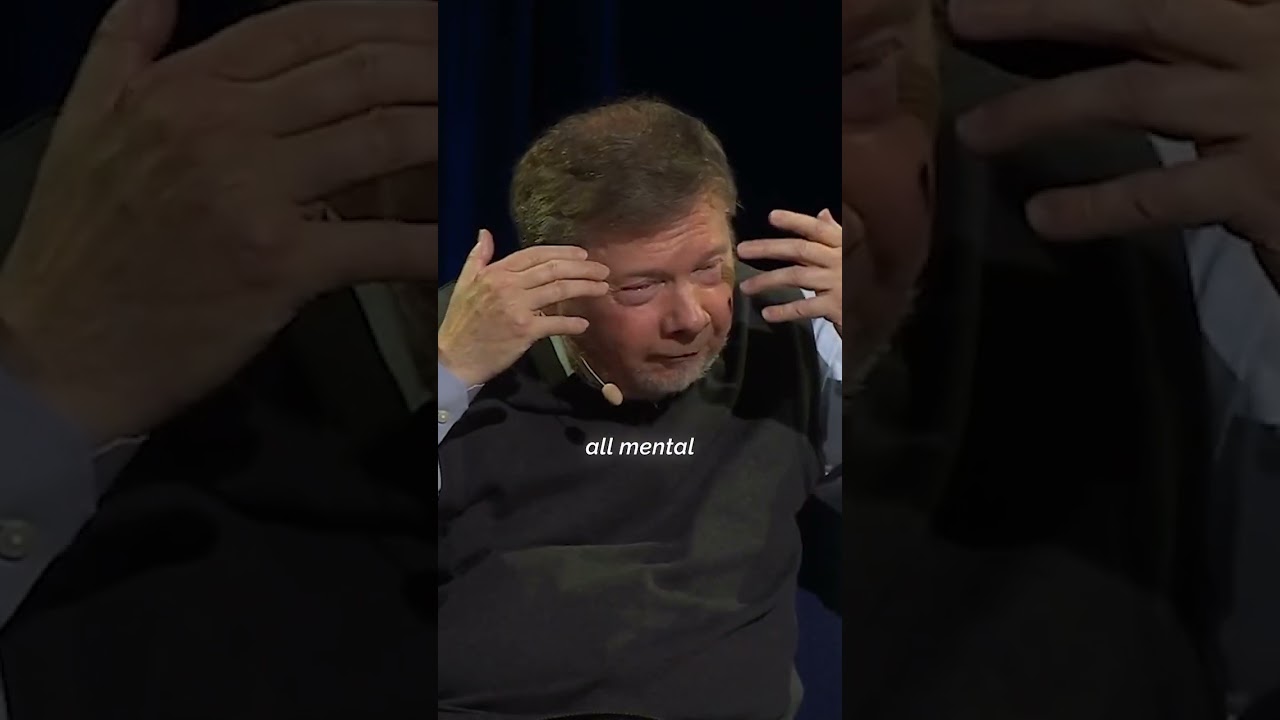
Rather than viewing life's repeated challenges as signs of failure, Eckhart Tolle reframes difficulty as an ongoing test—a mechanism through which consciousness strengthens your capacity to remain present and conscious even in instability. When you stop resisting what life brings and instead ask what it's teaching you, you move from victim narratives into direct spiritual work. This shift doesn't remove challenges but fundamentally changes how you relate to them, ultimately building resilience at the level of being rather than doing.
Why Life Repeats the Same Lessons
One of the most frustrating experiences in spiritual life is recognizing that you face the same challenge again and again. You thought you'd learned the lesson—you worked through the pattern, gained insight, perhaps even felt resolved. Yet here it comes again: the same conflict with a partner, the same anxiety about money, the same self-doubt when facing a new opportunity. The mind interprets this repetition as failure. "If I'd really learned," the ego says, "it wouldn't keep happening."
Tolle invites a different interpretation: life is testing you. Not to punish you, but to verify and deepen your capacity to remain conscious under pressure. Each time the same difficulty arises, you're being asked: Can you stay present now? Can you meet this without reactivity? Can you hold awareness even as discomfort emerges? This is not punishment for inadequacy—it's the mechanism by which consciousness becomes stable, mature, and genuinely free from the tyranny of conditioned patterns.
The distinction matters profoundly. If you believe you're failing, you carry shame and self-judgment into the challenge, which thickens the ego's control and makes presence harder. If you recognize you're being tested, you can approach difficulty as feedback, as invitation, as an opportunity to prove to yourself what you're capable of.
The Difference Between Resistance and Acceptance
At the core of Tolle's teaching lies a subtle but crucial distinction: what happens to you is not the actual problem. Your resistance to what happens—your refusal to accept the reality of the present moment—is where suffering originates. This is not blame. Rather, it's pointing to a mechanism you can actually work with.
When you resist a challenge, you create a secondary layer of suffering on top of the primary difficulty. The original problem—a financial setback, a relationship conflict, a health crisis—exists. But your mind's refusal to accept it, your demand that it "shouldn't be this way," your internal argument with reality, creates additional pain. This resistance also prevents you from seeing clearly what the situation is asking of you. Clarity requires presence, and presence requires acceptance of what is.
Acceptance doesn't mean resignation or passive collapse. It means acknowledging the reality of what you're facing without the additional burden of mental contraction. From that place of acknowledgment, you can ask: What is this teaching me? What capacity am I being called to develop? What am I being asked to see about myself or my patterns?
Tests of Presence, Not Competence
It's important to recognize what kind of test life actually is. It's not a test of your problem-solving ability, your productivity, or your success metrics. External outcomes—whether you "succeed" or "fail" by conventional standards—are not the point. The test is whether you can remain conscious, present, and aligned with your deeper being while facing difficulty.
This is radically different from how we're typically taught to relate to challenges. The conventional narrative says: face the problem, solve it, succeed, move on. But Tolle's teaching suggests something else: face the problem, yes, but the real work is maintaining your presence and awareness in the midst of it. Can you take right action from a place of peace rather than panic? Can you respond rather than react? Can you stay in your body and your breath while the mind generates stories about disaster?
When you understand this, repeated challenges stop looking like failures and start looking like invitations. Life is essentially saying: you handled this well enough last time to progress—now here's a deeper version. Can you stay steady now? This is how consciousness matures. Not through thinking your way to enlightenment, but through the repeated, embodied practice of staying present when presence is difficult.
Why Instability Keeps Returning
A natural question arises: if I'm supposedly learning and growing, why does instability keep returning? Shouldn't the challenges get easier?
Part of the answer is that life itself contains inherent instability. Impermanence is not a bug in the system—it's fundamental to existence. Relationships change, bodies age, circumstances shift, loss happens. This is not a failure of the universe or of your practice. It's simply what existence is. The question isn't how to eliminate instability; it's how to develop the capacity to remain steady within it.
Another dimension is that many challenges do indeed repeat until a genuine shift in consciousness occurs. If you're still meeting difficulty with reactivity, blame, self-judgment, or resistance, the same pattern will circle back. It has to, because the lesson hasn't been integrated at the level of being. You haven't yet proven—to yourself and to life—that you can handle this particular flavor of challenge with presence. Once you can, new challenges emerge. But the point is never to reach a state where challenges stop; it's to reach a state where you stop being undone by them.
The Role of Acceptance in Stability
Staying steady when everything feels unstable requires a fundamental shift in what you're trying to stabilize. The ego wants to stabilize your circumstances—to control outcomes, secure the future, eliminate all sources of discomfort. This is impossible. Circumstances will always shift. The future will always contain unknowns. Discomfort is part of being human.
What can actually be stabilized is your consciousness. Your capacity to be present, aware, and connected to something deeper than the content of your thoughts and feelings—that can become increasingly stable and reliable. This is what Tolle points to when he speaks of staying steady. Not steady circumstances, but steady presence. Not the absence of difficulty, but the presence of awareness even within difficulty.
Acceptance is the doorway to this stability because acceptance is what ends the internal struggle. When you accept that this moment is as it is—that this challenge has arisen, that you feel afraid or angry or confused, that uncertainty exists—you release the enormous energy it takes to argue with reality. That energy becomes available for presence, for clarity, for responding skillfully to what's actually in front of you.
From Victim to Participant
One of the most liberating shifts Tolle's teaching offers is the movement from a victim narrative to a participant narrative. In victim consciousness, life is something that happens to you. Challenges are injustices, evidence that the universe is unfair, proof that something is wrong with you or your circumstances. This narrative is deeply contracted. It leaves you waiting for external rescue, resentful, and unable to access your own agency and power.
When you reframe challenges as tests, you shift from passive suffering to active engagement. You become someone who is learning, who is developing, who is being called to show up at a higher level. This doesn't mean you caused the challenge or deserve it. It simply means you've moved from "this is happening to me" to "this is happening, and I'm here to see what it's asking of me." That simple shift opens possibility.
This reframe is not spiritual bypassing or toxic positivity. It's not denying that real difficulty exists or that some challenges are genuinely harmful or unjust. It's simply that, given that difficulty exists, what are you going to do with it? Will you use it to contract further into victimhood, or will you use it as material for consciousness to strengthen itself?
Where to Go From Here
The practical implication of Tolle's teaching is clear: the next time you face a challenge—especially one that feels familiar, like an old pattern—pause before reacting. Notice the urge to resist, to blame, to spiral into "why is this happening to me?" Breathe. Come into your body. Ask yourself: What is this test asking of me? Can I stay present right now? What would it look like to accept this reality without fighting it? What action, if any, needs to come from a place of clarity rather than fear?
This doesn't solve the challenge externally, but it fundamentally changes your relationship to it. Over time, as you pass these tests—as you repeatedly choose presence over reactivity, acceptance over resistance—your consciousness genuinely stabilizes. You develop a lived confidence that you can meet difficulty without being destroyed by it. That capacity is worth more than any external circumstance, because it cannot be taken from you. It becomes the ground of your peace.