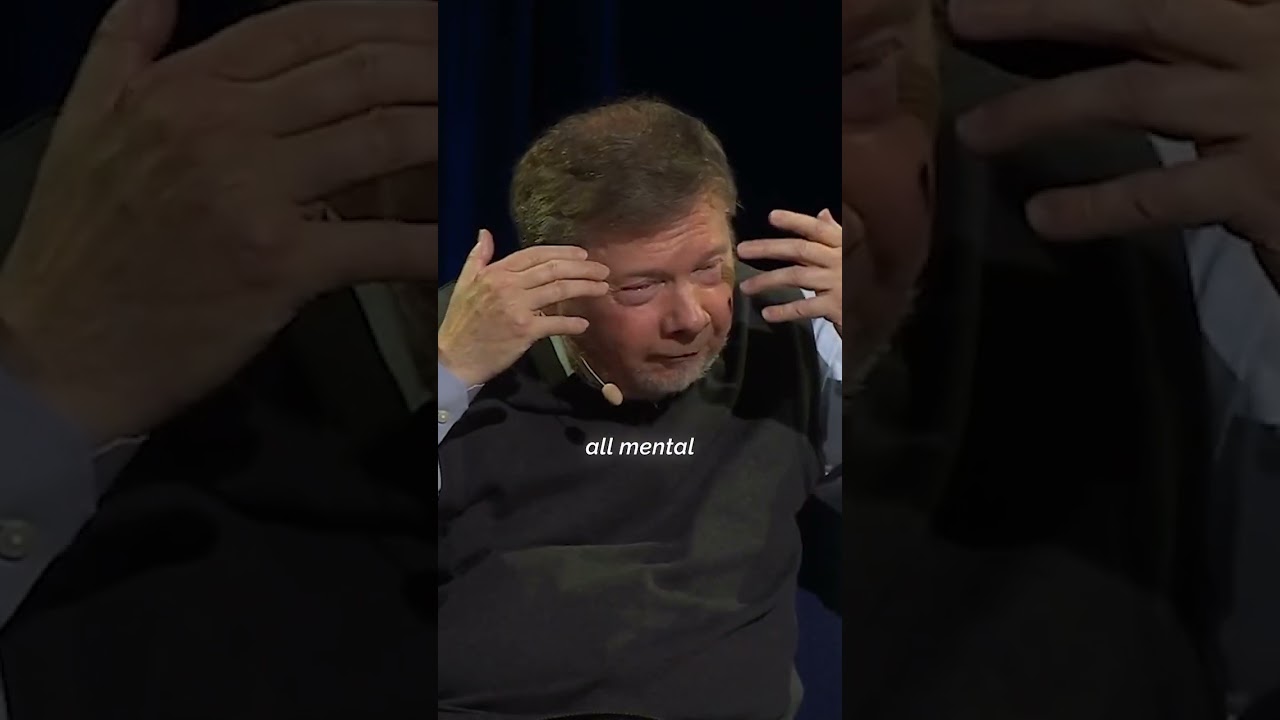
Eckhart Tolle teaches that enlightenment and liberation from the cycle of reincarnation are available now, not dependent on future incarnations. The gateway to ending this cycle is simple but radical: stop identifying with your thoughts and recognizing them as separate from your essential self. This isn't a future achievement requiring lifetimes of spiritual practice—it's a shift in consciousness available in the present moment.
Why Do We Believe We Need Another Incarnation?
Many spiritual traditions teach that enlightenment is a distant goal requiring multiple lifetimes of accumulated spiritual work. This creates an implicit postponement of awakening: *maybe in the next life, after enough karma is resolved, after sufficient spiritual merit is accumulated.* This framework, while present in many wisdom traditions, can become an excuse for inaction or a rationalization for continued suffering in the present moment.
Tolle's central insight challenges this assumption. He suggests that the belief we need "another incarnation" reveals a fundamental misunderstanding about how awakening actually works. Awakening is not something you achieve through accumulation—more practices, more lifetimes, more spiritual effort. Instead, it requires a discontinuity: a break from the habitual pattern of mistaking thought for self.
What Does It Mean to Mistake Thoughts for Identity?
The human mind continuously produces thoughts. Most people live their entire waking life identified with this stream of mental content, treating their thoughts as equivalent to who they are. You think "I'm not good enough," and you believe that thought reflects your essential nature. You think "I'm anxious," and you identify anxiety as part of your core self. You think "I'm a failure," and you accept that narrative as truth about yourself.
This identification creates what Tolle calls the egoic mind: a constructed identity built entirely from thought patterns, memories, and learned beliefs. When you're completely identified with thought, you can't step outside it to observe it. Your thoughts feel like reality itself, not as mental phenomena arising and passing.
The problem is that thought is fundamentally reactive and repetitive. It draws from past experience and projects into future scenarios. When you're merged with thought, you're essentially trapped in the past and the future—the only two places the mind can actually operate. This means you're never fully present, never fully alive to what is actually happening now.
How Does Stopping Thought Identification End the Cycle?
The reincarnation cycle, as Tolle frames it, isn't merely a metaphysical claim about literal rebirth across multiple bodies. It's a description of the repeated pattern of suffering caused by unconscious identification with thought. Each day, the same egoic patterns repeat: the same anxieties, the same self-judgments, the same defensive reactions, the same desires and aversions. This *is* the cycle—living the same unconscious patterns over and over again, whether in one lifetime or across many.
To end this cycle doesn't require waiting for a future incarnation. It requires a discontinuity in consciousness *now*. The moment you recognize a thought as a thought—not as the truth, not as who you are, but as a passing mental event—you step outside identification with it. You create a gap between the thinking process and your awareness of it.
This gap is the space of presence, of the "now." It's the only place where genuine change can occur because it's the only place you're not bound by conditioned patterns. When you're present, thoughts may still arise, but they no longer run your life. You can observe them, let them pass, without being swept up in their narrative.
The Immediate Availability of Awakening
Tolle's teaching is radically optimistic: you don't have to become enlightened in some distant future. You don't have to wait for the right circumstances, the right teacher, the right lifetime. The possibility of awakening exists in this very moment, available to anyone willing to shift how they relate to their own mind.
This doesn't mean awakening is automatic or effortless. It requires what Tolle calls "seeing"—a direct recognition of how the egoic pattern works, how identification with thought creates suffering. But this seeing can happen now. You can recognize right now that your anxious thoughts are not your identity. You can observe right now that your self-critical inner voice is a pattern, not the truth.
The shift doesn't require becoming a different person or acquiring new spiritual powers. It requires what might be called a subtraction: removing the layer of identification that obscures your true nature. Your essential self—awareness itself, untouched by the content of thought—is already present. You don't need to develop it; you need to stop obscuring it.
Practical Implications of This Understanding
If awakening is truly available now, what changes? First, you stop procrastinating with spirituality. You stop telling yourself "maybe next year I'll do a serious retreat," or "maybe in the next life I'll get enlightened." The urgency shifts to the present moment because the opportunity is present.
Second, you stop waiting for perfect conditions. Many people delay their spiritual work until their external life is stable enough, their circumstances right enough, their mind calm enough. But these conditions rarely arrive. The present moment, exactly as it is—chaotic, difficult, imperfect—is the only condition that ever exists. If you can't wake up now, with your life as it is, the internal resistance won't disappear by changing your circumstances.
Third, the approach to spiritual practice shifts. Instead of accumulating more techniques or knowledge, the focus becomes simple and direct: recognizing thought when it arises, creating space between awareness and the thinking process, and returning to presence whenever you notice you've been lost in the egoic narrative.
Understanding the Nature of the "Cycle"
The cycle that Tolle refers to isn't only about reincarnation as a literal metaphysical process. Even more fundamentally, it's about the daily, hourly, moment-by-moment cycle of unconscious reaction. You wake up and immediately get lost in your thoughts. Something triggers an old wound, and the reactive pattern activates. You get caught in worry about the future or regret about the past. Your attention moves away from what is actually present.
This is the cycle: consciousness being captured by content, identification with pattern, suffering arising from that identification. It repeats continuously. Each time you notice it and step back into awareness, the cycle is interrupted. Each time you remain identified with thought without knowing it, the cycle continues.
What's radical about Tolle's teaching is the insistence that this cycle can be broken not through perfecting yourself across multiple lifetimes, but through a fundamental shift in how you relate to the mind—a shift that can happen today, this hour, this moment.
Where to Go From Here
Tolle's teaching invites a direct experiment: begin noticing the gap between your awareness and your thoughts. When an emotion arises, can you be aware of it without being entirely identified with it? When a thought appears, can you recognize it as a thought rather than fact? These simple questions, explored directly in your own experience, are the beginning of the work. There is no need to wait for another lifetime—the transformation is available now.