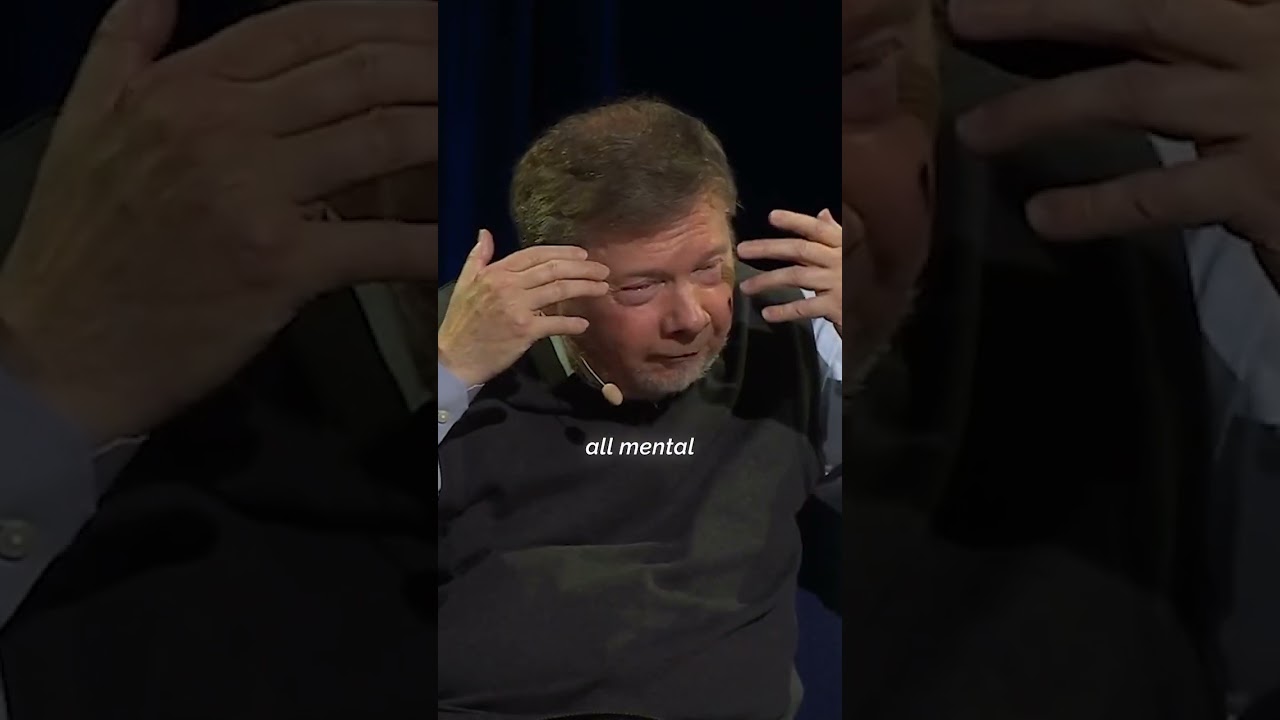
Eckhart Tolle addresses the question of alcohol consumption for those pursuing spiritual presence, recommending abstinence as the ideal while acknowledging that a single glass of wine may not significantly obstruct presence. He emphasizes that two or more drinks begin to interfere with the arising of presence, suggesting a graduated approach based on practical reality rather than rigid prohibition. The core principle remains that presence itself—not external rules—is the practice.
Why Does Alcohol Matter for Spiritual Practice?
The relationship between intoxicants and spiritual development has long occupied a central place in contemplative traditions. Tolle addresses this not from a place of judgment but from a straightforward assessment of how alcohol affects the nervous system and the capacity to remain present. Presence—the ability to be fully aware in the here and now—requires a certain clarity of consciousness. When the mind is dulled or the body intoxicated, the sensory apparatus becomes less precise, and the gap between stimulus and response widens rather than narrows.
Tolle's approach is notably pragmatic. Rather than declare alcohol entirely forbidden, he frames the question in terms of degrees and thresholds. One glass of wine, he notes, would not "unduly interfere with the arising presence in you." This acknowledgment respects the reality of human social life—that many people inhabit cultures where sharing wine at dinner is normative—while still pointing toward the ideal of abstinence.
What Is the Threshold Between Moderation and Obstruction?
Tolle introduces a specific gradient: one glass likely poses no major impediment, two glasses begin to interfere, and three or more substantially obstruct the capacity for presence. This is not merely a rule but an observation about how consciousness works. As alcohol concentration in the bloodstream increases, the pre-frontal cortex—the region responsible for awareness, attention, and discrimination—becomes progressively less available. The "observer" within consciousness becomes less active, and reactivity takes over.
The graduated framework allows practitioners to make conscious choices rather than follow blind commandments. If someone does choose to drink, the question becomes: am I still accessible to presence? Can I still notice the arising thoughts and sensations without being identified with them? Two glasses typically makes this significantly harder. Three makes it nearly impossible for most people.
How Does This Fit Into a Broader Spiritual Context?
Tolle's instruction—"Refrain as much as possible from intoxicating beverages"—sets the direction clearly. The ideal remains sobriety. Yet he also recognizes that spiritual practice unfolds in real social and psychological contexts. Some practitioners may have deep cultural or relational reasons for occasional wine consumption; others may find total abstinence reinforces a healthier relationship with the body and mind.
Importantly, Tolle frames this without moral judgment. He does not shame the practitioner who has a glass of wine, nor does he suggest that one drink nullifies spiritual progress. Instead, he places the emphasis back where it belongs: on presence itself. "Presence is the practice," as the description notes. Everything else—including the question of alcohol—should be held lightly, with gentle awareness rather than rigid ideology.
What Does "Spiritually Advanced" Mean in This Context?
Tolle's closing remark—"since everybody here is spiritually advanced, if you do have a glass of wine, you will not be judged"—deserves careful reading. This is not sarcasm or condescension; it is an acknowledgment that practitioners who are genuinely committed to presence develop an internal compass. They no longer need external rules to behave ethically or wisely. If a spiritually mature person has wine at dinner, they do so consciously, not compulsively. They remain aware of the effects and adjust accordingly.
This invokes what might be called "mature discernment." Rather than relying on a commandment that applies to everyone equally, the practitioner develops the capacity to notice in real time: "Is this supporting my presence or diminishing it?" That internal feedback mechanism is more reliable than any fixed rule because it adapts to the individual body, the individual nervous system, and the particular moment.
Why Recommend Abstinence at All?
Given Tolle's measured tone, some might wonder why he still recommends abstinence as the ideal. The answer lies in the nature of presence itself. Alcohol, even in small amounts, creates a physiological buffer between the organism and direct reality. It dulls sensation, softens edges, and creates a subtle dissociation from the body. For a practice whose entire aim is to sharpen awareness and dissolve the unconscious patterns that keep us contracted, alcohol works in the opposite direction.
Moreover, abstinence removes uncertainty. If presence is the goal, and alcohol in any dose slightly reduces presence, then none is cleaner than some. It is also worth noting that many people use alcohol as a way to escape presence—to numb anxiety, to quiet the mind, to relax into social situations. Breaking that habit, even temporarily, can reveal how much of our drinking is driven by resistance to what is present rather than genuine enjoyment.
How Should Practitioners Apply This Teaching?
Tolle's guidance invites a self-honest approach. The instruction is not to white-knuckle abstinence or to judge oneself harshly for a drink at dinner. Rather, it is to notice: Can I be fully present if I have this glass? Am I choosing it consciously, or am I reaching for it habitually? If I do drink, does it support my capacity to notice what is, or does it cloud it?
For practitioners serious about deepening presence, experimenting with periods of total abstinence can be illuminating. It reveals baseline clarity and makes the effects of alcohol—even in small doses—more obvious upon return. Over time, many find that the subtle dulling of presence becomes undesirable precisely because they have tasted what sharper presence feels like.
The underlying teaching is that rules serve presence, not the reverse. If abstaining from alcohol helps someone stabilize in presence, that is wise. If a single glass of wine at a social gathering does not meaningfully disrupt presence and the person chooses it consciously, there is no violation. The practice is to remain awake to what you are doing and why, not to accumulate merit through prohibition.
Where to Go From Here
Explore Tolle's broader teachings on presence and how various habits, substances, and behaviors either support or obstruct it. Notice your own relationship with alcohol, without judgment: Do you drink to enhance presence or to escape it? Can you remain fully aware while having a drink, or does it pull you into unconsciousness? Consider experimenting with periods of abstinence to establish a clearer baseline of what presence feels like without chemical modulation. Remember that the practice is presence itself—everything else, including this guidance, should be held gently and adapted to serve that central aim.