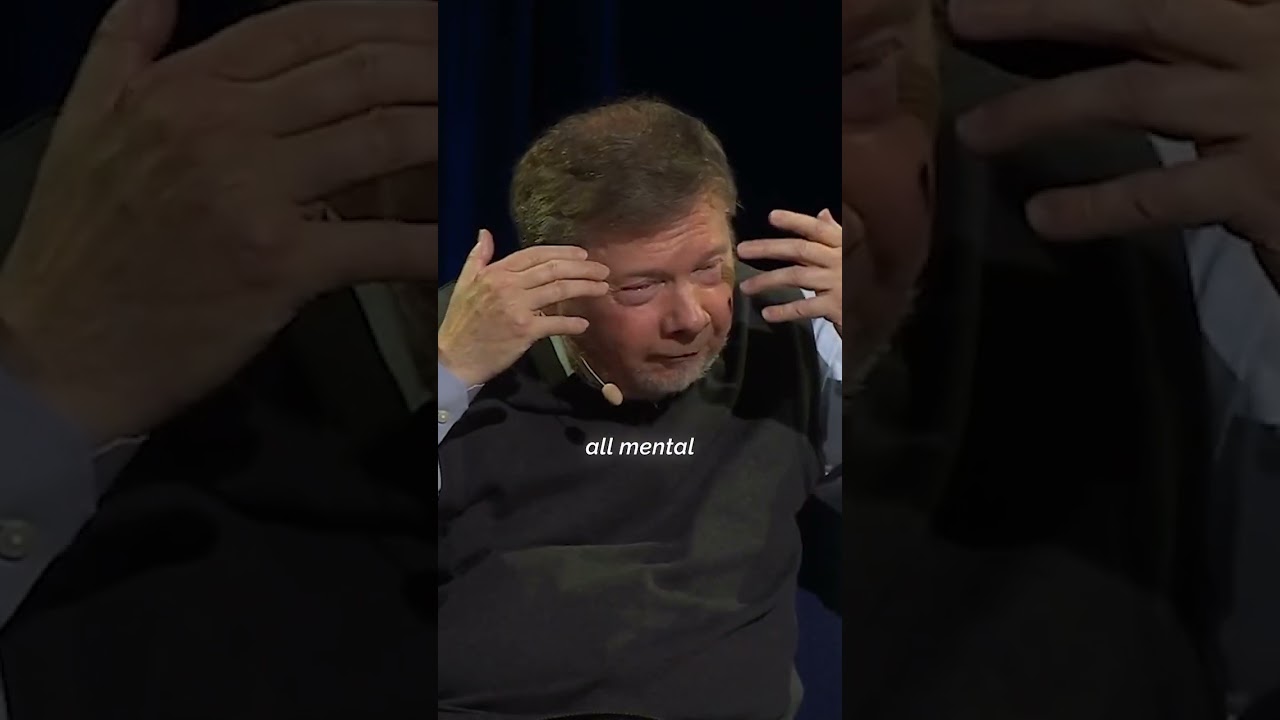
Most human suffering stems from a fundamental confusion: we treat our thoughts as facts. An event occurs—neutral in itself—and our mind immediately wraps a story around it. We then believe the story, feel the emotions it generates, and never pause to notice that the suffering isn't from the event but from our narrative about it. This pattern is so automatic it functions like hypnosis, a trance we're barely aware we've entered. The gap between what actually happened and what you told yourself about it is the real source of pain.
How Your Mind Mistakes Thought for Reality
Every thought that crosses your consciousness arrives with a default assumption of truth. You don't question it; you accept it as a direct report of reality. This is the central confusion Eckhart Tolle identifies: we conflate the map with the territory. When a thought arises—"That person doesn't respect me," "I'm not good enough," "This situation is unfair"—it feels solid, factual, true. But it's only a story, an interpretation layered on top of a neutral event.
This happens because the mind's job is to conceptualize and narrate. It takes raw experience and packages it into meaning. That function is useful, but we've become so identified with our thoughts that we can no longer separate the event from the story we're telling about it. The event itself is neutral. A person walks past you without greeting you. That's it—a neutral occurrence. But your mind immediately generates a narrative: they're angry at you, they don't like you, you've done something wrong. The thought feels true because it arises inside you, and we instinctively trust our inner content.
The hypnotic power lies in this seamlessness. There's no gap, no moment of doubt. The thought appears, and immediately you're feeling the emotion the thought creates. You're wrapped in a story so completely that you've forgotten it's a story. You believe you're responding to reality when you're actually responding to your interpretation of reality.
Why Do We Believe Every Narrative Our Mind Creates?
The human mind evolved to generate stories because narrative is how we make sense of the world. It's how we predict danger, plan for the future, and create identity. But this same mechanism has a built-in flaw: we can't easily tell the difference between a thought and an observation. Both feel like they're "coming from outside," both feel like they're reporting what's real.
Additionally, emotions reinforce the belief. When your mind tells you a story, it triggers an emotional response—fear, shame, anger, sadness. That emotion feels like evidence that the story is true. You feel hurt, so the narrative that hurt you must be accurate. But the emotion is just a neurochemical response to the thought, not a confirmation of its truth. The mind is essentially hypnotizing itself: thought creates feeling, feeling validates thought, and you're locked in a loop that feels completely real.
This is compounded by attention. Where your attention goes, your energy follows. Once you believe a thought, you start looking for evidence that confirms it. You notice every instance that fits the story and ignore those that don't. This is called confirmation bias, and it makes the narrative stronger and more believable over time. The mind has literally hypnotized itself into a conviction.
The Gap Between Event and Interpretation: Where Suffering Lives
Here's the crucial insight: between the neutral event and your experience of suffering, there's a gap. In that gap sits your interpretation. The event itself—by itself—has no emotional valence. Someone didn't text you back. Your boss gave you critical feedback. You made a mistake. These are just occurrences. But the moment your mind interprets them ("They don't care about me," "I'm not competent," "I'm a failure"), suffering begins.
Tolle's teaching points to the fact that most people never locate this gap. They experience the suffering and assume it comes from the event. So they try to change the event, control circumstances, or get other people to behave differently. But if the suffering actually comes from the interpretation, those efforts will mostly fail. You can't control external events reliably enough to prevent all painful interpretations from arising.
What actually works is noticing the gap itself. Can you observe the moment between what happened and what you're telling yourself about it? Can you recognize that the story is a story, not a fact? This recognition is not intellectual—you don't just think, "Oh, that's a story." You actually see it, feel the difference between the neutral event and the narrative overlay. That seeing itself weakens the hypnotic spell. It doesn't make the thought disappear, but it removes your total identification with it. You become the observer of the thought rather than the believer in it.
How the Hypnosis Works: Automaticity and Identification
The hypnotic quality of this pattern comes from its complete automaticity. It happens before you're conscious of it. A thought arises, you feel an emotion, you act from that emotion—all before awareness has a chance to catch up. By the time you're conscious, you're already in the feeling, already believing the story. It's like waking up in the middle of a dream and realizing you were never awake at all.
What makes it a hypnosis specifically is that you're identified with the thought. It's not something happening to you; you're convinced it's you. The thought says, "I'm not good enough," and you think that's a true statement about who you are. But "I" is awareness, consciousness. A thought is content that appears in consciousness. They're not the same thing. When you mistake a thought about yourself for yourself, you've entered the trance.
The repetition reinforces it. The same thoughts recur again and again, and each time they arise, they feel true again. Over years, these thought patterns become so familiar that they feel like the fabric of reality itself. You don't notice them anymore—they've become invisible, like the air you breathe. That invisibility is the depth of the hypnosis. You're not noticing you're hypnotized because the hypnosis has convinced you there's nothing to notice.
Breaking the Pattern: Noticing Without Judgment
The path out isn't complicated, but it requires a shift in attention. Instead of focusing on whether the thought is true, you shift to noticing that you're having a thought. This is a different order of awareness. You're not analyzing the content; you're observing the fact of the thought itself.
When you notice, "I'm having the thought that I'm not good enough," something changes. There's now a separation between the awareness that's observing and the thought being observed. That gap is the crack in the hypnotic trance. You're no longer completely identified with the thought. You're present to it as an occurrence rather than a fact about reality.
This practice isn't about positive thinking or replacing bad thoughts with good ones. That's just using the mind to manipulate itself, another layer of the same pattern. Real freedom comes from seeing clearly: the event happened, the mind generated a story, emotions arose from the story, and now I'm believing the story as if it were the event itself. That seeing is itself the wake-up from the hypnosis. Not permanently, necessarily—the thoughts will keep coming. But each time you notice, you're breaking the automatic identification and reconnecting with clear seeing.
Where to Go From Here
The practice is simple: start paying attention to the gap. When you feel emotional pain or resistance, pause and ask: What event actually occurred, and what story am I telling about it? Not to judge yourself, not to try to "fix" your thinking, but simply to create that separation between event and interpretation. Over time, this noticing becomes more automatic than the original pattern. Presence—the quality of being aware right now without the overlay of narrative—becomes your default rather than the thought-story.
As this clarity deepens, you'll notice that life events continue, but they don't carry the same weight of suffering. Not because your circumstances change, but because you're no longer completely hypnotized by your own mind.