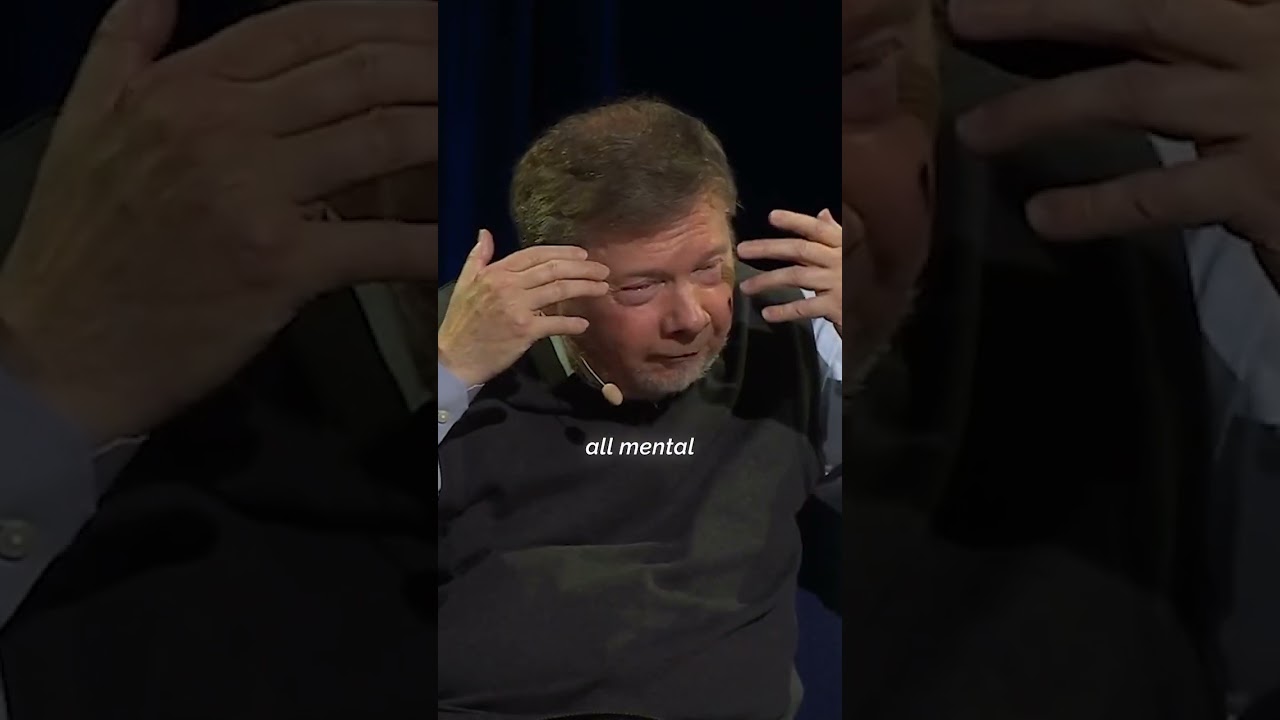
Eckhart Tolle's core teaching in this talk centers on a deceptively simple but profound practice: recognizing that who you are extends far beyond your thoughts, memories, and mental content. By directly sensing your own consciousness—the aware presence that observes your thinking—you develop the capacity to recognize that same consciousness in another person. This recognition of consciousness to consciousness is what authentic relationship actually is, and it shifts how you meet another being from a place of ego (identification with thought and past) to a place of presence. The talk frames relationship as an opportunity for mutual awakening rather than validation or fulfillment through another.
What Is the Invisible Nature of Your Being?
Tolle begins by pointing toward something most people overlook in their daily experience: the distinction between the content of your mind (thoughts, memories, sensations) and the awareness itself that is aware of that content. This awareness is "invisible" not because it's hidden, but because it's so fundamental that the conditioned mind typically passes right through it. When you think, you experience the thought. When you remember, you experience the memory. But what is the experiencing itself? That awareness—that presence—is not an object you can point to, yet it's the most intimate fact of your existence.
Tolle emphasizes that most people live entirely identified with the content of consciousness (their thoughts, emotions, life story) rather than consciousness itself. This is the root of human suffering and dysfunction in relationships. You believe you are your memories, your personality, your accumulated sense of self. But that sense of self is a mental construct. The awareness that knows even that construct—that is what you actually are. This distinction is not intellectual; Tolle guides people toward the direct sensing of it in their own experience.
How Does Recognizing Your Own Consciousness Change Relationship?
Once you begin to sense your own consciousness directly—the aliveness and presence that is aware of your thoughts rather than identified with them—a profound shift becomes possible in how you relate to another person. Instead of meeting another from the lens of your ego (your thoughts about them, your judgments, your need for them to validate you), you meet them from presence. You sense, in them, the same consciousness that you've begun to recognize in yourself.
This recognition is not abstract. Tolle describes it as a felt experience—a moment of genuine seeing. When you truly sense another person's consciousness, their presence, their aliveness independent of what they say or do, something shifts. The other is no longer primarily a character in your story or a means to your satisfaction. They are a conscious being, meeting you across the same ground of awareness that you share. This recognition is mutual and reciprocal—when it happens, both people feel it.
This is the answer to the question posed in the title: the most important question you can ask about your relationship is not "Does this person make me happy?" or "Are we compatible?" It is "Can I see and recognize the consciousness in this other being?" and "Can they do the same for me?" Because when two people can meet at the level of consciousness rather than ego, the relationship becomes what Tolle calls a "portal to awakening."
What Is the Difference Between Meeting Someone's Ego and Meeting Their Consciousness?
When you relate to another primarily from ego, you relate to their persona, their roles, their history, their qualities and defects. You might love them because they are intelligent, attractive, or make you laugh. You might resent them because they trigger your insecurities or fail to meet your expectations. In either case, you are relating to content—mental constructs about them and about yourself.
Meeting someone's consciousness is fundamentally different. It requires a shift in your own being first. You have to step back from your own thought stream, your own mental narrative, and recognize the presence within you that is aware. From that place of presence, you naturally recognize presence in another. Tolle points out that this recognition often feels like a moment of grace—it's not something your ego accomplishes, but something that happens when the ego temporarily steps aside.
In practical terms, this means relating to another without the filter of judgment, need, or defensiveness. You listen without planning your response. You see them without overlaying them with your expectations. You are simply present with them, sensing the being behind their words and actions. This creates a space where authentic contact becomes possible—not the contact of ego with ego (which is always conflict at some level), but the contact of consciousness with consciousness.
How Does Memory and Thought Obscure Your True Nature?
Tolle emphasizes that memory and thought are tremendously useful—they allow you to function in the world. But they also create a false sense of identity. You accumulate memories and construct a story called "me"—your past, your personality, your sense of who you are based on what you've done and what's been done to you. This is the ego, and it is entirely made of thought and memory. It has no independent existence.
The problem is not that you have thoughts and memories, but that you believe you are those thoughts and memories. From this identification, you relate to others as though they too are primarily their egos—their personalities, their histories, their qualities. You miss the consciousness itself, the presence, the being beneath the story.
When you sense the awareness that is aware of your thoughts, you recognize something that is not created by memory or thought. This awareness is continuous, unchanged by what you think or remember. It is your actual being. Paradoxically, this recognition brings tremendous freedom because you are no longer trapped in identification with content that is constantly changing, constantly threatened, constantly needing validation.
What Does Genuine Recognition of Another Actually Feel Like?
Tolle's teaching here is experiential rather than conceptual. He points toward a felt sense of mutual recognition that is quite distinct from ordinary social interaction or even emotional intimacy. When two people recognize each other's consciousness, there is often a silence that arises—not awkward, but full. There is a quality of meeting, of being truly seen without judgment or agenda.
This recognition can happen in a moment—a glance between two people where something genuine is perceived. It doesn't require words. It can happen with a stranger as well as with a partner or family member. What matters is that, for that moment, both people have stepped out of their egos and into presence. Both are sensing the consciousness in the other.
Tolle notes that this kind of recognition is rare in relationships because most people are not familiar with consciousness itself. They are identified with thought and cannot easily step out of it. But the practice of learning to sense your own consciousness—to recognize the presence within you—is what makes this recognition of another possible. It is the foundation of what authentic intimacy actually is.
How Can You Develop the Capacity to Sense Consciousness in Others?
The primary practice Tolle points toward is the recognition of your own consciousness. This can be cultivated through presence practices—through learning to rest attention in the aliveness of the present moment rather than in thought. As you do this, you become familiar with the sense of presence within you, the awareness that is aware.
Once this becomes more stable in you, you naturally become more sensitive to presence in others. You begin to notice the aliveness in another person's eyes, the sense of being that underlies their words and actions. This recognition develops organically as your own presence deepens.
In relationships specifically, this means practicing presence with the people around you—truly listening without judgment, seeing them without the overlay of your stories and expectations. It means noticing the moments when mutual recognition occurs and becoming more intimate with that quality of contact. Over time, these moments become less rare, and the relationship deepens beyond what ego-based relating can offer.
Why Is This Question More Important Than Practical Relationship Concerns?
Tolle's teaching suggests that the most important question about a relationship is not whether the other person is right for you in practical terms, whether you share goals or compatibility. While these practical considerations have their place, the deeper question—can we recognize each other's consciousness—determines whether the relationship serves awakening or unconsciousness.
Many relationships fail despite practical compatibility because the people never recognize each other's true nature. They remain locked in ego-based relating: defending, demanding, blaming, seeking validation. Other relationships, seemingly less ideal on the surface, become portals for profound growth because the people can meet at the level of presence.
The quality of consciousness you bring to a relationship matters far more than the identity or achievements of the other person. A relationship with someone you truly see—and who truly sees you—is what allows both people to awaken. A relationship where consciousness is not recognized remains fundamentally lonely, regardless of its external success.
Where to go from here
The teaching invites you to begin recognizing your own consciousness directly. Notice the awareness that is aware of your thoughts right now. Not as a concept, but as a living presence. When you become familiar with this in yourself, you will naturally recognize it in others.
In your relationships, practice pausing. Set down your phone, your to-do list, your story about the other person. Look at them. Really listen. See if you can sense the presence in them, the being beneath their words. Notice what shifts when you meet another from that place. This simple practice can fundamentally transform how you relate and what a relationship is for. Tolle's full video on Eckhart Tolle Now explores these themes in greater depth, including detailed guidance on the direct sensing of consciousness and what mutual recognition feels like in real time.