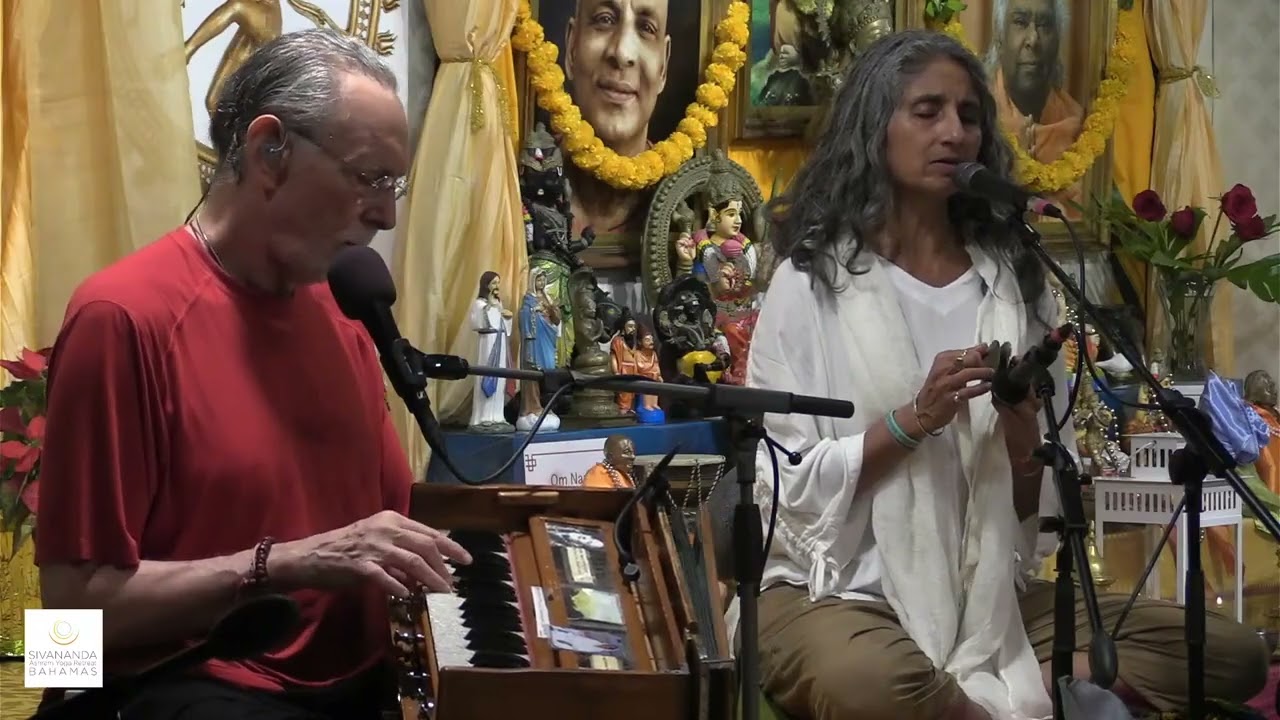
This is a live kirtan recording from Krishna Das at the Heart of Devotion Retreat in Garrison, NY (April 2023), featuring devotional chanting and call-and-response singing led by one of the West's most accessible teachers of Hindu mantra practice. Kirtan—the practice of singing mantras and sacred names, often in a group setting—becomes a direct gateway to deeper presence and heart-centered awareness when approached with genuine intention rather than as performance or entertainment.
What Is Kirtan and How Does It Work?
Kirtan is an ancient practice of call-and-response chanting rooted in Hindu and Yogic traditions, where a leader sings a mantra or sacred phrase and the community echoes it back. Unlike meditation, which can feel private or internal, kirtan is inherently participatory and relational—it pulls you into rhythm with others and with the repetitive power of sacred sound. The practice doesn't require belief in any particular deity or religious framework; rather, it works through the direct impact of vocalization, breath, and synchronization with a group.
Krishna Das has become one of the most influential kirtan teachers in the West by stripping away cultural barriers and presenting the practice in accessible, contemporary language while maintaining its spiritual integrity. His approach emphasizes that kirtan is ultimately about opening the heart and cultivating direct experience of presence, not about perfect pronunciation or intellectual understanding of Sanskrit.
The Role of Repetition in Spiritual Practice
One of kirtan's central mechanics is repetition. By repeating the same mantra or phrase again and again—sometimes for fifteen, thirty, or sixty minutes—the thinking mind begins to quiet. The repetitive structure creates a container that naturally stills mental chatter. As the voice and breath synchronize with the group's rhythm, attention naturally drops from conceptual thought into direct sensation and feeling.
This isn't mystical; it's neurological and psychological. Repetition, particularly when synchronized with others and with rhythm, engages different parts of the nervous system than analytical thought does. The result is often a deepening sense of calm, connection, and emotional opening that many practitioners describe as coming home to themselves.
How Group Singing Deepens Individual Practice
Kirtan in a group setting carries a unique power. The voices of many people singing together create a resonance that individual practice alone cannot replicate. There's also a social mirror effect: when you're part of a group singing with unified intention, you're held in that container. The collective energy supports individual practitioners who might struggle with focus or emotional opening on their own.
For many who attend kirtan retreats like the Heart of Devotion Retreat where this recording was made, the experience of singing with others creates a felt sense of belonging and shared human vulnerability that is increasingly rare in modern life. This is not incidental to the spiritual work—it's central to it.
Sacred Sound and Mantra in Hindu Tradition
The mantras used in kirtan—names and invocations like "Radhe Krishna" or "Hare Krishna"—carry centuries of devotional intention within them. In Hindu philosophy, sound (shabda) is not separate from its meaning; sound is understood as a vehicle for consciousness itself. When you chant a mantra repeatedly, you're not just making noise—you're working with a vibrational frequency that practitioners believe carries spiritual potency.
Whether one accepts this metaphysically or approaches it pragmatically as a sonic technology for shifting consciousness, the result is similar: the repeated, intentional use of sound in group settings produces measurable changes in heart rate, nervous system state, and subjective experience of calm and connection.
The Heart-Centered Focus of Modern Kirtan
Krishna Das's particular gift has been in emphasizing the emotional and relational dimensions of kirtan practice. Rather than treating it as a performance or an intellectual study of Sanskrit, he consistently returns practitioners to the question: "What is your heart saying? What do you actually need right now?" This reorientation—from head to heart, from understanding to feeling—is what makes his teaching style so accessible to contemporary Western practitioners who may have no prior exposure to Hindu spirituality.
In a kirtan led by Krishna Das, you're not being asked to believe anything or adopt a specific theology. You're being invited into an experience of your own aliveness, your own presence, your own capacity to connect with others and with something larger than your individual concerns.
Preparing for a Kirtan Experience
For those encountering kirtan for the first time through a recording or a live event, there's little preparation needed. Kirtan welcomes absolute beginners. The call-and-response structure means you can simply listen on the first round and join in when you feel ready. There's no wrong way to participate—whether you sing loudly, hum softly, or simply listen with openness, you're part of the practice.
What matters most is showing up with some degree of openness and willingness to be moved. Kirtan isn't an intellectual exercise; it's an embodied practice. As you sing, you're invited to feel your own voice, your own breath, your own participation in something shared with others.
Where to Go From Here
If this kirtan recording resonates with you, Krishna Das's full catalog of music and teachings is widely available. His website (krishnadas.com) lists upcoming retreats and events where you can experience kirtan in person—an experience that, while powerful in audio form, carries a unique energy when shared in a physical space with a teacher and community. The Heart Space Digital Library also offers further webinars, workshops, and recordings for those interested in deepening their practice or understanding of devotional traditions.
For those in or near New York, his regular kirtan gatherings continue, and for those elsewhere, his music and online offerings provide accessible entry points into this ancient practice for contemporary spiritual life.