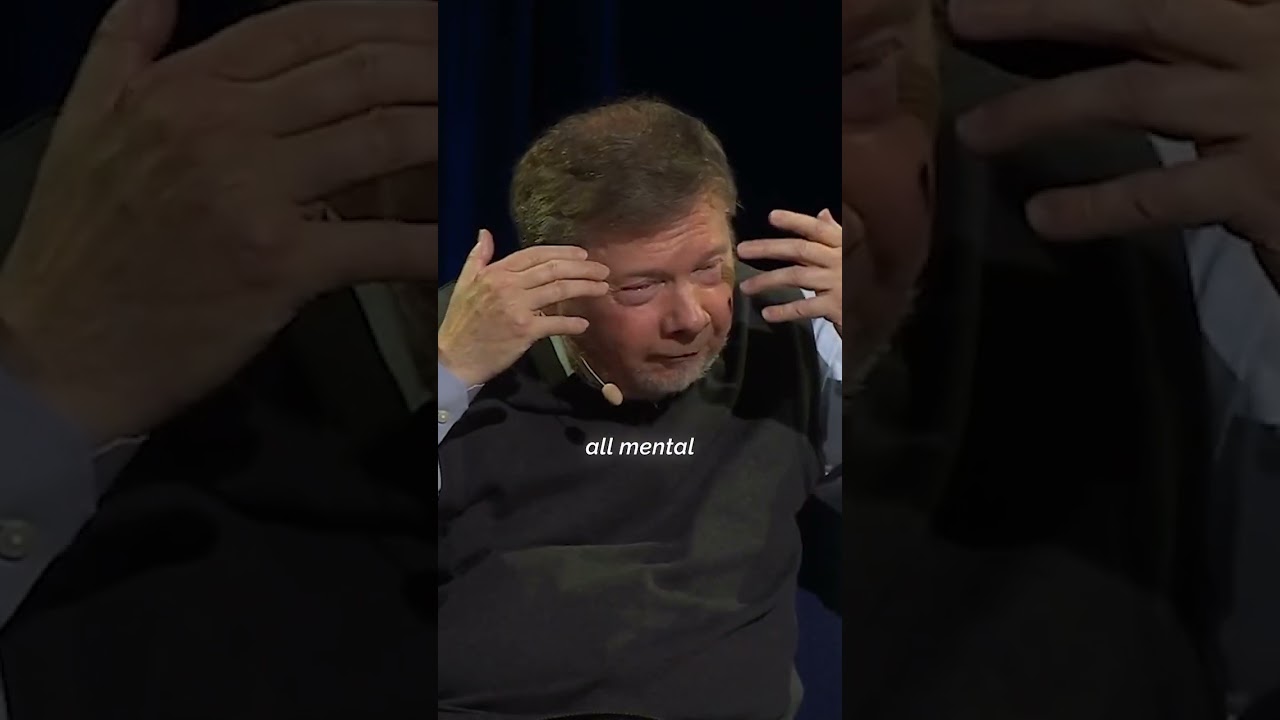
The constant stream of thought and identification with mental narratives creates a false sense of self that unconsciously governs behavior and perception. Most people live as prisoners of conditioned belief systems and thought patterns, mistaking the mind's continuous chatter for reality. By recognizing the difference between thinking and consciousness itself—the awareness that observes thought—it becomes possible to access a state of stillness beyond mental activity. This stillness is not empty or blank but rather a dimension of clarity, peace, and what might be called true sanity, in contrast to the neurotic quality of perpetual mental identification.
What Does It Mean to Be Held Back by the Mind?
Most people live under the assumption that they are their thoughts. This equation—the assumption that "I am my mind"—is the foundation of what Eckhart Tolle identifies as unconscious living. The mind operates primarily through stored patterns: learned beliefs, emotional reactions, memories, and interpretations of the world. These patterns run like autopilot, generating a constant narrative that the person accepts as reality and as who they are.
Being held back by the mind means being trapped in identification with these automatic patterns. When a thought arises—a worry about the future, a resentment about the past, a judgment about yourself or others—the unconscious person does not observe the thought. Instead, they become the thought. They live as if the thought is true, inevitable, and central to their identity. A person who thinks "I'm not good enough" does not simply have a thought; they identify with it, build a self-image around it, and allow that thought to shape their decisions, relationships, and possibilities.
This identification is not a choice made in any conscious moment. It is the default condition of the unreflective mind. The thought stream becomes a prison because the person has never learned to distinguish between the thoughts occurring in consciousness and the consciousness itself—the aware presence that could observe the thoughts without becoming them.
How Do Belief Systems and Mental Narratives Shape Identity?
Belief systems are thought patterns that solidify into a sense of self over time. A child learns from parents, culture, and experience that certain things are true about the world and about who they are. These beliefs—"I'm shy," "people can't be trusted," "I have to earn love," "the world is dangerous"—become invisible scaffolding. They are not questioned because they feel like reality itself, not like opinions or stories.
Once a belief system solidifies, it shapes perception selectively. The mind filters incoming information through these pre-existing beliefs, noticing evidence that confirms them and ignoring or dismissing evidence that contradicts them. A person who believes "nobody likes me" will interpret neutral social interactions as rejection and positive ones as exceptions or pity. The belief system creates a self-fulfilling prophecy: it shapes how the person behaves, which in turn influences how others respond, which confirms the original belief.
Mental narratives operate similarly. A narrative is a story the mind tells about who you are, what your life means, and what is possible for you. Common narratives include: "I'm too old to change," "I'm a victim of my circumstances," "I have to be perfect," or "nobody understands me." These narratives feel deeply true because they have been reinforced repeatedly through thought, emotional reaction, and selective memory. The person has literally spent years building evidence for their own narrative.
The critical insight is that none of these belief systems or narratives is inherently true about the person. They are mental structures, not facts. Yet they function as invisible rulers, determining what the person attempts, how they relate to others, and what they believe is possible. In this way, identification with mental patterns holds a person back from authentic living and from discovering capacities and possibilities that lie beyond what the mind has concluded about them.
What Is the Difference Between Thinking and Consciousness?
Most people have never made a distinction between thinking and consciousness. They assume that the mind—the thinking function—is the only reliable access to reality and truth. But consciousness and thinking are not the same. Thinking is a function, a mental process. Consciousness is the awareness in which all mental processes occur.
You can observe this distinction directly. Right now, a thought may arise in your mind. If you can notice that thought arising, then something in you is aware of the thought. That awareness—that capacity to perceive the thought—is not itself the thought. It is consciousness. It is the space or dimension in which the thought appears, just as the sky is the space in which clouds appear.
Thinking is useful for certain tasks: planning, problem-solving, analysis, language. But thinking is also deeply limited. It is always based on past conditioning and past experience. It cannot generate truly novel understanding. It cannot produce the peace that comes from being present. And it cannot know truth directly; it can only interpret reality through its patterns.
Consciousness, by contrast, is silent and still. It does not move through time the way thinking does, dwelling on the past and projecting into the future. Consciousness is present—it is the aware presence of this moment. When you drop identification with your thoughts and simply rest as awareness itself, you are accessing consciousness. This is not a mystical state or a special achievement. It is what is already here, already operating, always available. Most people simply have not learned to recognize it or value it because they have been conditioned to trust only the thinking mind.
What Happens When You Stop Identifying With Thought?
The shift from identification with thought to identification with consciousness is gradual for most people but can be described simply: it is the difference between being lost in a dream and waking up.
When you identify with your thoughts, you are at their mercy. An anxious thought arises, and you believe it, and your body responds with anxiety. A judgment arises about yourself, and you feel shame. A story arises about someone else's motives, and you feel anger. The thinking mind generates an entire emotional and behavioral response cascade, and you experience it as reality.
When you stop identifying with thought—when you recognize yourself as the consciousness that observes thought—something fundamental shifts. Thoughts still arise. The mind still does its job. But you are no longer the thoughts. You are the aware space in which they occur. From this position, thoughts can be noticed without being believed or obeyed. A fearful thought can arise, and instead of acting from fear, you can observe the fear thought and choose a wiser response. A self-critical thought can arise, and instead of accepting it as truth, you can notice it as a thought pattern and let it pass.
This distinction makes freedom possible. As long as you are identified with your thoughts, you have no freedom—you are run by automatic patterns. But the moment you recognize yourself as consciousness, as the awareness that observes thoughts, choice becomes real. Not choice as the thinking mind's struggle against itself, but genuine freedom—the space to respond rather than react.
What Is Stillness Beyond the Mind?
Stillness beyond the mind is not the absence of thoughts or a blank state. It is not achieved by trying to make the mind empty or stop thinking. Rather, it is the dimension of consciousness that exists whether thoughts are present or not.
In ordinary waking consciousness, the mind is in constant motion. It narrates, evaluates, remembers, anticipates. This motion is experienced as normal and necessary. But beneath this motion, there is something still. You might notice it in rare moments: in deep sleep, in being lost in nature, in genuine laughter, in moments of pure presence with someone you love. In these moments, the mind is not still—thoughts may continue—but identification with thought drops away. There is an aliveness and peace that does not depend on mental content.
This stillness can be accessed deliberately through the recognition that consciousness itself is your true nature. Instead of trying to force the mind quiet, you recognize that the awareness that observes the mind is already still, already at peace. When attention drops from the mental narrative into simple awareness of the present moment—not thinking about this moment, but actually being present in it—you touch this stillness.
The value of this stillness is immense. In stillness, the nervous system finds genuine rest. Mental loops and obsessive thinking subside, not through suppression but through lack of identification. Creativity flows more naturally because it arises from a deeper dimension than conditioned thought patterns. Emotional reactivity decreases because you are not feeding thoughts with your identification. And most importantly, a clarity about what is actually true emerges—a clarity that is not mediated by your personal history, beliefs, or fears.
How Does Discovering Stillness Lead to Clarity and Peace?
Clarity is possible only when the mind's clouds have lifted. As long as you are identified with your thoughts, you are seeing reality through layers of interpretation, judgment, and conditioning. A situation occurs, and instead of perceiving what is actually happening, you perceive it through your beliefs, your fears, your narratives. You miss the direct perception of reality.
When consciousness is no longer caught in the story-making machinery of the mind, direct perception becomes possible. You see what is actually here, without the layer of interpretation. A person says something, and instead of filtering it through the belief "they don't really care about me," you hear them directly. A challenge arises, and instead of seeing it through the narrative "this is too much for me to handle," you meet it with your full presence and intelligence.
This clarity is inseparable from peace. Much suffering comes from the mental activity of resisting reality—wishing things were different than they are, judging what is happening as wrong, trying to fix or control situations through anxious thought. When you are not identified with this resistance, peace is what remains. Not the absence of challenge or difficulty, but peace in the midst of it. Peace comes from accepting what is, while responding to it with your full presence and intelligence.
This is quite different from resignation or passivity. True peace does not come from giving up or accepting things as hopeless. It comes from releasing the mental tension of resistance, of pushing against reality, of telling yourself stories about how things should be. With that tension released, action becomes possible from a clearer, wiser place. And paradoxically, this often leads to more effective action than the anxious, thought-driven striving that comes from mind-identification.
What Is True Sanity Versus Mental Neurosis?
In Tolle's view, what is ordinarily called "sanity"—functioning adequately in society, maintaining a job and relationships—may actually be a collective form of neurosis. The neurosis is constant mental activity, identification with thought, the belief that the self is the mind, and consequently the emotional turbulence that comes from this identification.
True sanity, by contrast, is the capacity to be present and aware without being hijacked by mental patterns. A truly sane person can have thoughts without being defined by them. They can experience emotions without being swept away by them. They can engage in mental activity when it is useful—planning, learning, problem-solving—and then release it when it is not needed. Most importantly, they rest habitually in the awareness that observes these functions rather than identifying with them.
The neurotic quality of mind-identification is that it is always seeking. The mind is never satisfied. It always has a problem to solve, a lack to fill, a future state that would finally make things okay. This seeking generates anxiety, restlessness, and a constant sense of inadequacy. True sanity, by contrast, does not deny the need for practical action and planning, but it does not demand that you be neurotic about it. It is possible to plan and act from presence, not from the driven energy of the seeking mind.
Where to Go From Here
The practical inquiry that flows from this understanding is simple but requires consistent attention: begin to notice the difference between thinking and consciousness. Notice when you are identified with thoughts—believing them, taking them seriously, allowing them to determine your emotional state and actions. Notice when attention shifts into simple presence, into observation, into being aware of your surroundings or your breath or your body without narrating about them.
This noticing is itself the beginning of freedom. You do not need to "fix" your mind or force it to be different. You simply need to withdraw identification from it. As attention increasingly rests in consciousness itself—in pure awareness—the mind naturally becomes less dominant, less tyrannical. Thoughts continue, but they are held more lightly. And in the space created by this lightness, clarity, peace, and authentic action become possible.