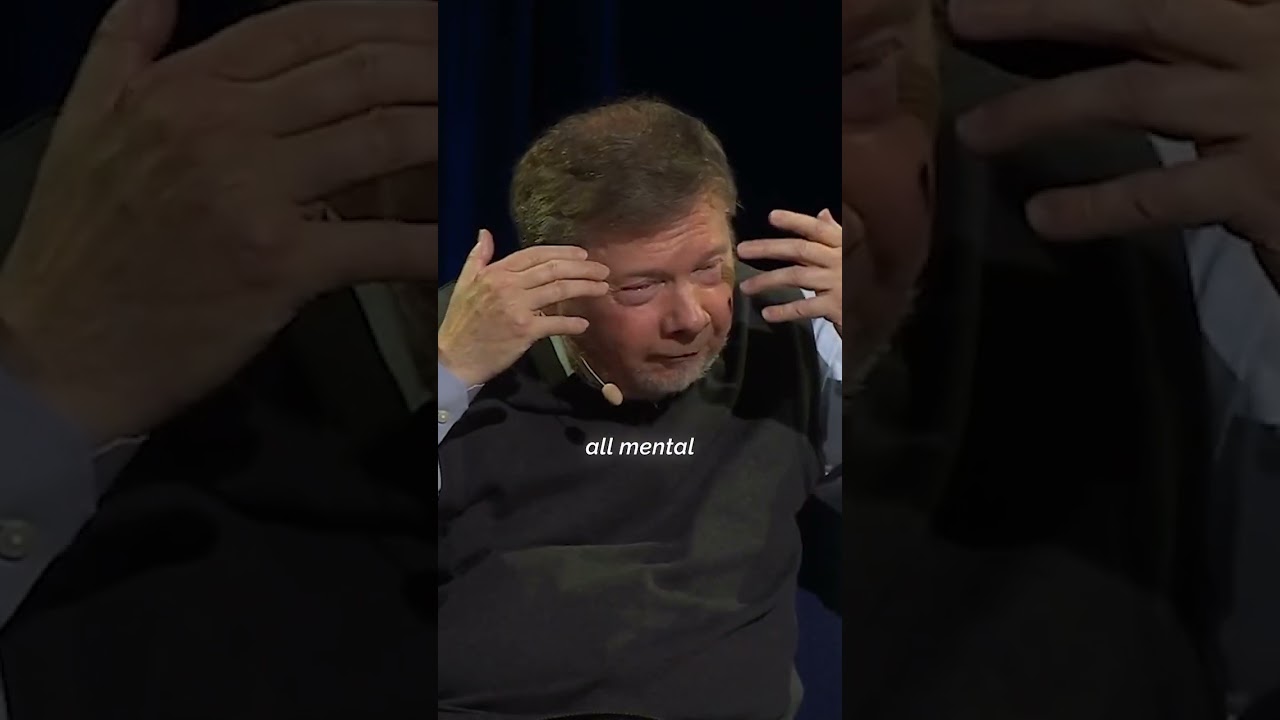
Eckhart Tolle teaches that the ability to be comfortable in moments of nothingness—silence, stillness, and absence of mental content—is foundational to spiritual presence and inner peace. Most people habitually reach for distractions (phones, thoughts, noise) to avoid the discomfort of emptiness. By learning to enjoy and rest in nothingness rather than flee from it, you access a deeper dimension of consciousness where peace naturally emerges.
The Discomfort of Empty Space
One of the most revealing patterns in modern consciousness is the almost reflexive urge to fill every gap of silence or stillness with something—a thought, a device, a sound, a task. This is not accidental. For most people, moments of nothingness trigger a subtle anxiety, a sense that something is wrong when the mind is not busy, when there is nothing to do, nowhere to go, no one to become. The mind interprets emptiness as a threat.
Tolle points to a core spiritual insight: this discomfort with nothingness reveals that we have been identified with the thinking mind as our primary sense of self. When the mind quiets, there is a temporary loss of the constructed identity—the "me" that exists as a narrative of thoughts, judgments, and plans. Rather than recognize this as liberation, the ego experiences it as extinction and instinctively grasps for distraction to restore itself.
What Does "Moments of Nothingness" Actually Mean?
Nothingness, in this context, does not mean unconsciousness or numbness. It refers to gaps in thought—moments where the stream of mental narrative momentarily ceases. These occur naturally throughout the day: between thoughts, in deep listening, in genuine presence with another person, or during meditation. The catch is that most people miss these moments entirely because they are so brief and because the habit of reaching for something is so strong.
A crucial distinction: nothingness is not the same as blankness. When you are truly present in a moment of nothingness, you are still aware. There is alertness, openness, and often a subtle sense of aliveness. What is absent is the constant narration, judgment, and mental elaboration. This is where genuine freedom begins—in the space before the mind reconstructs itself.
Why We Reach for Distraction
The compulsion to fill silence or emptiness stems from deep conditioning. From childhood, people are taught (implicitly and explicitly) that productivity, busyness, and constant engagement are marks of worth and normalcy. Stillness is reframed as laziness, emptiness as a void to be feared. Additionally, when you are identified with thought, the cessation of thought feels like personal annihilation—which is terrifying at an unconscious level.
Modern technology has amplified this pattern dramatically. Smartphones, notifications, endless streams of content, and algorithmic engagement create an environment where even a few seconds of potential nothingness are immediately filled. This is by design: distraction is engineered to be addictive because it serves the purpose of keeping attention commodified and the thinking mind active and reactive.
But the cost is profound. Each time you reflexively reach for distraction rather than being present, you reinforce the identification with the thinking mind and miss the possibility of touching something deeper in consciousness.
Learning to Enjoy Nothingness
The shift Tolle invites is not to eliminate thought or become permanently blank. Rather, it is to develop a different relationship with moments of emptiness—to recognize them not as problems but as invitations. Learning to enjoy nothingness means learning to trust the present moment even when it contains nothing interesting or productive to do.
This is a practical skill. Start small: sit for a minute without your phone, without a task, without needing to go anywhere. Notice the impulse to fill the space. Don't fight it; simply observe it with curiosity. What does the urge feel like in your body? What stories arise about why you need to be doing something? As you observe without judgment, the grip of the compulsion naturally begins to loosen.
Over time, you may discover something counterintuitive: emptiness is not empty at all. When you stop filling it with the content of mind, you discover a quality of presence, peace, and subtle aliveness that is always here but normally obscured by constant mental activity. This is what Tolle calls the "no-thing" that is actually the most essential thing—the ground of consciousness itself.
The Connection Between Nothingness and Presence
True presence cannot coexist with the constant urge to escape the now through distraction. Presence is what remains when you stop running from nothingness. It is not a state you achieve through effort or willpower; rather, it is what naturally emerges when you stop resisting what is actually here.
This is why meditation practices often emphasize simply sitting and observing whatever arises without distraction or preference. The "meditation" is not primarily about developing concentration or achieving special states. It is about training the capacity to be present with what is—including nothingness—without the compulsion to flee into distraction. This capacity then ripples into daily life, making you less reactive, more aware, and more alive.
Nothingness and the Thinking Mind
A key insight from Tolle's teaching is that the thinking mind cannot function in moments of true nothingness. The mind requires content: something to think about, analyze, worry over, or plan. When that content is absent, the mind has no job. This is precisely why the mind generates a sense of threat around emptiness—it interprets the absence of work as a threat to its existence.
But here is what becomes possible when you are no longer completely identified with the thinking mind: you can observe its patterns. You can notice the moment it activates to fill a gap. You can recognize the distraction impulse as a reflex rather than as something you must obey. This creates a gap between stimulus and response—and in that gap is where true freedom lies.
Integrating Nothingness Into Daily Life
You don't need to meditate for hours to access the benefits of comfort with nothingness. Moments of genuine presence are available throughout the day: when waiting in line, pausing before responding to someone, feeling the physical sensation of breathing, noticing the space between thoughts during a conversation. The key is to notice these gaps and, rather than immediately fill them, to simply rest there for a breath or two.
Over time, this practice naturally reorients your relationship to the present moment. You become less dependent on external distractions for a sense of completeness. You discover that you don't need to be constantly entertained or productive to feel okay. This creates a profound shift: instead of life being something you have to constantly fill, manage, and defend against emptiness, life becomes a continuous unfolding that you can actually be present for.
The Paradox of Seeking Nothingness
A subtle trap emerges when the ego tries to "practice nothingness" as another achievement or goal. The moment you turn being present into a project or a way to attain something, you have made it about the thinking mind again. True nothingness cannot be pursued; it can only be allowed.
This is why Tolle emphasizes simplicity: you don't need techniques or elaborate practices. What you need is simply to notice your patterns and, moment by moment, choose presence over distraction. The choice itself is what dismantles the compulsion.
Where to go from here
If this exploration resonates, consider beginning with a simple observation practice: spend five minutes a day sitting quietly without distraction. Your only "task" is to notice what happens when you don't reach for your phone, a book, music, or thought. What arises? What feels uncomfortable? What unexpected qualities of awareness or peace might be here?
As you build familiarity with brief moments of nothingness, you can extend the practice—not as ambition, but as natural interest. Notice how your relationship with daily tasks, conversations, and silence shifts when you are less desperate to escape emptiness. This is where spiritual presence becomes lived reality rather than a concept discussed in talks.